Table of Contents
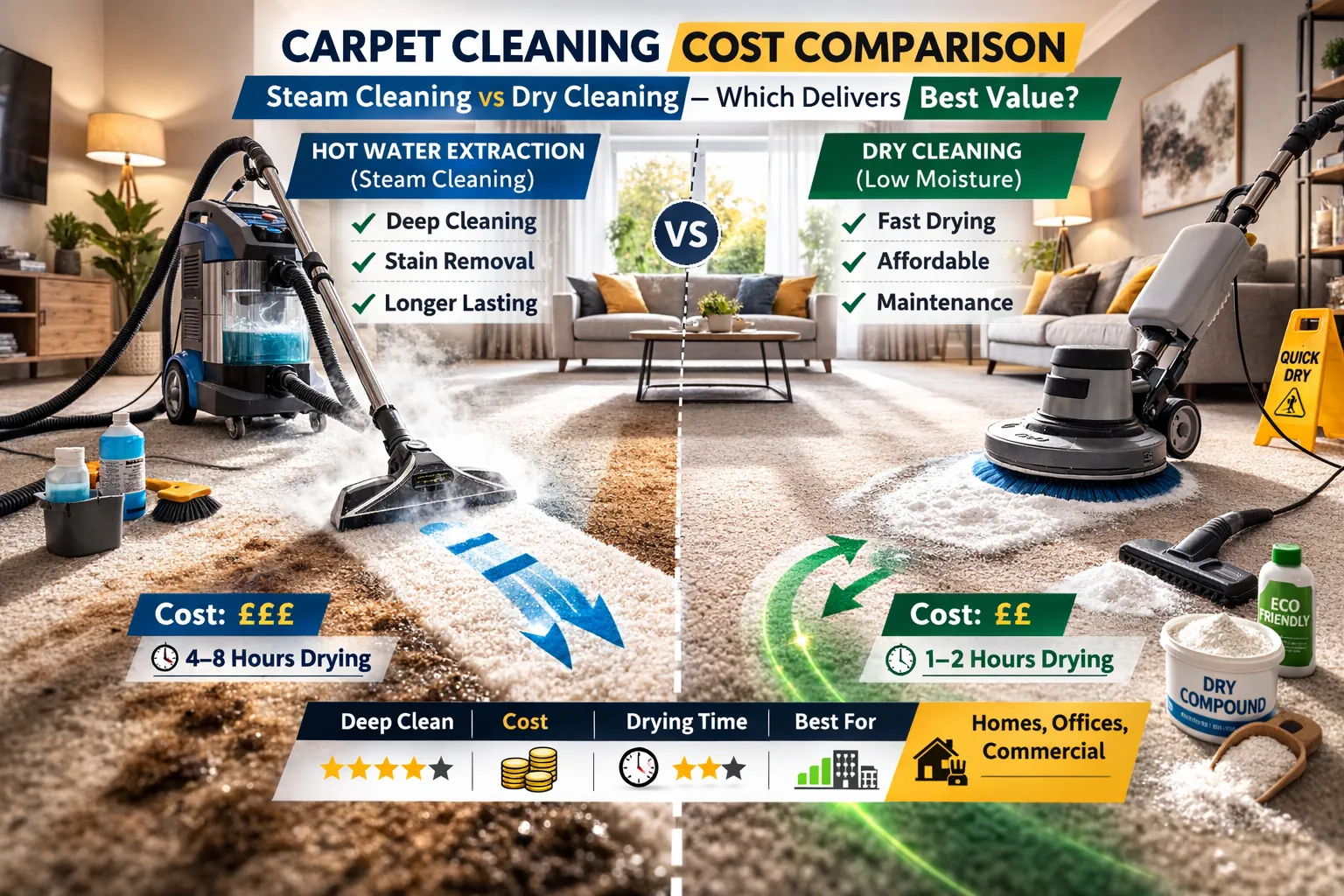
The cost of carpet cleaning methods varies based on equipment, labour, drying time, and cleaning depth. Steam cleaning (hot water extraction) typically costs more per session but delivers the deepest clean and longest-lasting results. Dry cleaning and encapsulation cost less and dry faster. They suit maintenance cleaning better than deep stain removal. For most homes, steam cleaning provides the best long-term value, while low-moisture methods are more cost-effective for offices and commercial spaces.
Factors That Influence Carpet Cleaning Costs
Before comparing cleaning methods, it is important to understand the factors that affect carpet cleaning pricing.
Carpet Size
The larger the carpet area, the higher the cost. Professional services usually charge:
- per room
- per square meter
- per property
Large open spaces often reduce the price per square meter due to efficiency.
Level of Dirt and Staining
Heavily soiled carpets require:
- pre-treatment chemicals
- additional extraction passes
- specialized stain removal
This increases labour time and cost.
Carpet Fibre Type
Delicate carpets such as wool or Persian rugs require:
- specialist cleaning solutions
- slower cleaning processes
- fibre-safe equipment
This often increases cleaning costs compared to synthetic carpets.
Drying Time Requirements
Businesses or hotels may prefer low-moisture cleaning methods because carpets must be ready quickly. Faster drying often means different equipment and techniques.
We are highly recommended on Google Business Profile
Serving: London & Surrounding Areas
⭐️⭐️⭐️⭐️⭐️
270+ 5 Star Google Reviews
Overview of Major Carpet Cleaning Methods
Hot Water Extraction (Steam Cleaning)
Hot water extraction is widely considered the most effective professional carpet cleaning method. It works by spraying hot water and cleaning solution into the carpet. It then extracts the water using a high-powered vacuum.
Benefits:
- deep removal of dirt and allergens
- effective stain removal
- recommended by many carpet manufacturers
- sanitises carpets by removing bacteria
This method is often used by professional carpet cleaners because it removes deep dirt and bacteria. It also helps restore carpet fibres. Typical drying time ranges between 4 and 8 hours depending on airflow and humidity.
Dry Carpet Cleaning
Dry carpet cleaning uses specialised absorbent compounds that attract dirt.
The compound is brushed into the carpet and then vacuumed out.
Benefits:
- minimal moisture
- very fast drying time
- suitable for delicate carpets
Dry cleaning is often used for natural fibre carpets that cannot tolerate water.
Encapsulation Cleaning
Encapsulation cleaning uses polymer-based solutions that surround dirt particles and crystallize them.
Once dry, the particles are removed through vacuuming.
Benefits:
- quick drying
- reduced chemical residue
- efficient for large commercial areas
This method is often used for maintenance cleaning in offices and hotels.
Bonnet Cleaning
Bonnet cleaning uses a rotating machine with an absorbent pad soaked in cleaning solution.
The pad absorbs surface dirt from the carpet.
Benefits:
- very fast cleaning
- low cost
- suitable for surface maintenance
However, bonnet cleaning does not remove deep dirt from carpet fibres.
Shampoo Carpet Cleaning
Carpet shampooing is a traditional method where foam detergent is applied using a rotary brush machine.
Benefits:
- good agitation for dirt removal
- effective for heavily soiled carpets
However, modern professionals often prefer hot water extraction because shampoo cleaning may leave residue.
Cost Comparison of Cleaning Methods
The cost of carpet cleaning varies depending on the method used and the cleaning depth required. Below is a general comparison of average professional cleaning costs.
Hot Water Extraction (Steam Cleaning)
Average cost: £25 – £45 per room
Pros:
- deepest cleaning method
- removes allergens and bacteria
- longest lasting results
Cons:
- longer drying time
- slightly higher cost
Long-term value: Excellent
Dry Carpet Cleaning
Average cost:
£20 – £35 per room
Pros:
- quick drying (1–2 hours)
- suitable for delicate carpets
Cons:
- less effective on deep stains
- may require more frequent cleaning
Long-term value: Good for maintenance
Encapsulation Cleaning
Average cost:
£15 – £30 per room
Pros:
- cost-effective
- fast drying
- ideal for commercial spaces
Cons:
- limited deep cleaning capability
Long-term value: Best for routine maintenance
Bonnet Cleaning
Average cost:
£15 – £25 per room
Pros:
- lowest cost
- very fast process
Cons:
- surface cleaning only
- dirt may remain deep in fibres
Long-term value: Low for residential carpets
Shampoo Cleaning
Average cost:
£20 – £35 per room
Pros:
- good for heavily soiled carpets
Cons:
- residue may attract dirt
- longer drying time
Long-term value: Moderate
Which Carpet Cleaning Method Offers the Best Value?
From a cost perspective, the cheapest method is not always the best.
Surface cleaning methods such as bonnet cleaning may appear affordable, but carpets may become dirty again quickly because deep soil remains.
Deep cleaning methods such as hot water extraction usually deliver better long-term value because they:
- extend carpet lifespan
- remove allergens
- improve indoor air quality
This means carpets require fewer cleanings over time.
Residential vs Commercial Carpet Cleaning Costs
Cleaning methods often differ between homes and commercial spaces.
Residential cleaning priorities:
- deep cleaning
- stain removal
- allergen removal
Common method: hot water extraction
Commercial cleaning priorities:
- speed
- minimal disruption
- large area coverage
Common methods: encapsulation or bonnet cleaning
Understanding this difference helps businesses select the most cost-effective solution.
How Often Should Carpets Be Cleaned?
Cleaning frequency also affects long-term costs.
Typical recommendations:
Homes without pets
Every 12–18 months
Homes with pets or children
Every 6–12 months
Commercial properties
Every 3–6 months depending on foot traffic
Regular cleaning reduces the need for expensive restoration cleaning later.
Cost vs Carpet Lifespan
Carpets represent a significant investment. Replacing carpets in a home or office can cost thousands of pounds.
Professional cleaning helps protect that investment by:
- removing abrasive dirt particles
- restoring carpet fibres
- preventing permanent staining
Spending slightly more on a deep cleaning method often saves money by extending carpet life.
Signs Your Carpet Needs Professional Cleaning
Recognising early warning signs can prevent expensive restoration.
Look for:
- visible stains
- persistent odours
- flattened carpet fibres
- allergy symptoms indoors
- heavy traffic marks
These signs indicate that deep cleaning may be required rather than surface maintenance.
How to Reduce Carpet Cleaning Costs
Several strategies can help reduce overall carpet cleaning expenses.
Vacuum carpets regularly
Use entrance mats
Remove shoes indoors
Clean spills immediately
Schedule regular maintenance cleaning
Preventative maintenance reduces the need for intensive cleaning methods.
Frequently Asked Questions
What is the cheapest carpet cleaning method?
Bonnet cleaning is usually the lowest-cost carpet cleaning method. It focuses on surface cleaning and needs less equipment and labour. However, it does not remove deep dirt, so carpets may require more frequent cleaning.
Which carpet cleaning method provides the best long-term value?
Hot water extraction (steam cleaning) often gives the best long-term value. It removes deep dirt and allergens. This helps carpets stay cleaner for longer.
Why is steam cleaning more expensive?
Steam cleaning uses high-powered extraction machines, heated water systems, and longer cleaning times. These factors increase cost but provide deeper cleaning results.
Is dry carpet cleaning cheaper than steam cleaning?
Dry carpet cleaning is usually slightly cheaper because it uses less water and shorter drying times. However, it may not remove heavy stains or deep dirt as effectively.
Which carpet cleaning method dries the fastest?
Dry cleaning and encapsulation methods dry the fastest, often within one to two hours. Steam cleaning usually takes several hours to dry.
How much does professional carpet cleaning cost in London?
Professional carpet cleaning in London usually costs £20 to £45 per room. Prices vary by cleaning method, carpet condition, and room size.
Does the cleaning method affect carpet lifespan?
Yes. Deep cleaning methods remove abrasive dirt particles that damage fibres. Regular professional cleaning can significantly extend carpet lifespan.
Is professional carpet cleaning worth the cost?
Professional cleaning helps protect carpet investment, improve indoor air quality, and maintain appearance. In most cases, it is far more cost-effective than replacing carpets prematurely.