Table of Contents
The best carpet cleaning method depends on the carpet’s fibre type, construction, and level of soiling. Synthetic carpets such as nylon and polyester are usually cleaned using hot water extraction (steam cleaning) because it removes deep dirt, bacteria, and allergens. Wool carpets require controlled moisture and specialised detergents to prevent fibre damage, while natural fibre carpets like sisal or jute are best cleaned using dry or low-moisture methods to avoid shrinkage.
Professional carpet cleaners inspect the carpet material first and then choose the safest method to achieve deep cleaning without damaging the fibres.
This guide explains the most effective carpet cleaning methods and how they match different carpet materials.
Why Carpet Type Matters in Cleaning
Before discussing cleaning methods, it is important to understand why carpet material plays such a critical role.
Carpet fibres vary in:
- Absorbency
- Heat tolerance
- Chemical sensitivity
- Shrinkage risk
- Colour stability
For example:
- Wool carpets absorb water easily and require controlled moisture.
- Synthetic carpets can tolerate stronger cleaning solutions.
- Natural fibre carpets like sisal or jute can be damaged by water.
Using the wrong method may lead to:
- Colour bleeding
- Fibre distortion
- Odours caused by moisture retention
- Permanent carpet damage
Professional cleaners typically inspect the carpet first and perform fibre identification before choosing the appropriate cleaning technique.
The Most Effective Carpet Cleaning Methods
Professional cleaners use several techniques depending on carpet type and contamination level.
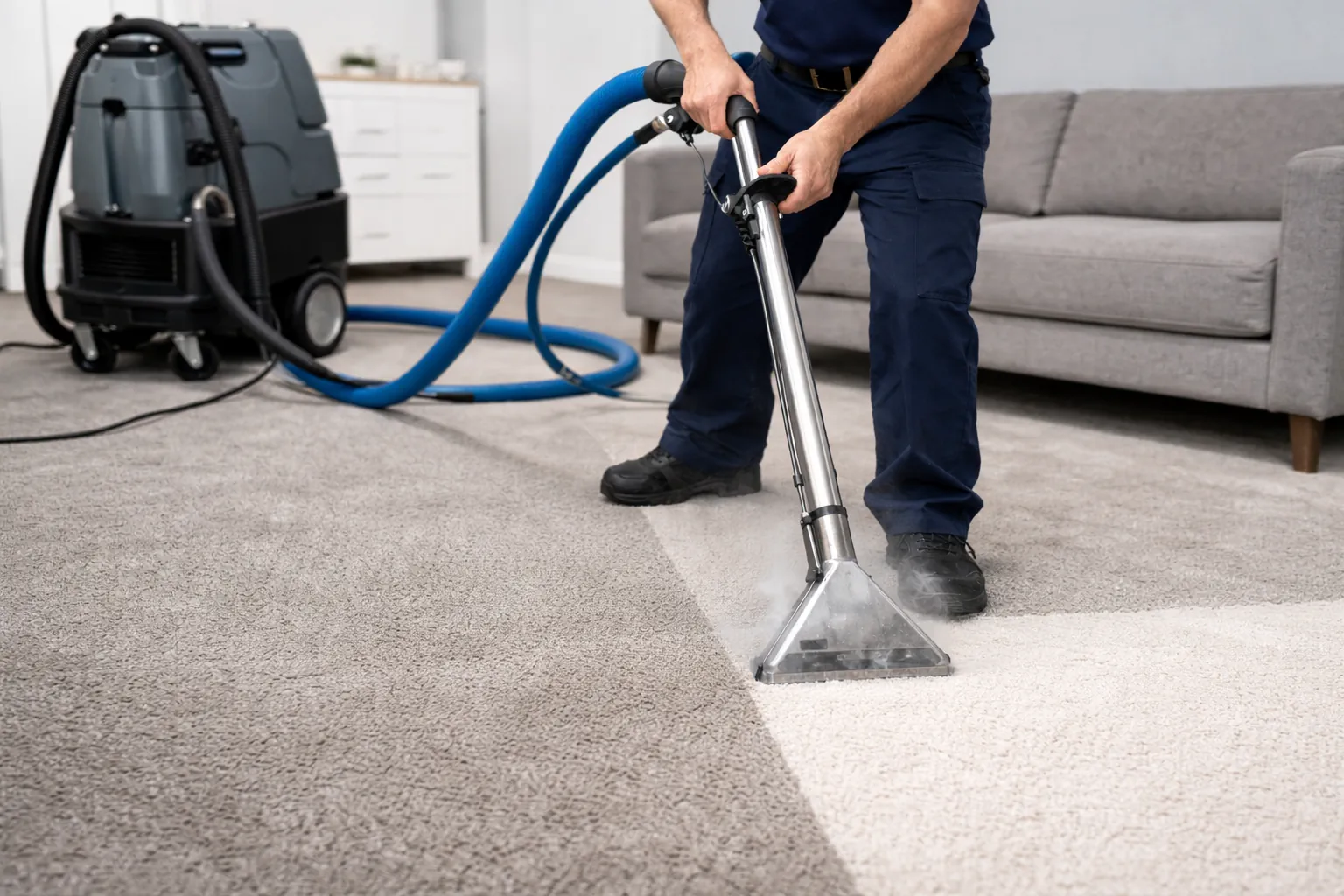
Hot Water Extraction (Steam Cleaning)
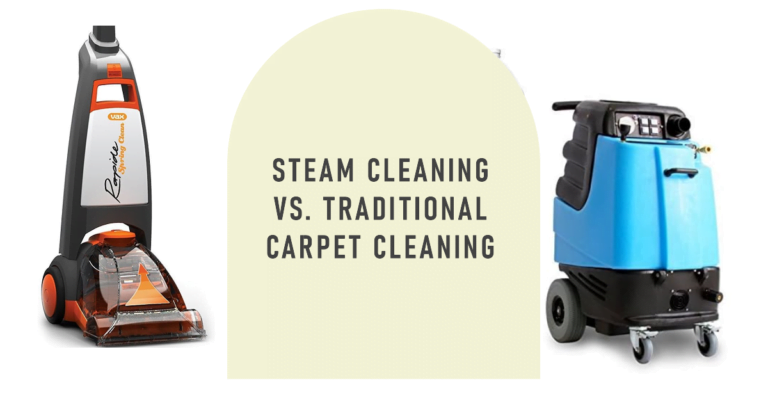
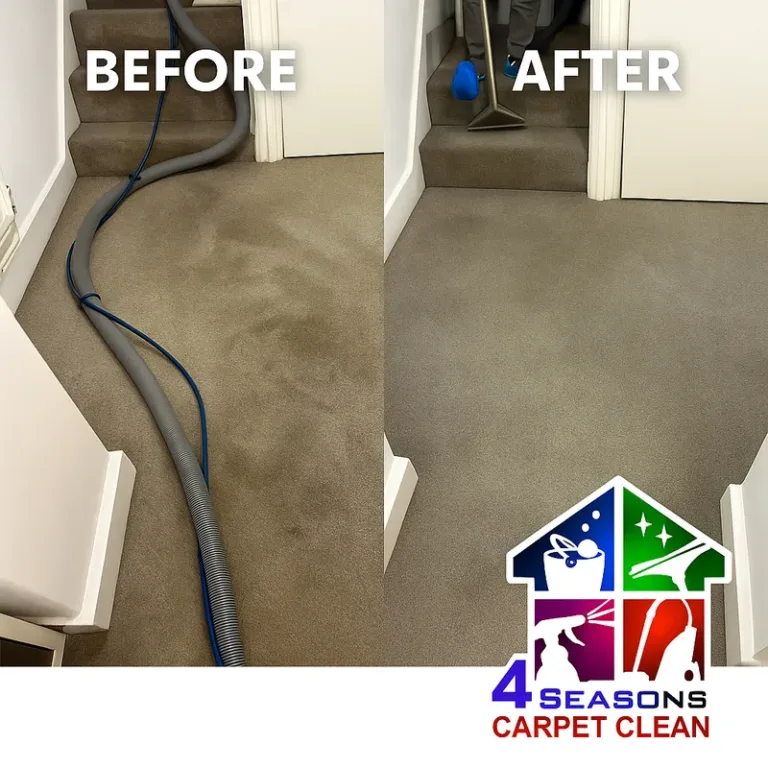
Hot water extraction is widely considered the most effective deep cleaning method. The process involves injecting hot water and cleaning solution into the carpet and then extracting it with powerful suction.
Benefits:
- Removes deep dirt and allergens
- Kills bacteria and dust mites
- Highly effective for stain removal
- Recommended by many carpet manufacturers
Best for:
- Nylon carpets
- Polyester carpets
- Heavily soiled carpets
- Residential homes with pets or children
Professional systems can remove up to 99.99% of bacteria and deeply embedded dirt. However, wool carpets require controlled temperatures and specialised detergents to prevent fibre damage.
Dry Carpet Cleaning
Dry carpet cleaning uses specialised powders or compounds that absorb dirt. The compound is brushed into the carpet fibres and then vacuumed out.
Benefits:
- Very low moisture
- Fast drying time
- Safe for delicate carpets
Best for:
- Natural fibre carpets
- Sisal and jute
- Commercial spaces needing quick turnaround
Dry cleaning is ideal for environments where carpets must remain usable immediately after cleaning.
Encapsulation Cleaning
Encapsulation is a modern low-moisture cleaning technique. a specialised polymer solution surrounds dirt particles and crystallises them, making them easy to vacuum away.
Benefits:
- Fast drying
- Reduced residue
- Cost-effective for large spaces
Best for:
- Commercial carpet tiles
- Olefin carpets
- Maintenance cleaning
Encapsulation is commonly used in offices, hotels, and schools where carpets experience high traffic.
Bonnet Cleaning
Bonnet cleaning uses a rotating pad soaked in cleaning solution to absorb surface dirt.
Benefits:
- Quick cleaning process
- Improves appearance rapidly
Best for:
- Commercial carpets
- Hotels and conference centres
However, bonnet cleaning only cleans the surface layer and is not considered a deep cleaning method.
Shampoo Carpet Cleaning
This traditional method uses foam detergent applied with a rotary machine.
The foam loosens dirt, which is later vacuumed.
Benefits:
- Effective for heavily soiled carpets
- Good agitation for embedded dirt
Drawbacks:
- Can leave residue if not rinsed properly
- Longer drying times
Today, shampoo cleaning is less common due to improved modern techniques.
Matching Carpet Types with the Best Cleaning Method
Here is a simple guide to selecting the right method. Choosing the correct cleaning method ensures maximum effectiveness without damaging fibres.
| Carpet type | Best Method |
|---|---|
| Wool carpets | Controlled hot water extraction or dry cleaning |
| Nylon carpets | Best method: Hot water extraction |
| Polyester carpets | Best method: Steam cleaning with proper rinsing |
| Olefin carpets | Best method: Encapsulation cleaning |
| Natural fibre carpets | Best method: Dry compound cleaning |
Professional Carpet Inspection Process
Experienced carpet cleaning companies follow a structured process before cleaning.
Typical steps include:
- Fibre identification
- Colour fastness testing
- Soil analysis
- Stain identification
- Selecting correct cleaning method
This inspection process reduces risk and improves cleaning results.
Why Professional Carpet Cleaning Delivers Better Results
Many homeowners attempt DIY carpet cleaning using rental machines or consumer equipment. While these systems may remove some surface dirt, they often lack the power and precision of professional equipment.
Professional cleaning offers several advantages:
- Industrial-grade extraction machines
- Fibre-specific cleaning solutions
- Expert stain removal techniques
- Faster drying times
- Improved indoor air quality
Companies that specialise in carpet and upholstery cleaning often combine eco-friendly solutions with advanced equipment to achieve deeper cleaning while protecting carpet fibres.
Signs Your Carpet Needs Professional Cleaning
Recognising when to clean carpets can help maintain their appearance and lifespan.
Common signs include:
- Visible stains
- Persistent odours
- Allergies or respiratory irritation
- Matted or dull fibres
- Increased dust accumulation
Experts generally recommend professional carpet cleaning every 12–18 months, though high-traffic areas may require more frequent service.
Common Carpet Types and Their Characteristics
Understanding carpet materials helps determine the safest cleaning method.
Wool Carpets
Wool is a premium natural fibre known for durability and softness.
Characteristics:
- Natural stain resistance
- Highly absorbent
- Sensitive to high alkalinity
- Can shrink with excessive moisture
Cleaning consideration: Wool requires mild detergents and controlled moisture.
Nylon Carpets
Nylon is one of the most common synthetic carpet fibres.
Characteristics:
- Extremely durable
- Resistant to wear
- Good stain resistance with treatment
- Handles moisture well
Cleaning consideration: Nylon carpets tolerate most professional cleaning methods.
Polyester Carpets
Polyester carpets are popular in modern homes due to their colour vibrancy.
Characteristics:
- Naturally stain resistant
- Softer texture
- Slightly less durable than nylon
Cleaning consideration: Requires proper rinsing to avoid residue buildup.
Olefin (Polypropylene) Carpets
Olefin carpets are often used in basements and commercial environments.
Characteristics:
- Resistant to moisture and mildew
- Good chemical resistance
- Low resilience
Cleaning consideration: Requires low moisture methods and proper agitation.
Natural Fibre Carpets (Sisal, Jute, Seagrass)
These carpets are stylish but delicate.
Characteristics:
- Highly absorbent
- Sensitive to water
- Easily stained
Cleaning consideration: Dry cleaning methods are preferred.
Tips to Maintain Carpets Between Professional Cleanings
Proper maintenance can significantly extend the life of your carpet.
Recommended practices include:
- Vacuum frequently
- Use entrance mats
- Treat spills immediately
- Rotate furniture periodically
- Schedule professional cleaning regularly
These simple steps reduce soil buildup and preserve carpet appearance.
Frequently Asked Questions
What is the safest carpet cleaning method for wool carpets?
The safest method is controlled hot water extraction using wool-safe detergents. Some delicate wool carpets may also require low-moisture or dry cleaning techniques.
Can steam cleaning damage carpets?
When performed correctly, steam cleaning does not damage carpets. Problems usually occur when excessive water, incorrect chemicals, or high heat are used.
Which carpet cleaning method dries the fastest?
Dry compound cleaning and encapsulation cleaning typically dry the fastest, often within 1–2 hours.
Is dry carpet cleaning as effective as steam cleaning?
Dry cleaning is effective for maintenance and delicate carpets, but steam cleaning generally provides deeper cleaning for heavily soiled carpets.
How often should carpets be professionally cleaned?
Most carpets should be professionally cleaned every 12–18 months. Homes with pets, children, or allergies may benefit from cleaning every 6–12 months.
What carpet cleaning method removes allergens best?
Hot water extraction is considered the most effective method for removing dust mites, allergens, and bacteria from carpets.
Can all carpets be steam cleaned?
No. Some natural fibre carpets such as sisal or jute should not be steam cleaned because they can shrink or discolor.
What cleaning method is best for commercial carpets?
Encapsulation cleaning is commonly used for commercial carpets because it dries quickly and works well for large areas.