Table of Contents
Blood stains are a common yet daunting challenge faced in laundry rooms worldwide. The complexity of blood’s composition, especially when dried, makes it a formidable opponent against traditional cleaning methods. However, with the right approach and tools, removing dried blood stains can be simplified.
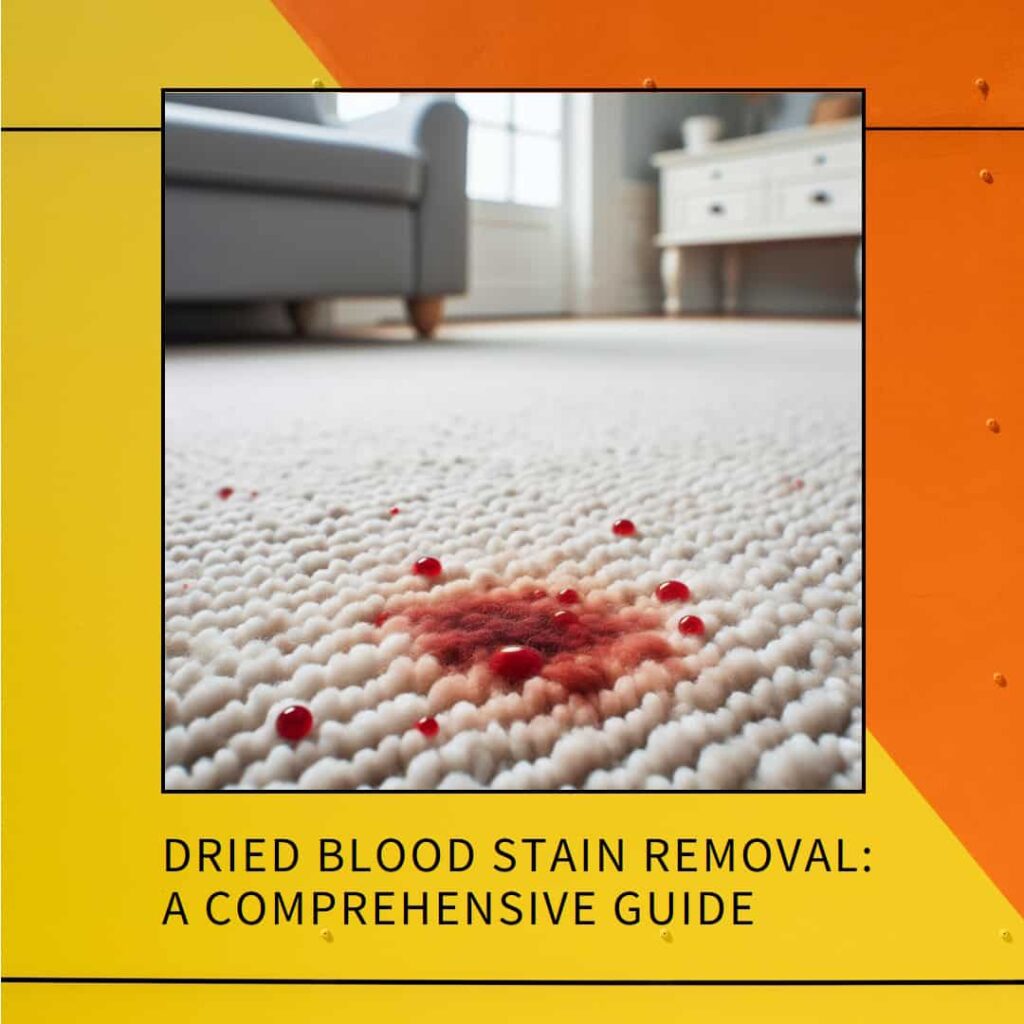
Understanding Blood Stains
Blood, a vital fluid in our bodies, has a unique composition that clings to fabrics, making stains tough to remove once dried. The key to effective removal lies in understanding its properties and reacting accordingly.
Why Blood Stains Cause Carpet Discolouration
Blood is packed with colorful pigments—most notably hemoglobin—that readily bind to carpet fibers. When blood dries, these pigments go deeper into the fabric. This makes stains hard to remove and can change the fabric’s colour. If left untreated, this discolouration can become permanent, especially on lighter or more delicate carpets. That’s why prompt attention is crucial to preserve your carpet’s original appearance and prevent lasting marks.
We are highly recommended on Google Business Profile
Serving: London & Surrounding Areas
⭐️⭐️⭐️⭐️⭐️
270+ 5 Star Google Reviews
Pre-Treatment Precautions
Before diving into stain removal, it’s crucial to identify the fabric type and test for colorfastness. This step ensures that the chosen removal method won’t damage the fabric.
Home Remedies for Blood Stain Removal
Simple ingredients like salt and cold water can work wonders on fresh blood stains. For dried stains, hydrogen peroxide acts as a mild bleach, breaking down the blood’s structure.
What You’ll Need
- Cold water
- Table salt
- Hydrogen peroxide (3%)
- Clean white cloths or paper towels
- Mild detergent
- Enzyme-based cleaner (optional for stubborn stains)
- Lemon juice and baking soda (for alternative methods)
- Rubber gloves (for safety)
Commercial Stain Removers
There are several products specifically designed for blood stain removal. These usually contain enzymes that digest the proteins in blood, lifting the stain from the fabric.
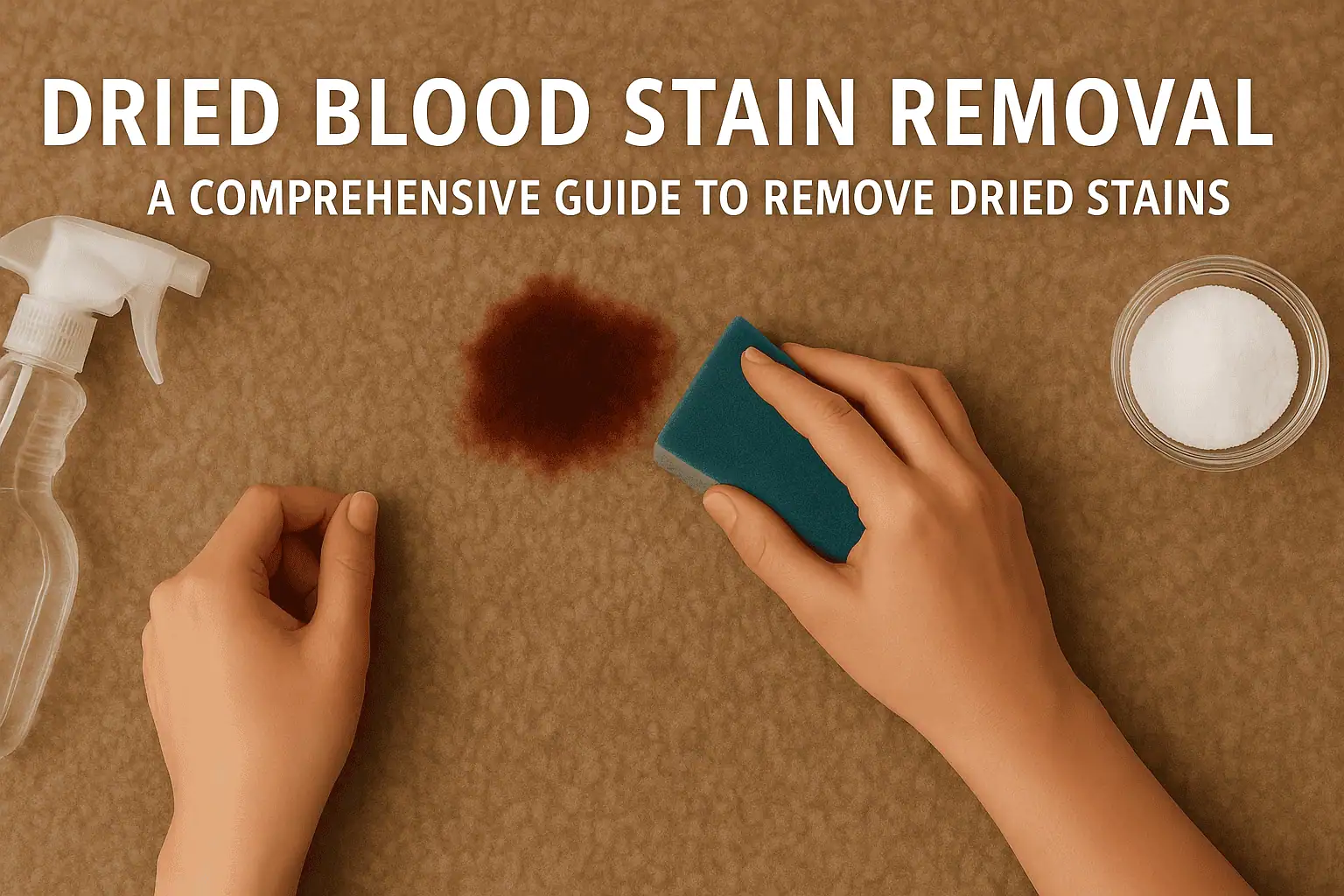
Step-by-Step Guide to Removing Dried Blood Stains
- Soak the stained area in cold water for at least 15–30 minutes. This helps rehydrate the dried blood and loosens its grip on the fibers.
- Blot gently with a clean cloth to remove as much blood as possible. Avoid rubbing, as this can spread the stain.
- Apply a mix of salt and cold water directly to the stain. You can also use a small amount of hydrogen peroxide. Just test it on a hidden area first. Let it fizz and bubble for a few minutes.
- Rub gently with another clean cloth or use a soft brush, working from the outside in to avoid spreading.
- Rinse thoroughly with cold water to remove all cleaning agents.
- Launder the item as usual, using a cold, gentle cycle and mild detergent.
Laundry Tips for Blood-Stained Fabrics
Using the correct washing settings is vital. A cold, gentle cycle is often most effective, followed by air drying to ensure the stain is completely removed.
Alternative Methods for Stubborn Stains
For challenging stains, enzyme-based cleaners or natural solutions like lemon juice and baking soda can be used. Apply the cleaner, let it sit for 10–15 minutes, then blot and rinse. These methods break down the blood without damaging most fabrics.
More Tips and Advice
- If the stain persists after washing, avoid machine drying, as heat can set the stain permanently.
- Always check the care label before applying any solution, especially hydrogen peroxide, as it can bleach some fabrics.
- For delicate fabrics like silk or wool, opt for enzyme-based cleaners and use a gentle touch.
Safety Measures When Handling Blood Stains
Always wear gloves and dispose of any contaminated materials properly to maintain hygiene and prevent any potential health risks.
With these tools and supplies, you will be ready to remove tough dried blood stains without harming your fabrics.
Common Mistakes to Avoid in Stain Removal
Avoid using hot water, which can set the stain, and be wary of old wives’ tales that might do more harm than good.
Expert Tips for Dried Blood Stain Removal
Professional cleaners often have tricks up their sleeves for tough stains. One such tip is using meat tenderizer, which breaks down protein-based stains.
FAQs on Blood Stain Removal
Future Prevention of Blood Stains
Acting quickly and having the right tools on hand can prevent most blood stains from setting. Regular maintenance and immediate treatment are key.
Testimonials and Many Success Stories
Many have found success with these methods, sharing their stories of transforming stained garments back to their original state.
Conclusion
Dried blood stain removal doesn’t have to be a nightmare. With the right knowledge and tools, you can tackle even the most stubborn stains and restore your fabrics to their former glory.