Table of Contents
Cleaning a Persian rug isn’t the same as cleaning a standard carpet. One wrong step—too much water, the wrong detergent, or harsh scrubbing—can permanently damage fibres. It can cause dye to bleed and reduce your rug’s value.
These rugs are handcrafted, often from natural wool or silk, and require a careful, controlled approach. The good news: with the right method, you can safely maintain your rug at home and keep it looking vibrant for years.
This guide walks you through exactly how to clean a Persian rug safely, what to avoid, and when it’s time to bring in professionals.
Why Persian Rugs Require Special Cleaning Methods
Persian rugs are not mass-produced textiles. They are hand-knotted pieces made using natural fibres and traditional dyes. That combination makes them durable—but also sensitive.
Here’s what makes them vulnerable:
- Natural fibres: Wool and silk absorb moisture easily and can shrink or distort
- Organic dyes: Colours can bleed if exposed to excessive water or harsh chemicals
- Handcrafted structure: Aggressive cleaning can loosen knots and damage the pile
Even routine cleaning must be done with care. Over-wetting or using harsh chemicals can cause mould, fibre damage, or permanent colour changes.
If your rug is valuable, antique, or heavily soiled, it’s always safer to use a professional Persian rug cleaning service.
Step-by-Step: How to Clean a Persian Rug Safely
1. Start With Gentle Vacuuming
Regular vacuuming removes dirt before it settles deep into the fibres. This is critical because embedded grit can wear down the rug over time.
- Use suction-only vacuum (no rotating brush)
- Vacuum in the direction of the pile
- Avoid fringes—they can fray easily
Consistent light cleaning prevents long-term damage and extends the life of your rug :contentReference[oaicite:1]{index=1}.
2. Shake or Dust the Rug (If Possible)
If the rug is small enough, take it outside and gently shake it. This removes deep dust that vacuuming might miss.
For larger rugs, lifting and lightly beating the back can help loosen trapped dirt before cleaning.
3. Spot Clean Spills Immediately
This is where most people make mistakes. The correct approach is simple:
- Blot the spill immediately with a clean, dry cloth
- Never rub—it pushes the stain deeper into fibres
- Use a mild, wool-safe detergent diluted in water
- Test any solution on a hidden area first
A mixture of water and mild detergent or diluted vinegar can safely treat minor stains when used carefully.
4. Use Minimal Moisture
Water is one of the biggest risks when cleaning a Persian rug. Too much moisture can:
- Cause shrinkage
- Lead to mould and mildew
- Trigger dye bleeding
Always use a damp cloth—not a soaking wet one—and clean in small sections. Persian rugs should never be saturated.
5. Gently Clean the Surface
If your rug needs more than spot cleaning:
- Use lukewarm water with a small amount of mild detergent
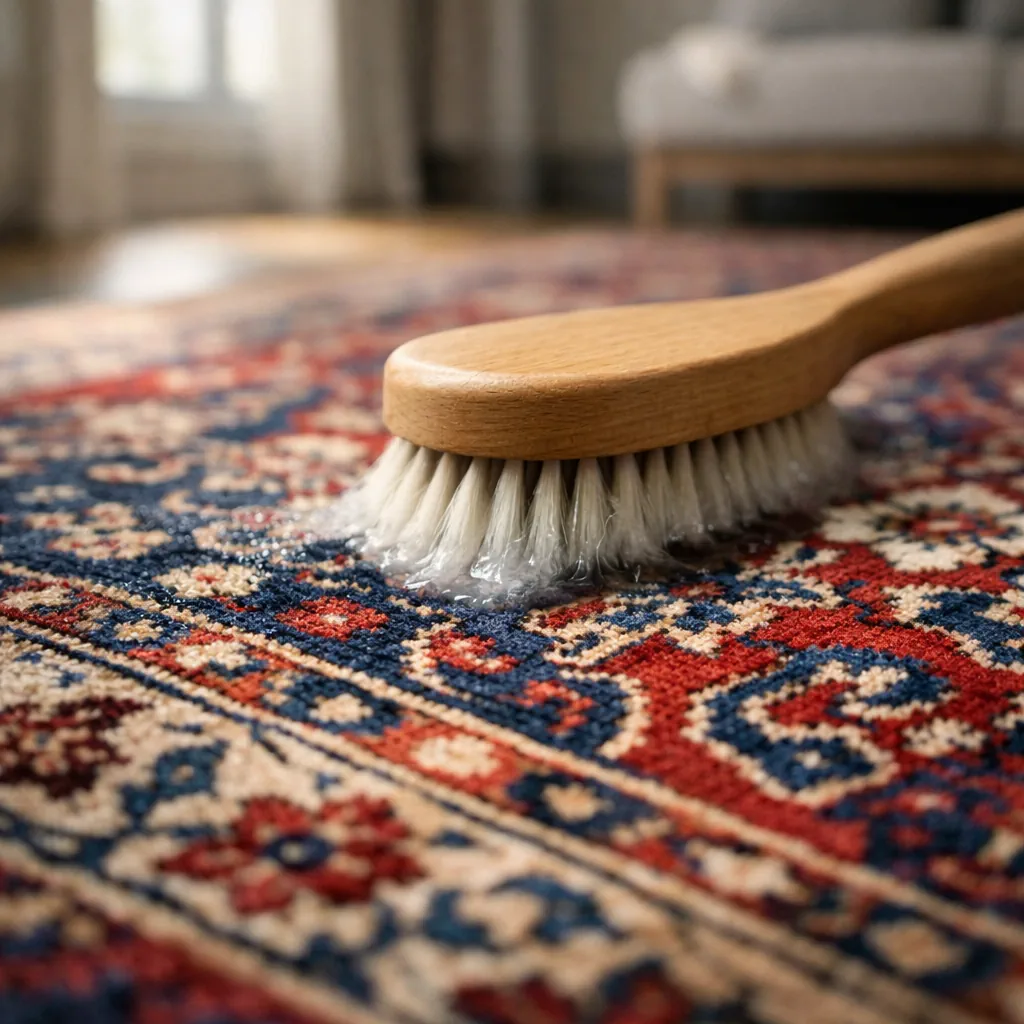
- Apply with a soft sponge or cloth
- Dab gently—do not scrub aggressively
Aggressive brushing or scrubbing can damage fibres and distort the pile structure.
6. Remove Residue Carefully
After cleaning, go over the area with a clean damp cloth to remove any detergent residue. Leftover soap can attract dirt and dull the rug over time.
7. Dry the Rug Properly
Drying is just as important as cleaning.
- Lay the rug flat in a well-ventilated area
- Avoid direct sunlight to prevent fading
- Flip occasionally to ensure even drying
Proper airflow is essential to prevent moisture from getting trapped in the fibres, which can lead to odours or mildew.
Common Mistakes That Damage Persian Rugs
If you want to protect your rug, avoid these at all costs:
- Steam cleaning: Heat and moisture can shrink fibres and distort the rug
- Machine washing: Most Persian rugs are not designed for it
- Harsh chemicals or bleach: These destroy natural dyes and fibres
- Over-wetting: Leads to mould, warping, and dye bleeding
- Scrubbing stains: Pushes dirt deeper and damages the pile
Even silk rugs are especially sensitive—heat, chemicals, and friction can permanently damage them :contentReference[oaicite:4]{index=4}.
How Often Should You Clean a Persian Rug?
Maintenance is key. You don’t need to deep clean frequently, but regular care matters.
- Vacuum: once or twice per week
- Spot clean: immediately after spills
- Deep clean: every 12–24 months (depending on use)
Homes with pets, children, or high foot traffic may require more frequent professional cleaning :contentReference[oaicite:5]{index=5}.
Extra Care Tips to Protect Your Rug
Cleaning is only part of the equation. Long-term care prevents damage before it happens.
- Rotate your rug every 6 months to prevent uneven wear
- Keep out of prolonged direct sunlight to avoid fading
- Use a rug pad to reduce friction and movement
- Keep food and drinks away where possible
These small habits significantly extend the life and appearance of your rug.
When You Should Call a Professional
DIY cleaning works for maintenance—but not for everything.
You should use a professional rug cleaning service if:
- The rug has deep stains or strong odours
- You’re dealing with pet accidents or water damage
- The rug is silk, antique, or high-value
- Colours appear to be bleeding or fading
Professional cleaners use controlled techniques, eco-friendly solutions, and specialised equipment to clean delicate rugs safely and thoroughly.
We are highly recommended on Google Business Profile
Serving: London & Surrounding Areas
⭐️⭐️⭐️⭐️⭐️
285+ 5 Star Google Reviews
How do you clean a Persian rug safely?
The safest way to clean a Persian rug is to vacuum gently, spot clean with mild detergent, avoid excess water, and dry it flat. For deep cleaning, use a professional Persian rug cleaning service to prevent fibre damage and colour bleeding.
- Vacuum with low suction
- Blot stains (do not scrub)
- Avoid soaking the rug
- Dry in a ventilated area
Final Thoughts
Cleaning a Persian rug safely comes down to one principle: less is more. Less water, less force, and fewer chemicals.
Gentle care—regular vacuuming, careful spot cleaning, and proper drying—will keep your rug in great condition without damage.
But when in doubt, don’t take chances. A Persian rug is an investment. Professional care is often the safest way to protect its beauty, structure, and value.
Frequently Asked Questions
Can I use a carpet cleaner on a Persian rug?
No. Standard carpet cleaners are too harsh and can damage natural fibres and dyes. Always use gentle, wool-safe methods.
Is steam cleaning safe for Persian rugs?
No. Steam can cause shrinkage, fibre distortion, and colour bleeding, especially in wool and silk rugs.
What is the best homemade solution for cleaning a Persian rug?
A mild mix of lukewarm water and a small amount of wool-safe detergent or diluted white vinegar works for light stains. Always test first.
How do I remove odours from a Persian rug?
Lightly sprinkle baking soda, leave it for a few hours, then vacuum gently. Persistent odours require professional cleaning.
Can Persian rugs get wet?
They can handle minimal moisture, but excessive water is dangerous and can lead to mould, shrinkage, and dye bleeding.
How do I know if my rug needs professional cleaning?
If it looks dull, smells unpleasant, or has stains that won’t come out with gentle cleaning, it’s time for professional treatment.