Table of Contents
Pet urine is one of the most stubborn and damaging problems you can face as a homeowner. It doesn’t just sit on the surface—it seeps deep into rug fibres, padding, and even the floor beneath. If not treated properly, it can leave permanent stains, strong odours, and long-term hygiene issues.
The real challenge isn’t just removing the visible stain—it’s eliminating the smell at its source. Done wrong, the odour comes back. Done right, your rug can be fully restored.
This guide explains the best expert-backed ways to remove pet urine from rugs safely. It covers fresh accidents and deeply set stains.
Why Pet Urine Is So Difficult to Remove
Pet urine contains uric acid crystals that bind tightly to fibres. These crystals don’t dissolve easily with water alone, which is why standard cleaning methods often fail.
Over time, urine breaks down into ammonia compounds, causing that strong, lingering smell. Moisture or humidity can reactivate the odour even after cleaning.
This is why simply wiping or shampooing the surface rarely works—you need to neutralise the problem at a chemical level.
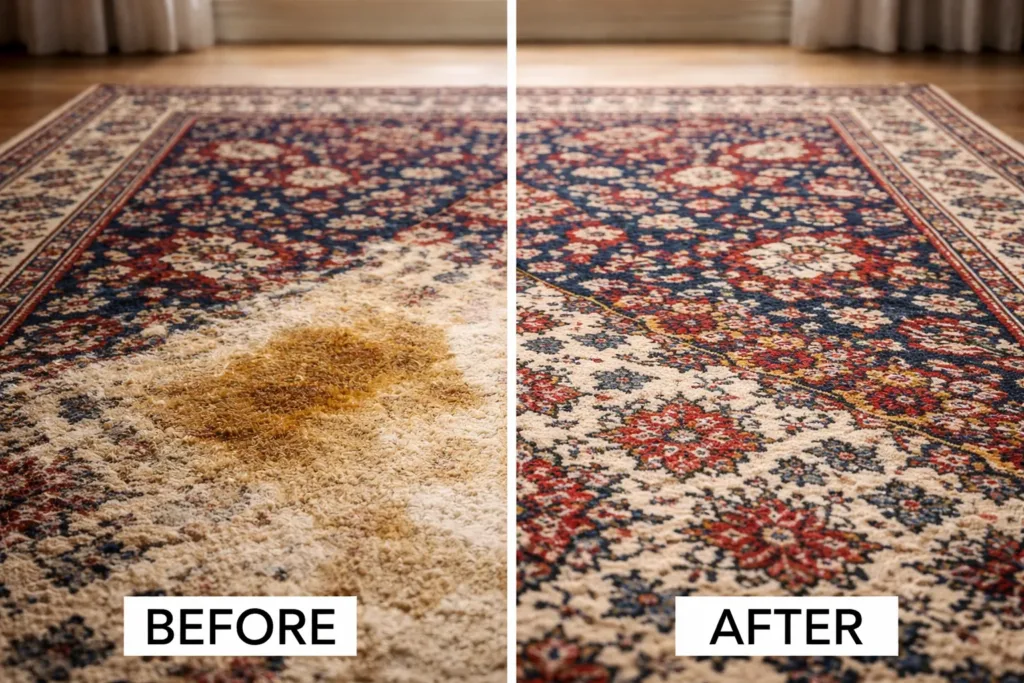
Best Way to Remove Pet Urine from Rugs (Step-by-Step)
1. Act Immediately and Blot Thoroughly
The faster you respond, the easier it is to remove the stain completely.
- Use paper towels or a clean cloth
- Press firmly to absorb as much liquid as possible
- Do not scrub—this pushes urine deeper into fibres
Blotting is critical because it removes the bulk of the contamination before it spreads.
2. Apply a Vinegar and Water Solution
A simple but highly effective solution is a mix of equal parts white vinegar and water.
- Spray or pour lightly onto the affected area
- Let it sit for 5–10 minutes
- Blot again to lift the moisture
Vinegar works by neutralising ammonia in urine. This helps remove odours, rather than just masking them.
3. Use Baking Soda to Eliminate Odours
Once the area is damp (not soaking), apply baking soda generously.
- Let it sit for several hours or overnight
- Allow it to fully dry
- Vacuum thoroughly
Baking soda absorbs remaining moisture and odours, making it a powerful natural deodoriser.
4. Use an Enzymatic Cleaner for Deep Odour Removal
If the smell persists, this is the step most homeowners miss—and it’s the most important.
Enzymatic cleaners break down the proteins and uric acid in pet urine, removing the odour at its source rather than covering it up.
- Apply generously to the affected area
- Let it sit for 15 minutes (or longer for deep stains)
- Allow to air dry completely
These cleaners are specifically designed to eliminate odour-causing compounds, making them far more effective than general cleaning products.
5. Repeat If Necessary
Deep or old stains often require multiple treatments. If the odour returns, it means some residue remains in the fibres or underlayer.
Reapply the enzymatic cleaner and allow sufficient dwell time.
How to Remove Dried or Old Pet Urine Stains
Old stains are more challenging because the urine has already bonded with the fibres.
Here’s how to handle them:
- Lightly rehydrate the area with water
- Blot to lift loosened residue
- Apply vinegar solution, then baking soda
- Finish with an enzymatic cleaner
Older stains may require more effort, but the same principles apply—break down the source, don’t just clean the surface.
What About Strong or Lingering Odours?
If you’ve cleaned the rug but still notice a smell, it usually means:
- The urine has penetrated deeper layers
- The cleaning solution didn’t reach the source
- Residual bacteria are still present
In these cases, combining enzymatic treatment with proper drying and ventilation is essential. Airflow helps prevent odour reactivation and speeds up the cleaning process :contentReference[oaicite:5]{index=5}.
Common Mistakes That Make Pet Urine Worse
Even with good intentions, many homeowners accidentally make the problem worse.
- Scrubbing the stain: pushes urine deeper into fibres
- Using hot water: sets the stain and odour
- Over-wetting the rug: spreads contamination
- Using the wrong chemicals: can damage fibres or fix the stain permanently
One of the biggest mistakes is using standard carpet shampoo alone—it doesn’t break down uric acid.
Natural vs Commercial Cleaners: What Actually Works?
Both natural and commercial solutions have their place.
Natural methods (vinegar + baking soda):
- Safe and effective for fresh stains
- Great for neutralising odours
- Affordable and easy to use
Enzymatic cleaners:
- Essential for deep or recurring odours
- Break down urine at a molecular level
- Recommended by professionals for complete removal
In practice, the best results often come from combining both approaches.
Special Considerations for Delicate Rugs
Not all rugs can handle DIY cleaning—especially delicate or high-value ones like Persian or wool rugs.
These materials are sensitive to:
- Excess moisture
- Harsh chemicals
- Aggressive scrubbing
If your rug is handmade or expensive, it’s safer to use expert Persian rug cleaning to avoid permanent damage.
When DIY Cleaning Isn’t Enough
Some situations require professional intervention:
- Repeated pet accidents in the same area
- Strong, persistent odours
- Urine soaked into underlay or flooring
- Delicate or antique rugs
Professional cleaners use advanced extraction equipment and specialised solutions that penetrate deep into the rug to fully remove contamination.
For severe cases, consider professional stain removal or even emergency cleaning services to prevent long-term damage.
How to Prevent Future Accidents
Removing the stain is only half the battle. Preventing repeat incidents is just as important.
- Clean thoroughly to eliminate scent markers pets return to
- Train pets consistently
- Use protective rug pads
- Clean accidents immediately
If even a faint smell remains, pets are more likely to return to the same spot.
Final Thoughts
The best way to remove pet urine from rugs isn’t complicated—but it must be done correctly.
Blot quickly, neutralise with vinegar, absorb with baking soda, and eliminate the source with enzymatic cleaners. That combination tackles both stains and odours effectively.
For deeper contamination or delicate rugs, professional cleaning is the safest route. Done properly, even severe pet urine damage can be reversed—restoring your rug’s freshness, hygiene, and appearance.
Frequently Asked Questions
What is the fastest way to remove pet urine from a rug?
Blot immediately, apply a vinegar-water solution, then use baking soda to absorb odours. For best results, follow with an enzymatic cleaner.
Does vinegar really remove urine smell?
Yes. Vinegar neutralises ammonia in urine, which helps eliminate odours rather than masking them.
Are enzymatic cleaners necessary?
For deep or recurring odours, yes. They break down uric acid crystals that other cleaners cannot remove.
Can baking soda alone remove pet urine smell?
It can help absorb odours, but it won’t fully eliminate the source. It works best when combined with other treatments.
Will pet urine smell ever go away completely?
Yes—if the source is fully removed using proper cleaning methods. Incomplete cleaning is why smells often return.
When should I call a professional cleaner?
If the odour remains after several treatments, or if the rug is delicate or valuable, choose professional cleaning.