Table of Contents
Steam cleaning is one of the most popular methods for deep-cleaning carpets. It’s fast, effective, and widely recommended for synthetic flooring. But when it comes to Persian rugs, the answer is very different—and far more critical.
So, can you steam clean a Persian rug? Experts overwhelmingly agree: you shouldn’t.
While it may seem convenient, steam cleaning can cause lasting damage to delicate, handwoven rugs made from natural fibres. In this guide, you’ll learn why steam cleaning is risky. You’ll also learn what happens to your rug during the process. You’ll then see safer alternatives that professionals recommend.
What Is Steam Cleaning (And Why It Works for Carpets)
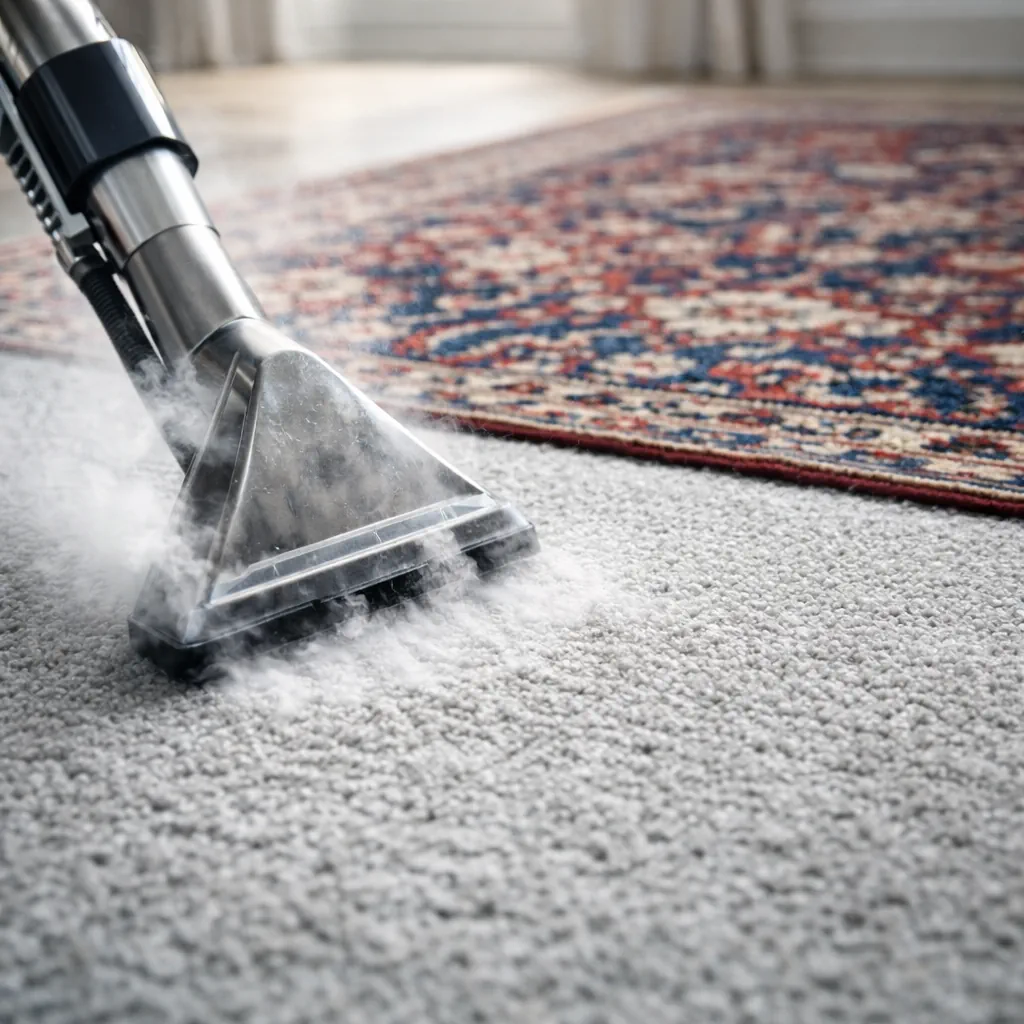
Steam cleaning, also called hot water extraction, injects hot water and cleaning solution into fibres.It then extracts the liquid, along with dirt and debris.
It’s highly effective for:
- Synthetic carpets
- Wall-to-wall flooring
- Heavily trafficked areas
This method relies on high heat, moisture, and pressure to break down dirt. That’s exactly why it works so well for standard carpets—and exactly why it’s dangerous for Persian rugs.
Why Steam Cleaning a Persian Rug Is Risky
Persian rugs are fundamentally different from modern carpets. They are handcrafted using natural wool or silk fibres, often dyed with organic pigments. These materials do not respond well to heat or excessive moisture.
1. Heat Damages Natural Fibres
Steam cleaning uses extremely hot water, sometimes exceeding 100°C. Natural fibres like wool and silk are protein-based, which makes them sensitive to heat.
Exposure to high temperatures can:
- Cause shrinkage and distortion
- Dry out fibres and make them brittle
- Strip natural oils like lanolin from wool
In fact, the heat and pressure from steam cleaning can irreparably damage wool and silk fibres in handmade rugs.
2. Moisture Weakens the Rug’s Structure
Steam cleaning doesn’t just use heat—it introduces a significant amount of moisture deep into the rug’s foundation.
This creates multiple risks:
- Warping or buckling of the rug base
- Mould and mildew development if not dried properly
- Weakening of the hand-knotted structure
Over-saturation is a main cause of long-term damage in Persian rugs. This is especially true when moisture gets trapped under the surface.
3. Dye Bleeding and Colour Loss
Persian rugs are famous for their rich, natural dyes. These dyes are not chemically fixed like synthetic ones, which makes them vulnerable.
Steam cleaning can cause:
- Colours to bleed into each other
- Patterns to blur or fade
- Permanent discolouration
Heat and moisture combined can destabilize traditional dyes, leading to visible and irreversible colour damage.
4. Shrinkage and Distortion
The foundation of many Persian rugs includes cotton warps and wefts. When exposed to heat and water, these materials can shrink unevenly.
The result?
- Rippling or curling edges
- Uneven surface texture
- Permanent shape distortion
This is one of the most common forms of damage seen after improper cleaning.
5. Damage Is Often Permanent
Unlike surface dirt, damage caused by steam cleaning isn’t easily reversible. Once fibres shrink, dyes bleed, or the structure warps, restoration becomes complex—and sometimes impossible.
That’s why many experts explicitly warn against steam cleaning Oriental and Persian rugs altogether.
But Isn’t Steam Cleaning Safe for Wool?
This is where confusion often happens.
Steam cleaning can be safe for some wool carpets, especially machine-made or blended carpets made for modern cleaning.
However, Persian rugs are not comparable to standard wool carpets. They are:
- Hand-knotted rather than machine-made
- Dyed using traditional, often unstable pigments
- Constructed with varying fibre densities and materials
Even if two rugs are both “wool,” their construction and dye methods make a massive difference in how they respond to cleaning.
In short: what works for a modern carpet does not apply to a Persian rug.
What Experts Recommend Instead
If steam cleaning is off the table, what should you do instead?
1. Gentle Surface Cleaning
Routine maintenance is your first line of defence:
- Vacuum with low suction (no beater bar)
- Shake out dust if possible
- Blot spills immediately
This prevents dirt from embedding deep into fibres.
2. Controlled Hand Washing
For deeper cleaning, professionals use a controlled hand-washing process that includes:
- pH-balanced, wool-safe solutions
- Minimal and controlled water usage
- Careful rinsing and extraction
This approach cleans thoroughly without exposing the rug to damaging conditions.
3. Professional Dust Extraction
Before washing, specialists often remove dry soil using advanced dusting equipment. This step alone can eliminate a large portion of embedded dirt without introducing moisture.
4. Specialist Drying Techniques
Drying is just as important as cleaning. Professionals use controlled environments to ensure rugs dry fast and evenly—preventing mould, odours, and fibre damage.
If you want a safe and effective solution, a specialist Persian rug cleaning service is the best option.
When (If Ever) Steam Cleaning Might Be Acceptable
In most cases, steam cleaning is not recommended. However, there are rare exceptions:
- Low-value, machine-made rugs labeled as steam-safe
- Synthetic rugs that mimic Persian designs
Even then, caution is essential. For genuine Persian rugs—especially handmade or antique pieces—steam cleaning should be avoided entirely.
If you’re looking for a method where steam cleaning does make sense, it’s ideal for carpets. Learn more about steam cleaning services designed specifically for modern flooring.
How to Tell If Your Rug Needs Professional Cleaning
Not every rug needs deep cleaning often, but there are clear signs when it’s time:
- Persistent odours
- Visible dullness or embedded dirt
- Stains that don’t respond to gentle cleaning
- Allergy symptoms worsening indoors
Most experts recommend professional cleaning every 1–3 years, depending on usage and environment.
Expert Insight: Why DIY Steam Cleaning Fails
From real-world experience, many rug cleaning professionals spend much of their time repairing damage. This damage is often caused by improper DIY cleaning, especially steam cleaning.
The most common issues they see include:
- Colour bleeding after a single cleaning session
- Shrunken rugs that no longer lie flat
- Fibre breakdown leading to thinning patches
- Persistent damp odours caused by poor drying
These problems often cost far more to fix than the price of proper cleaning in the first place.
Final Verdict
Steam cleaning may be one of the best methods for carpets—but it’s one of the worst choices for Persian rugs.
The combination of heat, moisture, and pressure can damage fibres, distort structure, and ruin colours permanently. Even a single cleaning session can cause visible, lasting harm.
If you want to protect your investment, do gentle care at home. Leave deep cleaning to specialists. They understand the complexity of handmade rugs.
When it comes to Persian rugs, the safest approach is not the fastest or cheapest. It is the one that keeps the rug in good condition for decades.
Frequently Asked Questions
Can steam cleaning ruin a Persian rug?
Yes. It can cause fibre damage, dye bleeding, shrinkage, and structural distortion—often permanently.
Why is steam cleaning bad for Oriental rugs?
Because they are made from natural fibres and dyes that react poorly to heat and moisture, leading to damage.
Is there any safe way to deep clean a Persian rug at home?
Only light cleaning is safe at home. Deep cleaning should be handled by professionals using controlled methods.
How often should a Persian rug be professionally cleaned?
Typically every 1–3 years, depending on foot traffic, pets, and environmental factors.
What is the best method to clean a Persian rug?
Professional hand washing with controlled moisture and specialised solutions is considered the safest and most effective method.
Can I use a steam cleaner on a synthetic rug that looks Persian?
Possibly, if the manufacturer allows it. But always check care labels before using any steam cleaning equipment.