Table of Contents
Tea stains seem harmless at first, but they can quickly become one of the most stubborn marks to remove from clothing. Black tea, green tea, herbal blends, and chai all contain tannins. These natural compounds cling to fabric fibres. They can leave yellow, brown, or orange stains.
The good news is that most tea stains can be removed successfully if you use the right method and avoid a few common mistakes.
Whether you spilled tea on a white shirt five minutes ago, or found an old dried stain after laundry day, this guide helps. It explains how to remove tea stains from clothes safely and effectively, without damaging the fabric.
Spilled tea on the floor instead? Read our carpet tea stain removal guide.
Why Tea Stains Are So Difficult to Remove
Tea contains tannins, which are plant-based compounds also found in coffee, wine, and some fruits. Tannins bond easily with fabric fibers, especially cotton, linen, wool, and light-colored clothing.
Once heat is introduced, the stain can set permanently into the fabric. That’s why one of the biggest mistakes people make is rinsing tea stains with hot water. Another mistake is putting stained clothes straight into the dryer.
Fresh stains are easier to remove than dried stains. Older tea marks can often be removed with cold water, mild detergent, and stain-lifting ingredients.
Act Fast: Fresh vs. Dried Tea Stains
The timing matters more than most people realize.
Fresh Tea Stains
Fresh stains are still sitting near the surface of the fabric. If you act quickly, there’s a high chance the stain will come out completely with simple household products.
The key steps are:
- Blot immediately
- Use cold water
- Avoid rubbing
- Treat before washing
Dried Tea Stains
Dried stains are more challenging because the tannins have already bonded deeper into the fibers. Heat from a dryer can make this even worse.
Older stains often need:
- A longer soaking period
- Vinegar treatment
- Baking soda paste
- Multiple treatments
Even tough tea stains that have sat for days can often come out without harsh chemicals. Stay patient and avoid too much heat.
First Things First: What You Should Never Do
Before treating the stain, avoid these common errors that make tea stains harder to remove.
Don’t Use Hot Water Immediately
Hot water can permanently set tannin stains into the fabric. Cold water is almost always the safest first step for tea stains. Laundry experts consistently recommend cold water for stain pretreatment because heat can lock stains deeper into fibers.
Don’t Rub the Fabric Aggressively
Rubbing pushes the stain deeper into the material and can damage delicate fibers. Instead, blot gently using a clean cloth or paper towel.
Don’t Put the Clothing in the Dryer
Dryer heat can make remaining stain residue permanent. Always inspect the clothing after washing and air dry until you’re certain the stain is gone.
Don’t Use Chlorine Bleach on Colored Fabrics
Bleach may discolor fabrics or weaken fibers. For colored clothing, gentler stain-removal methods are much safer.
Method 1: Cold Water and Dish Soap for Fresh Tea Stains
If the spill just happened, this method is usually the fastest and safest solution.
What You Need
- Cold water
- Mild liquid dish soap
- Clean white cloth or sponge
- Soft toothbrush (optional)
Step-by-Step Instructions
1. Blot the Excess Tea
Use a dry cloth or paper towel to absorb as much liquid as possible.
Do not scrub.
Press gently to lift moisture from the fabric.
2. Rinse From the Back of the Stain
Turn the garment inside out and run cold water through the back of the stain. This helps push the tea particles out instead of driving them deeper into the fibers.
3. Apply Dish Soap
Add a small amount of liquid dish soap directly onto the stain.
Dish soap works well because it breaks down tannins and oils without being too harsh on most fabrics.
4. Let It Sit
Leave the soap on the stain for about 10 minutes.
5. Gently Work the Area
Use your fingers or a soft toothbrush to work the soap lightly into the stain.
6. Rinse and Check
Rinse thoroughly with cold water.
If the stain remains, repeat the process before washing.
7. Wash Normally
Wash according to the care label using cold or lukewarm water.
Air dry first to confirm the stain is completely removed.
Method 2: Vinegar and Baking Soda Paste for Dried Tea Stains
Older tea stains need stronger treatment, especially if they have already dried or gone through the dryer.
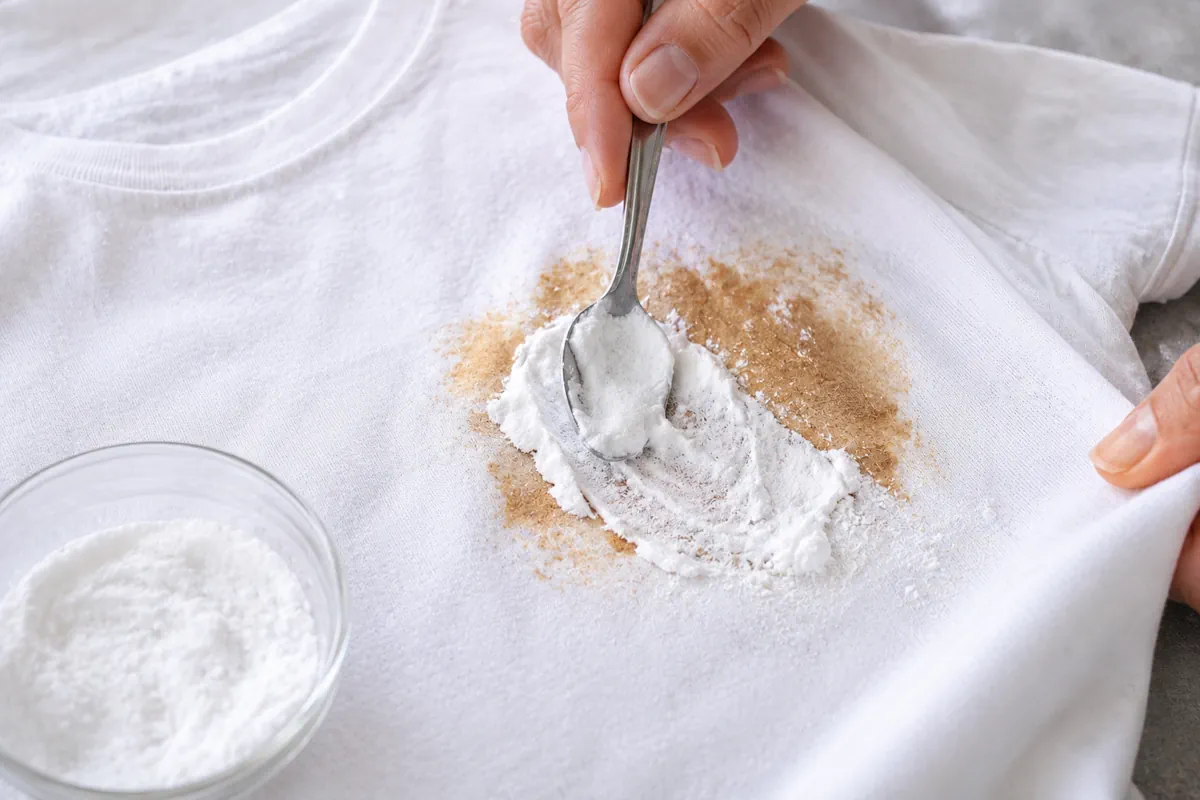
White vinegar and baking soda work well together. Vinegar breaks down tannins. Baking soda gently lifts stains from the fibres.
What You Need
- White vinegar
- Baking soda
- Cold water
- Small bowl
- Soft toothbrush
How to Make the Paste
Mix:
- 2 tablespoons baking soda
- 1 tablespoon white vinegar
- Small amount of water
The texture should resemble a thick paste.
Step-by-Step Instructions
1. Dampen the Stained Area
Use cold water to lightly wet the fabric.
2. Apply the Paste
Spread the paste directly over the tea stain.
Cover the entire affected area evenly.
3. Let It Sit
Allow the mixture to sit for 20–30 minutes.
For stubborn stains, you can leave it slightly longer.
4. Gently Scrub
Use a soft toothbrush to work the paste into the fabric gently.
Avoid aggressive scrubbing.
5. Rinse Thoroughly
Flush the area with cold water.
6. Wash the Garment
Wash normally according to the care label instructions.
7. Air Dry and Inspect
If the stain is still faintly visible, repeat the process before using heat.
How to Remove Tea Stains From White Clothes
White fabrics show tea stains more clearly, but they are often easier to restore because you can use stronger whitening methods safely.
After pretreating with dish soap or vinegar:
- Soak the garment in oxygen-based stain remover
- Wash using a quality laundry detergent
- Dry naturally in sunlight if possible
Sunlight can naturally help fade residual staining on white fabrics.
Avoid overusing chlorine bleach because it can weaken fibers over time and may even leave yellow discoloration.
How to Remove Tea Stains From Delicate Fabrics
Silk, wool, cashmere, and other delicate materials require extra care.
For delicate clothing:
- Use cold water only
- Avoid baking soda scrubbing
- Use mild detergent
- Test any cleaning solution on a hidden area first
If the item is labeled “dry clean only,” professional cleaning is usually the safest option.
Does Tea Stain Permanently?
Not usually.
Most tea stains can be removed completely if treated correctly. However, stains become harder to remove when:
- Heat has been applied
- The stain has been sitting for a long time
- The fabric is delicate or absorbent
- The stain was rubbed aggressively
Even set-in tea stains often improve significantly with repeated treatment.
Natural Remedies That Actually Work
Many people search for home remedies online, but not all stain hacks are safe.
These methods are generally effective and fabric-friendly:
White Vinegar
Excellent for breaking down tannins.
Baking Soda
Useful for lifting older discoloration.
Mild Dish Soap
Safe and highly effective for fresh spills.
Cold Water
One of the most important parts of stain removal.
Experts consistently recommend cold water first because heat can worsen many stains and make them harder to remove.
Methods You Should Avoid
Some popular internet stain-removal hacks can actually damage clothing.
Avoid:
- Boiling water directly on fabric
- Hair spray treatments
- Excessive bleach
- Aggressive brushing
- Mixing random chemicals together
Simple methods are usually safer and more effective.
When Professional Cleaning Makes Sense
Sometimes DIY stain removal is not enough.
Professional cleaning may be the best option if:
- The fabric is expensive or delicate
- The tea contained milk or sugar
- The stain has already been heat-set
- The garment is vintage or dry-clean-only
Professional cleaners use specialized stain-removal products and fabric-safe extraction methods that can restore clothing without causing damage.
At 4 Seasons Carpet Clean, stain removal expertise goes beyond carpets and upholstery. Our advanced cleaning methods safely tackle stubborn tannin-based stains on many materials.
Preventing Tea Stains in the Future
A few small habits can save you a lot of frustration later.
Use Spill-Proof Travel Mugs
Especially useful for commuting and office environments.
Treat Stains Immediately
Even rinsing with cold water quickly can make a major difference.
Avoid Letting Stained Clothes Sit
The longer tea remains in the fibers, the more difficult removal becomes.
Keep a Stain Kit Nearby
A small bottle of dish soap and a microfiber cloth can prevent permanent staining.
Final Thoughts
Tea stains may look intimidating, but they are usually removable with the right approach. The most important rule is to act quickly and avoid heat until the stain is completely gone.
For fresh spills, cold water and dish soap are often enough to restore the fabric fully. For older stains, vinegar and baking soda can break down stubborn tannins safely without harsh chemicals.
Patience matters. Many stains that seem permanent simply need the correct treatment and a second attempt.
Before throwing away stained clothing or replacing damaged fabrics, try these proven methods carefully. In most cases, your clothes can still be saved.
FAQ
What removes tea stains from clothes best?
Cold water, dish soap, white vinegar, and baking soda are among the most effective methods for removing tea stains from clothing.
Can old tea stains be removed?
Yes. You can often remove dried tea stains using vinegar and a baking soda paste. Wash gently and repeat the treatment if needed.
Why does hot water make tea stains worse?
Tea contains tannins that bond more strongly with fabric when exposed to heat. Hot water can permanently set the stain into the fibers.
Does baking soda remove tea stains?
Yes. Baking soda can help lift dried tea stains, especially when combined with white vinegar.
Can tea stains come out after drying?
Sometimes. Heat from the dryer makes stains harder to remove. Even so, repeated stain treatment can still reduce or remove the stain in many cases.
Is bleach safe for removing tea stains?
Bleach should be used cautiously. Oxygen-based bleach is generally safer than chlorine bleach, especially for delicate or colored fabrics.
Should I wash tea-stained clothes immediately?
Yes, but pretreat the stain first. Washing without pretreatment may not fully remove the stain, especially if warm water is used.