Table of Contents
Not all rugs are created equal—and more importantly, not all rugs should be cleaned the same way. One of the biggest and most costly mistakes homeowners make is treating silk and wool rugs as if they need the same care.
They don’t.
If you use the wrong cleaning method, you risk fibre damage, colour bleeding, shrinkage, or even permanent loss of value. Understanding the differences between silk and wool rugs is not just helpful. It is essential if you want to protect your investment.
This guide explains how silk and wool rugs differ in cleaning. It covers safe methods for each rug. It also shows how to avoid costly mistakes.
Why Material Matters More Than You Think
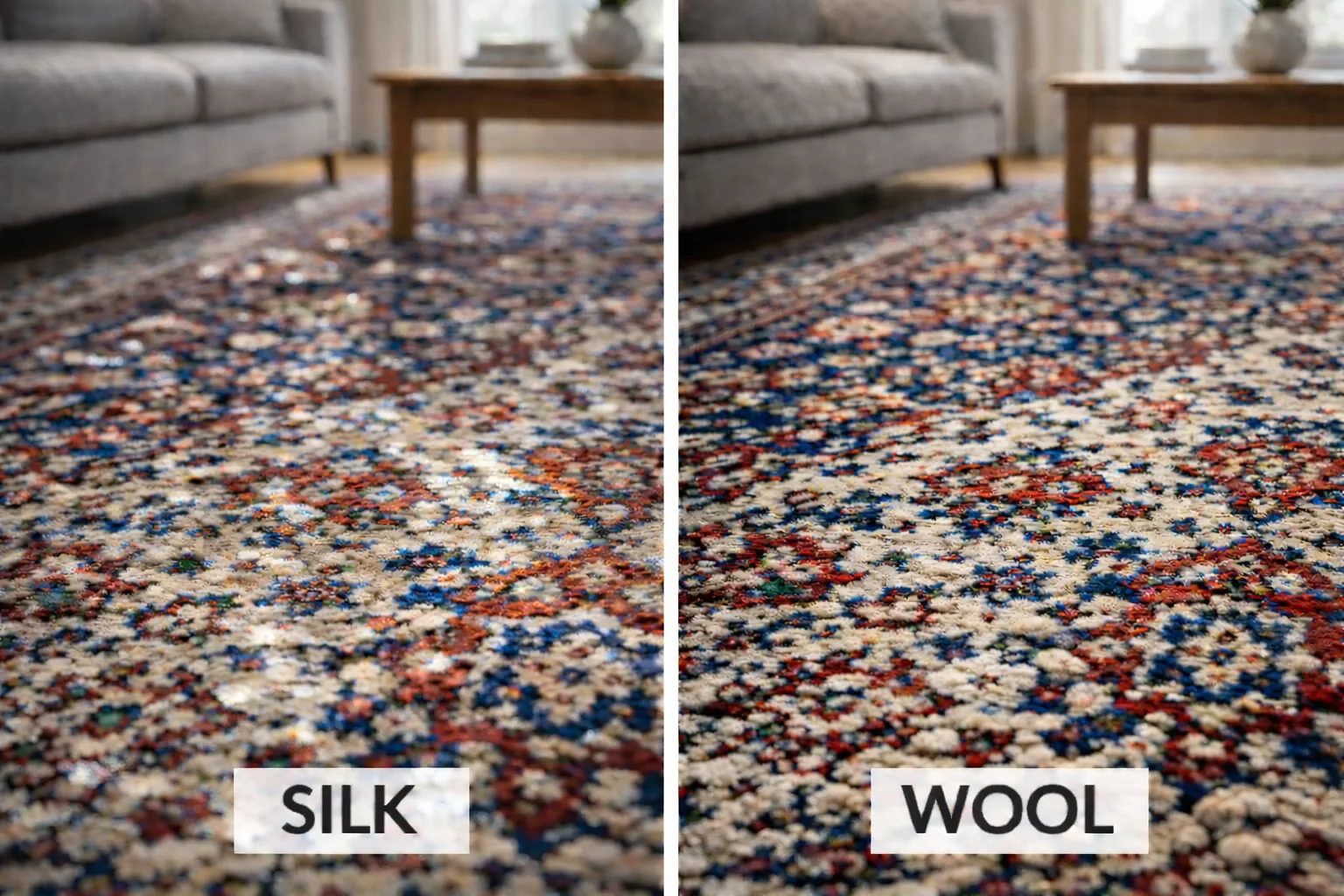
Both silk and wool are natural fibres commonly used in Persian and Oriental rugs. But their structure, durability, and reaction to moisture and cleaning agents are completely different.
Wool is resilient, elastic, and naturally dirt-resistant. Silk, on the other hand, is fine, delicate, and far more sensitive to handling and cleaning.
This fundamental difference is why using a one-size-fits-all cleaning approach can quickly lead to damage. Professionals always tailor their cleaning method based on fibre type—and for good reason.
Understanding Wool Rugs: Durable but Not Indestructible
Wool is the most common material used in Persian rugs—and for good reason. It’s strong, flexible, and naturally resistant to dirt thanks to lanolin, a protective oil found in wool fibres.
Key Characteristics of Wool Rugs
- Highly durable and suitable for high-traffic areas
- Elastic fibres that recover well from pressure
- Naturally resistant to dirt and stains
- More tolerant of moisture compared to silk
Wool rugs can last decades—even generations—if maintained properly. They’re also more forgiving when it comes to cleaning mistakes, but that doesn’t mean they’re risk-free.
How Wool Rugs Should Be Cleaned
Wool rugs can handle gentle water-based cleaning, but it must still be controlled and careful.
- Use mild, wool-safe detergents
- Apply lukewarm water—not hot
- Allow gentle agitation (never aggressive scrubbing)
- Dry thoroughly to prevent mould
Because wool fibres are flexible, they can tolerate light agitation and controlled washing processes without immediate damage.
However, excessive cleaning or harsh chemicals can strip the natural oils, leaving the rug more vulnerable over time.
Understanding Silk Rugs: Luxurious but Extremely Delicate
Silk rugs sit at the opposite end of the spectrum. They are prized for their softness, sheen, and intricate detailing—but that beauty comes with fragility.
Key Characteristics of Silk Rugs
- Extremely fine and delicate fibres
- Highly sensitive to moisture and friction
- Often used in low-traffic or decorative areas
- Vulnerable to staining and dye bleeding
Silk rugs are often used as statement pieces rather than everyday flooring. In fact, they’re commonly placed in low-traffic areas precisely because they don’t handle wear well.
How Silk Rugs Should Be Cleaned
Cleaning silk rugs requires a completely different approach:
- Avoid water saturation entirely
- Use minimal moisture techniques
- No scrubbing or friction
- Use specialised, fibre-safe cleaning solutions
Even small amounts of water or improper cleaning can cause permanent fibre damage or colour distortion. Silk cannot tolerate the same cleaning intensity as wool.
This is why most silk rugs should never be cleaned using DIY methods beyond light surface care.
Silk vs Wool Rugs: Key Cleaning Differences
To fully understand the contrast, here’s how silk and wool compare when it comes to cleaning:
1. Durability and Cleaning Tolerance
Wool is significantly more durable. It can handle light agitation and controlled washing.
Silk is fragile. Even minor friction or mishandling can damage the fibres.
2. Reaction to Water
Wool tolerates moisture in controlled amounts. It can be washed carefully without immediate harm.
Silk reacts poorly to water. Excess moisture can weaken fibres, distort structure, and cause dye bleeding.
3. Sensitivity to Chemicals
Wool can handle mild detergents designed for natural fibres.
Silk requires specialised solutions. Standard cleaning products—even mild ones—can damage it.
4. Cleaning Methods Used
Wool rugs:
- Gentle hand washing
- Low-pressure cleaning
- Controlled water extraction
Silk rugs:
- Dry or low-moisture cleaning
- Specialised hand treatment
- Precision cleaning techniques only
5. Risk Level During Cleaning
Wool rugs have a moderate risk if cleaned improperly.
Silk rugs have a high risk—even small mistakes can cause irreversible damage.
Why DIY Cleaning Is Riskier for Silk Than Wool
Many homeowners attempt DIY cleaning without realising how different these materials are.
With wool rugs, minor mistakes may not cause immediate damage. With silk, the margin for error is extremely small.
Common DIY risks include:
- Using too much water
- Applying the wrong cleaning solution
- Scrubbing stains
- Improper drying
For silk rugs, any of these can lead to permanent fibre damage or colour loss. That’s why professionals strongly recommend specialised care for delicate materials.
Real-World Use: Choosing Cleaning Frequency by Material
Cleaning frequency also differs between silk and wool rugs.
Wool Rugs
- Vacuum weekly
- Spot clean as needed
- Deep clean every 12–18 months
Silk Rugs
- Light vacuuming only (low suction)
- Minimal spot cleaning
- Professional cleaning only when necessary
Because silk rugs are often placed in low-traffic areas, they do not need frequent cleaning.But when they do, they must be cleaned carefully.
Professional Cleaning: Why It Matters for Both
Regardless of material, professional cleaning is often the safest option—especially for valuable or handmade rugs.
Professionals:
- Identify fibre type before cleaning
- Use appropriate methods for each material
- Control moisture, temperature, and drying
- Protect dyes and structure
This is particularly critical for silk rugs, where improper handling can cause irreversible damage.
For high-value pieces, using a specialist cleaning service ensures the rug is treated safely and correctly.
Common Mistakes to Avoid
Whether you have a silk or wool rug, avoid these common cleaning errors:
- Using steam cleaning on delicate rugs
- Over-wetting the fibres
- Using harsh chemicals or bleach
- Scrubbing stains aggressively
- Drying in direct sunlight
These mistakes are especially damaging for silk but can also shorten the lifespan of wool rugs.
Expert Insight: Why Fibre Knowledge Changes Everything
In professional rug cleaning, the first step is always fibre identification. That single step determines everything that follows—from cleaning solution to drying method.
Wool allows for a more flexible approach, while silk demands precision and restraint. Understanding this difference is what separates safe cleaning from costly damage.
It’s not just about cleaning—it’s about preservation.
Final Thoughts
When it comes to silk vs wool rugs, the cleaning differences are not minor—they are fundamental.
Wool rugs are durable, forgiving, and capable of handling controlled cleaning methods. Silk rugs are delicate, sensitive, and require specialist care.
If you remember one thing, it’s this: treat every rug based on its material, not its appearance.
That simple rule can save you from expensive damage and help your rug maintain its beauty, structure, and value for years to come.
Frequently Asked Questions
Can you clean silk and wool rugs the same way?
No. Wool can handle gentle washing, while silk requires low-moisture, specialised cleaning methods.
Is wool easier to clean than silk?
Yes. Wool is more durable and forgiving, making it easier to maintain and clean safely.
Can water damage a silk rug?
Yes. Excess moisture can weaken fibres, cause dye bleeding, and permanently damage silk rugs.
Are silk rugs suitable for high-traffic areas?
No. Silk rugs are best used in low-traffic areas due to their delicate nature.
Do wool rugs need professional cleaning?
Yes. While they can handle light DIY care, deep cleaning should be done professionally to protect fibres and dyes.
What is the safest way to clean a silk rug?
Professional cleaning using specialised, low-moisture techniques is the safest and most effective method.