
Pressure washing in London can refresh suitable outdoor hard surfaces, but the right method starts with the material, condition and drainage. Send photographs of the area you want cleaned and tell us whether it is a patio, path or driveway. We will assess the surface before suggesting a scope or quote.
A sound concrete patio and worn historic stone should not receive the same treatment. The name of the service describes equipment that may be used on suitable surfaces; it does not mean maximum pressure everywhere. We will discuss the surface and limitations before booking.
Before asking for a quote, photograph the whole area, joints, edges, drains and any cracked or loose section. These details matter more than a rough square-metre estimate alone.
Which outdoor areas can be assessed?
Use these examples to describe your enquiry. We will confirm suitability after reviewing the particular surface, not from its label alone.
- Patios and paved paths: ordinary surface dirt, loose organic growth and weathering on sound paving may be suitable for a controlled clean.
- Driveways: the paving type, joint material, drainage and any oil marks change the method and expected result.
- Courtyards and shared entrances: pedestrian access and runoff need planning, especially while surfaces are wet.
- Other exterior surfaces: send material details and photos first. Brickwork, painted areas, timber and fragile finishes may require a different specialist method.
For indoor flooring, see our carpet cleaning service; pressure washing is an outdoor hard-surface enquiry.
Why surface inspection comes before washing
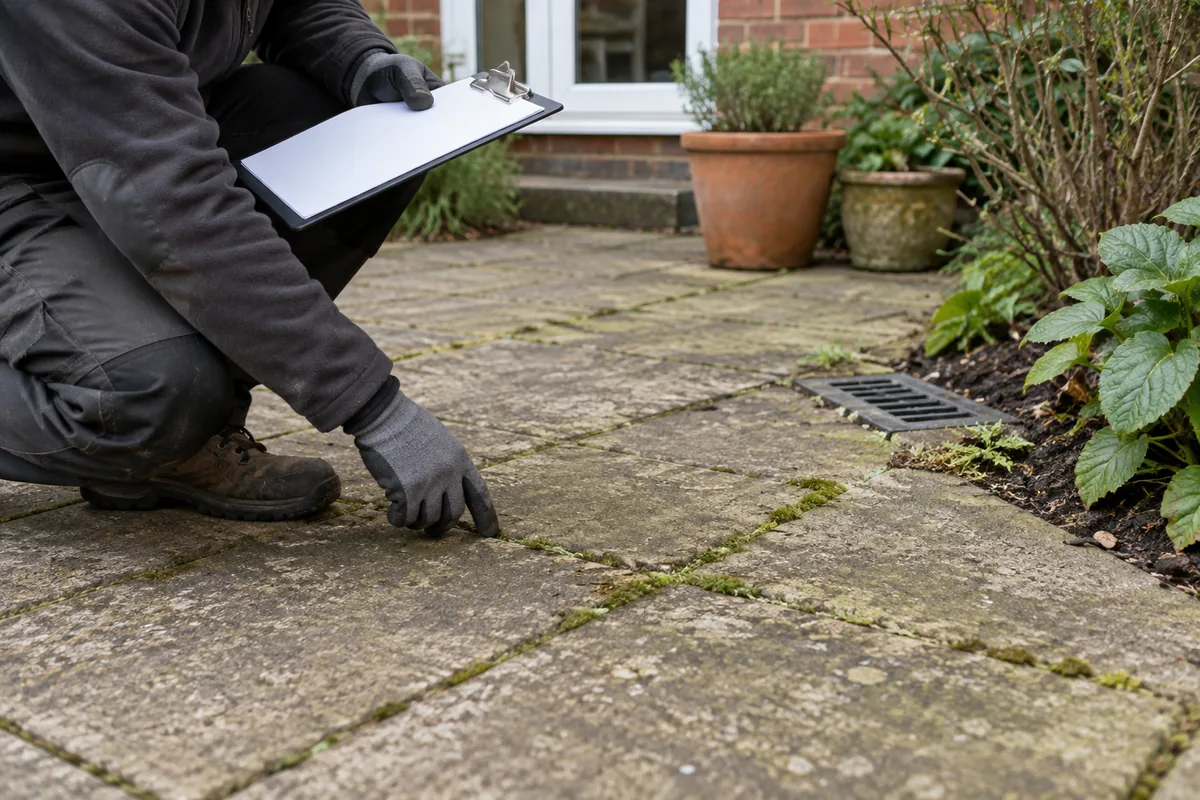
Pressure can lift dirt and also disturb weak joints, coatings or loose paving. Water must drain without entering a building, washing soil into a neighbour’s space or leaving a slippery route for people. We ask about cracks, previous sealants, nearby planting and electrical fittings before we choose an approach.
Historic England research on cleaning masonry warns that overzealous high-pressure jets can roughen and damage historic stone and brick. For listed buildings, heritage paving, soft stone or uncertain finishes, request a specialist assessment rather than assuming a pressure clean is appropriate.
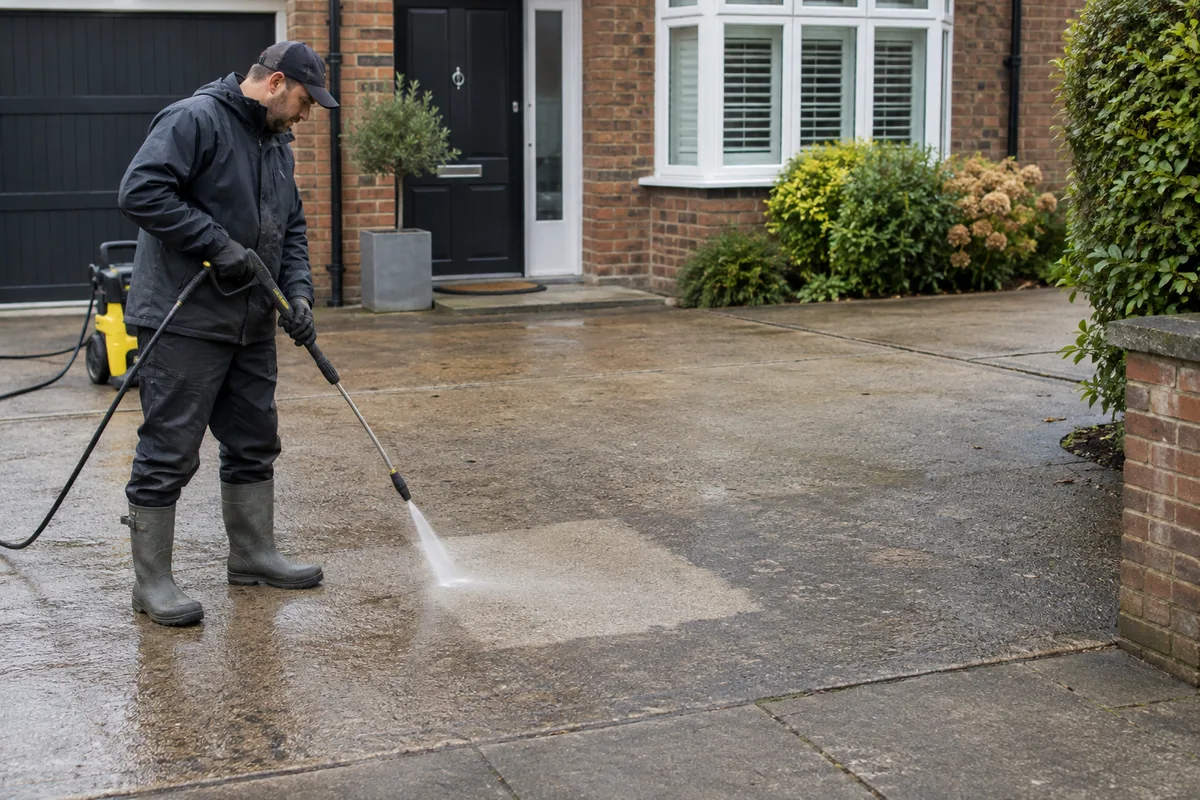
HSE guidance on pressure-cleaner risks also highlights hazards from high-pressure jets and electricity. A site plan should account for people, power, equipment and runoff. The photos here illustrate possible outdoor work; they are not evidence that a pictured surface was cleaned by our team.
How a quote is put together
The main inputs are surface type and condition, area size, access to water and power if needed, drainage, obstacles, level of build-up and any specialist treatment requested. If a stain is permanent or the paving is damaged, cleaning may improve appearance without restoring the original colour. A written scope should say what is included and whether a small test area is sensible.
- Send your postcode and approximate dimensions, or clear wide photos with a familiar size reference.
- Show close-ups of cracks, loose joints, oil marks, flaking sealant and drains.
- Explain where runoff can go and whether neighbours share the space.
- Tell us about plants, outdoor sockets, furniture and times when people need the path.
Before and after the visit
Agree how furniture, planters and vehicles will be moved. Keep children, pets and other users away from the working area and allow the surface to dry before normal use. If paving was sealed or is due for re-sanding, ask whether that work is part of the quote; do not assume it follows a wash automatically.
A business or managing agent can ask for timing around entrances and public access. If you also manage indoor floors, our commercial carpet cleaning service is a separate service with its own methods and scope.
What results should you expect?
Visible dirt and loose growth may lift from suitable paving, but deep oil staining, efflorescence, worn stone, colour loss and failed sealant can remain. No cleaner can guarantee a newly laid finish on weathered material. We would rather identify a likely limitation from photos or a site check than promise that every mark will disappear.
Frequently asked questions
Is pressure washing safe for every patio?
No. Material, condition, joints and coatings affect suitability. Historic or soft stone may need a specialist low-impact approach instead of high-pressure jetting.
Can you clean a driveway?
Send photos showing the paving, its joints, stains and access. We will assess whether cleaning is suitable and explain what the quote includes.
Will pressure washing remove oil stains completely?
Not necessarily. Oil can penetrate porous paving; outcome depends on material and stain history. Ask for a realistic assessment before work begins.
Do you re-sand block paving or reseal surfaces?
Do not assume these are included. Ask for any re-sanding or sealing requirement to be stated separately in the written scope.
How do you protect nearby plants and drains?
Flag planting, drains and water routes in your enquiry. Those details should be considered in the method and site plan before cleaning starts.
Request an exterior-cleaning assessment
Send area photos, postcode and any surface concerns through our contact page. Learn about 4 Seasons Carpet Clean and ask us to confirm what work is suitable for your site.
HSE and Historic England guidance checked on 27 September 2026.