After routine cleaning, ask how much water the machine recovered and when the cleaner expects this particular room to be usable. Keep the pile uncovered and air moving across it. If water came from a leak, flooding or sewage, skip the routine drying steps and seek water-damage advice.
Remove excess moisture first
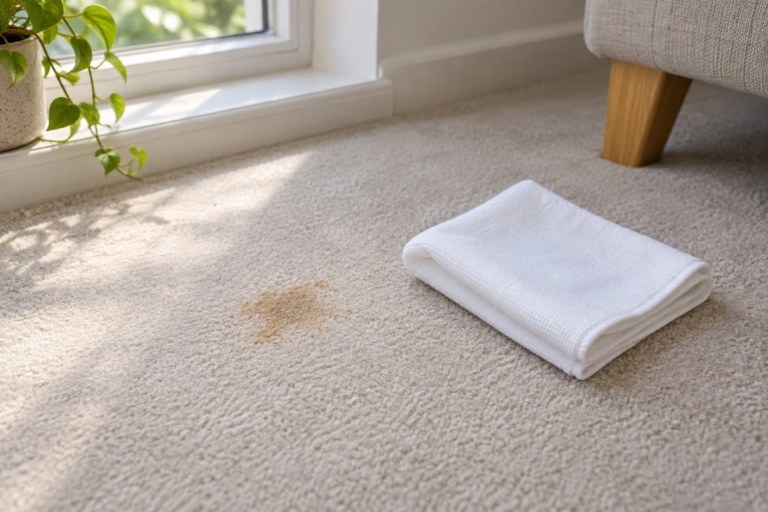
If you are using a hire extractor, finish with the recovery-only passes specified in its manual. If a technician cleaned the room and a patch squelches or appears saturated, call them back for advice. A domestic dry vacuum is unsuitable for water. For a small clean-water spot, press with a dry white towel and lift it as soon as it becomes wet.
Air movement and humidity
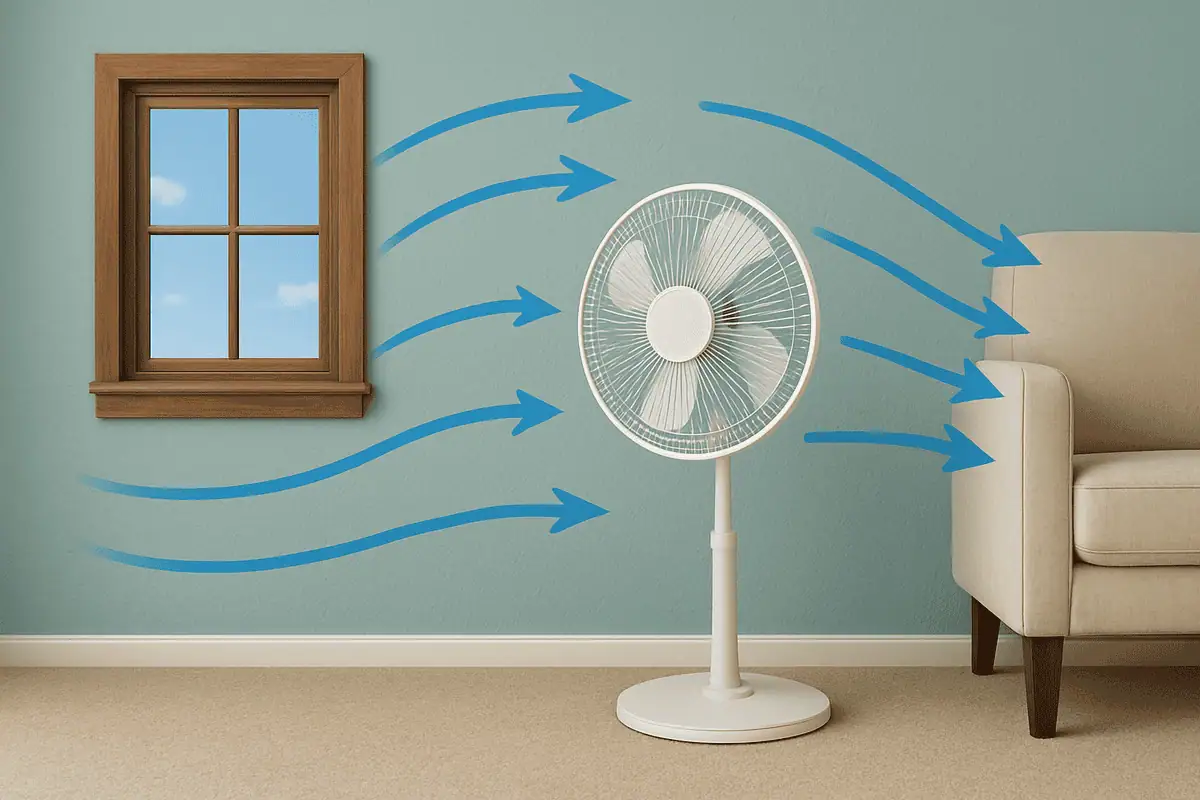
Position a fan on a stable, dry surface so air moves across the pile. Keep cables out of walkways, especially at the threshold where damp feet can slip on hard flooring. Open windows when the outside air is drier and it is safe to do so. Damp air on a rainy day can give moisture nowhere to go.
A dehumidifier takes moisture out of the room air. Follow its instructions about keeping windows closed, spacing around the unit, tank emptying and drainage. Use normal comfortable room heat. A radiator aimed at one patch, a hairdryer or an iron can overheat fibres while the backing stays wet.
Where drying takes longest
Check edges, deep pile, shaded corners and the area beside heavy furniture. Extraction, low-moisture cleaning and a local spot treatment leave different amounts of liquid behind. Thick underlay, a cool basement or a room with limited ventilation can extend drying. Ask for a time estimate tied to the room and cleaning method. For a lower-ground flat, see how to plan a clean with limited ventilation.

Keep protective tabs or blocks under furniture until the cleaner says to remove them. Delay replacing rugs and storage boxes. If the top seems dry but a towel pressed onto the densest part lifts moisture, leave the area clear. A dry towel at the surface cannot confirm dry underlay. Unexpectedly slow progress or a new musty smell warrants a moisture assessment.
Drying a loose rug
Check the rug label, backing, fringes and the floor beneath. Support a washable rug as instructed and allow air to reach both sides where the construction permits. Avoid hanging a heavy wet rug by one edge or folding it while damp. For a delicate or glued rug that accidentally became saturated, contact a rug specialist before moving it.
When water came from a leak or flood
Standing water or a soaked underlay needs a different response from an ordinary clean. Avoid affected sockets and appliances, and keep people and pets away from suspect water. Do not direct fans at visible mould or contaminated material. Contact your insurer and a flood-restoration specialist about assessment, removal and drying. Read UK government flood recovery guidance or see what to do after a carpet floods.
Common questions
How long after cleaning can I walk on the carpet?
Follow the technician’s estimate and keep traffic low until the treated area is dry. Be especially careful at transitions to hard flooring.
Should I open a window while the dehumidifier runs?
Follow the unit’s directions. Many units work in an enclosed room, while ventilation alone relies on exchanging damp air for drier air.
Why does one corner stay damp?
Check for weaker airflow, thicker pile, furniture or an ongoing leak. Call the cleaner if the corner stays wet beyond the expected drying period.
When can furniture go back?
Wait until the carpet is dry to the cleaner’s satisfaction and leave any protective blocks or tabs in place for the advised period.