Table of Contents
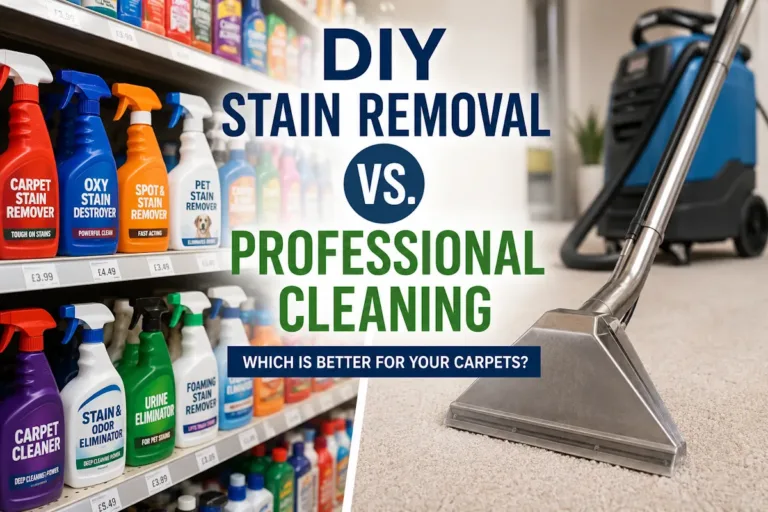
When your rug starts looking dull, stained, or tired, the question comes up fast: should you clean it yourself or hire a professional?
At first glance, DIY cleaning seems like the obvious choice—cheaper, quicker, and more convenient. But when it comes to real results, long-term protection, and fibre safety, the answer isn’t that simple.
So what actually works?
The truth is, both DIY and professional rug cleaning have their place—but they are not interchangeable. Understanding the difference is what prevents damage, wasted time, and unnecessary costs.
This guide breaks down exactly how each method works, where each one succeeds (and fails), and how to choose the right approach for your specific situation.
Quick Answer: DIY vs Professional Rug Cleaning
If you want a straight answer:
- DIY cleaning: works for light maintenance and surface dirt
- Professional cleaning: delivers deep cleaning, stain removal, and long-term protection
Experts consistently agree that while DIY methods can help maintain appearance, professional cleaning provides deeper, longer-lasting results due to advanced equipment and techniques.
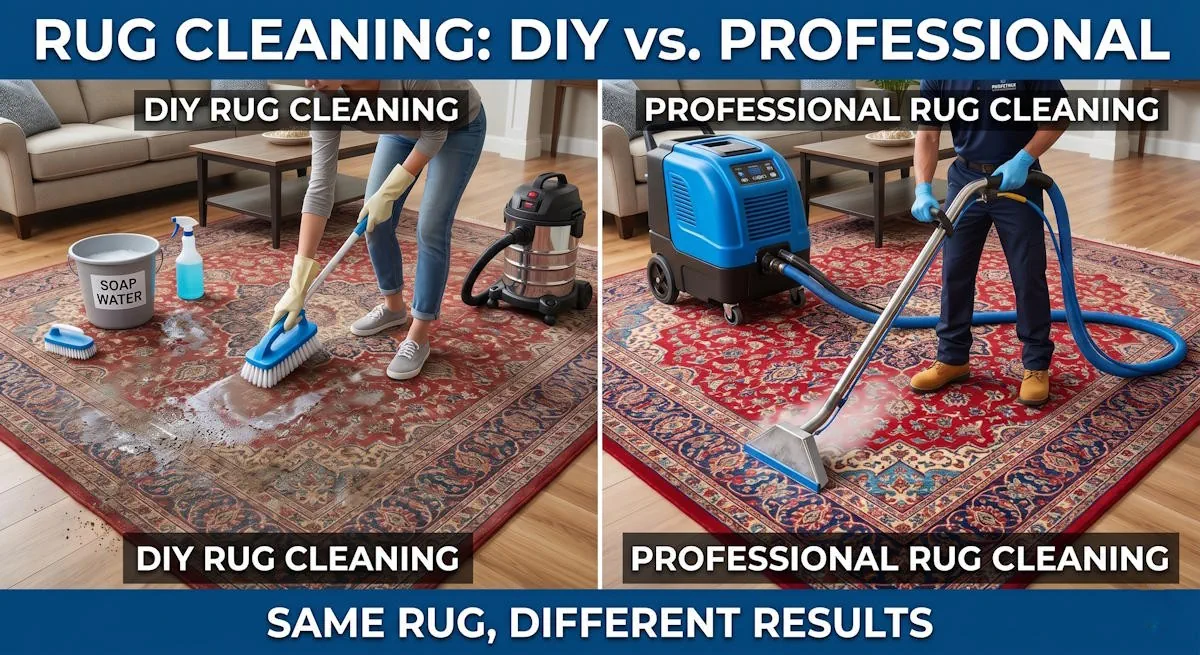
What DIY Rug Cleaning Actually Does (And Doesn’t Do)
DIY cleaning includes everything from vacuuming and spot cleaning to renting machines or using home remedies like vinegar and baking soda.
Where DIY Cleaning Works Well
DIY methods are effective for everyday maintenance:
- Removing surface dust and dirt
- Handling fresh spills quickly
- Keeping rugs looking presentable between deep cleans
For small, low-value rugs or synthetic materials, DIY cleaning can be a practical and cost-effective solution.
Where DIY Cleaning Falls Short
The problem is depth.
Most home cleaning methods—and even rental machines—lack the power to extract embedded dirt, bacteria, and allergens. They often clean the surface while leaving contamination underneath.
Common limitations include:
- Weak suction and extraction
- Limited ability to remove deep stains and odours
- Residue left behind that attracts more dirt
In many cases, DIY cleaning improves how a rug looks—but not how clean it actually is.
The Hidden Risks of DIY Rug Cleaning
DIY cleaning isn’t just limited—it can also be risky if done incorrectly.
1. Over-Wetting the Rug
This is one of the most common mistakes. Home machines often apply more water than they can extract, leaving rugs damp.
That can lead to:
- Mould and mildew growth
- Persistent musty odours
- Damage to the rug backing
Over-wetting is a major cause of long-term rug damage in DIY cleaning scenarios.
2. Using the Wrong Cleaning Products
Different fibres require different pH levels and cleaning agents. Using the wrong product can:
- Fade colours
- Damage fibres
- Leave sticky residue
This is especially risky for wool, silk, or Persian rugs.
3. Scrubbing and Fibre Damage
Aggressive scrubbing may remove a stain—but it can also damage the rug’s structure and texture.
4. Incomplete Cleaning
Without proper rinsing and extraction, dirt and detergent remain in the rug, leading to faster re-soiling.
In short, DIY cleaning can sometimes create the illusion of cleanliness while actually shortening the lifespan of your rug.
What Professional Rug Cleaning Does Differently
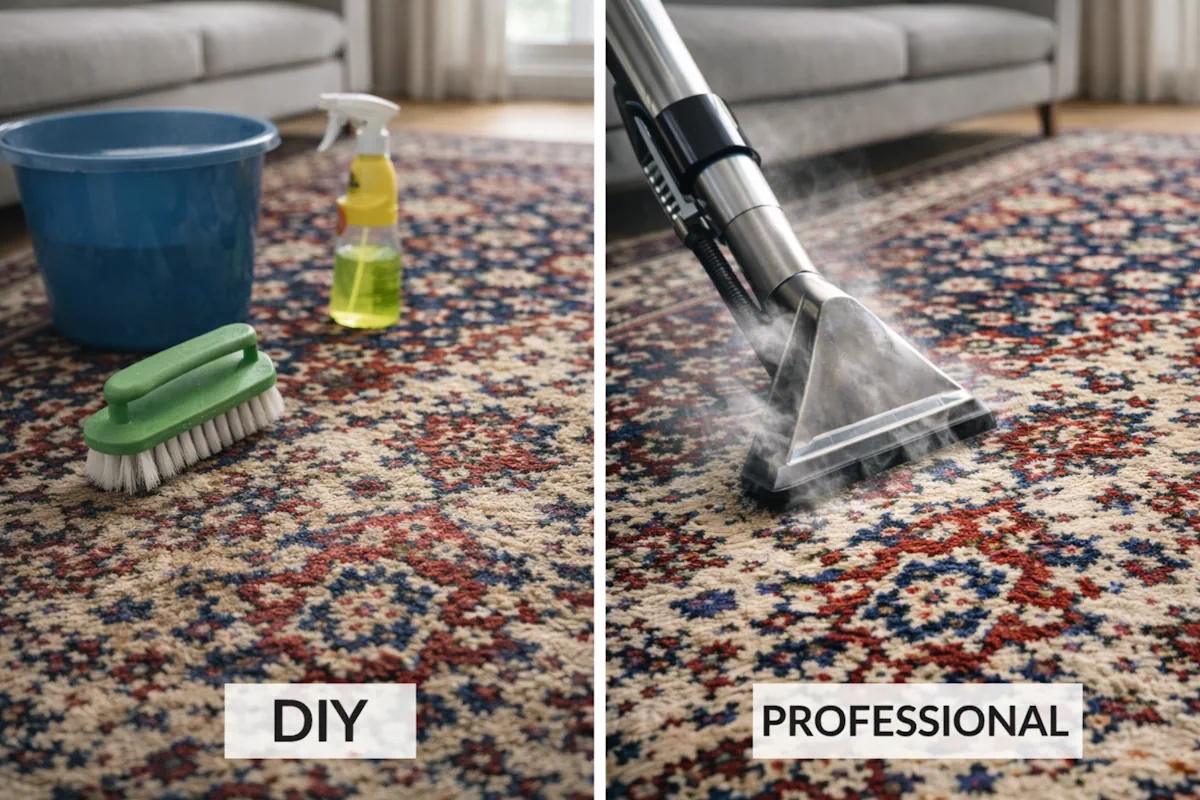
Professional cleaning isn’t just “stronger cleaning”—it’s a completely different process.
1. Deep Soil Removal
Professionals remove dry soil before washing. This step alone eliminates a significant portion of embedded dirt.
2. Fibre-Specific Cleaning Methods
Every rug is treated based on its material:
- Wool requires controlled moisture and gentle detergents
- Silk requires low-moisture, delicate handling
- Synthetic rugs can handle more intensive cleaning
This tailored approach significantly reduces the risk of damage.
3. Advanced Equipment
Professional systems use high-powered extraction and specialised tools that reach deep into fibres.
This allows them to:
- Remove deep dirt and allergens
- Extract moisture effectively
- Achieve faster drying times
These capabilities are far beyond what DIY machines can deliver.
4. Proper Rinsing and Drying
One of the biggest advantages is complete rinsing and controlled drying—two steps often overlooked in DIY cleaning.
This prevents:
- Residue buildup
- Odours
- Mould growth
Professional vs DIY Rug Cleaning: Side-by-Side Comparison
Here’s how they truly compare in real-world performance:
Cleaning Depth
DIY: Surface-level cleaning
Professional: Deep fibre penetration and extraction
Stain and Odour Removal
DIY: Limited effectiveness
Professional: Removes stubborn stains and embedded odours
Risk of Damage
DIY: High if done incorrectly
Professional: Low when handled by trained technicians
Cost
DIY: Lower upfront cost
Professional: Higher upfront cost, better long-term value
Time and Effort
DIY: Time-consuming and labour-intensive
Professional: Fast and hands-off
While DIY is cheaper initially, professional cleaning often extends the life of your rug—making it more cost-effective over time.
When DIY Rug Cleaning Is the Right Choice
DIY cleaning isn’t useless—it just needs to be used in the right context.
It’s a good option when:
- The rug is small and lightweight
- The material is synthetic or low-value
- The dirt is limited to the surface
- You’re dealing with a fresh spill
In these cases, DIY cleaning is practical, efficient, and cost-effective.
When You Should Always Choose Professional Cleaning
There are situations where DIY cleaning simply isn’t worth the risk.
Professional cleaning is strongly recommended for:
- Persian, Oriental, or handmade rugs
- Silk or delicate fibres
- Deep stains or pet odours
- Large or heavy rugs
- Water damage or contamination
For these cases, using a expert Persian rug cleaning service ensures the rug is treated safely and thoroughly.
For general flooring and heavy-use areas, professional carpet cleaning delivers the deep clean that DIY methods cannot match.
Cost vs Value: What Most People Get Wrong
Many homeowners focus only on the upfront cost.
DIY cleaning may cost less per session, but it often requires more frequent cleaning—and carries a higher risk of damage.
Professional cleaning costs more upfront but:
- Removes deeper contamination
- Extends the lifespan of the rug
- Reduces the need for frequent cleaning
Over time, this can actually save money by preventing premature replacement.
The Smart Approach: Combine Both Methods
The most effective strategy isn’t choosing one over the other—it’s using both correctly.
Use DIY Cleaning For:
- Weekly maintenance
- Immediate stain response
- Light surface cleaning
Use Professional Cleaning For:
- Deep cleaning
- Annual maintenance
- Stain and odour removal
- Protecting valuable rugs
This balanced approach keeps your rug consistently clean while avoiding unnecessary risk.
Final Verdict: What Actually Works?
DIY cleaning works—but only to a point.
It’s effective for maintenance, quick fixes, and keeping your rug looking presentable. But it cannot match the depth, safety, or long-term results of professional cleaning.
If your goal is to protect your rug, remove deep contamination, and extend its lifespan, professional cleaning is the clear winner.
The smartest decision isn’t choosing the cheapest option—it’s choosing the one that delivers real, lasting results.
Frequently Asked Questions
Is DIY rug cleaning effective?
Yes, for light maintenance and surface dirt. It’s not effective for deep cleaning or removing embedded stains and odours.
Is professional rug cleaning worth it?
Yes. It provides deeper cleaning, protects fibres, and extends the life of your rug.
Can DIY cleaning damage rugs?
Yes. Over-wetting, incorrect chemicals, and scrubbing can cause shrinkage, fading, and fibre damage.
How often should I use professional cleaning?
Typically every 12–18 months, or more frequently for high-traffic homes or rugs exposed to pets.
What types of rugs require professional cleaning?
Persian, Oriental, silk, wool, and antique rugs should always be professionally cleaned.
Can DIY cleaning remove pet odours completely?
Not usually. Deep odours require specialised treatment and extraction that DIY methods can’t provide.