A leather sofa is one of the most expensive things in most London living rooms — and one of the easiest to ruin with the wrong cleaning product. Unlike fabric upholstery, leather doesn’t forgive mistakes. The wrong spray can strip its finish, dry it out, or leave patches that never quite match again.
This guide explains how leather sofa cleaning actually works, the safe steps you can do yourself, the mistakes that cause permanent damage, and when it’s worth calling a professional. At 4 Seasons Carpet Clean we’ve cleaned leather sofas across London for years, and the advice below is exactly what we tell our own customers.
Need it done properly? Call 020 3488 1970 or request a free quote.
Why Leather Requires Different Care Than Fabric Upholstery
Fabric upholstery is absorbent — it’s designed to be cleaned with water and extraction. Leather is the opposite. It’s a sealed, treated surface, and most of the cleaning happens on top of the material, not soaked into it.
That’s why the cheap “all-purpose upholstery cleaner” under the sink is risky on leather. Products with high alcohol, ammonia, or strong solvents can:
- Strip the protective top coat
- Pull out the natural oils that keep leather supple
- Cause cracking, fading, or a sticky residue
Treating leather like fabric is the single most common reason a sofa ends up looking worse after a “clean” than before it.
Know Your Leather Type First
Before any cleaning, identify what you’re working with — the right method depends on it.
- Pigmented (protected) leather — the most common and most durable. Has a surface coating, so it tolerates gentle cleaning well. Most family sofas are this type.
- Aniline leather — premium, soft, with little or no protective coating. It shows its natural grain and absorbs liquid easily, so it stains fast and needs the gentlest approach.
- Semi-aniline leather — a middle ground, with a light protective layer.
Quick test: put a drop of water on a hidden area. If it beads on the surface, you likely have protected leather. If it soaks in and darkens, it’s aniline or semi-aniline and needs specialist care.
If you’re not sure, don’t guess — book a professional. Misjudging aniline leather is how irreversible water marks happen.
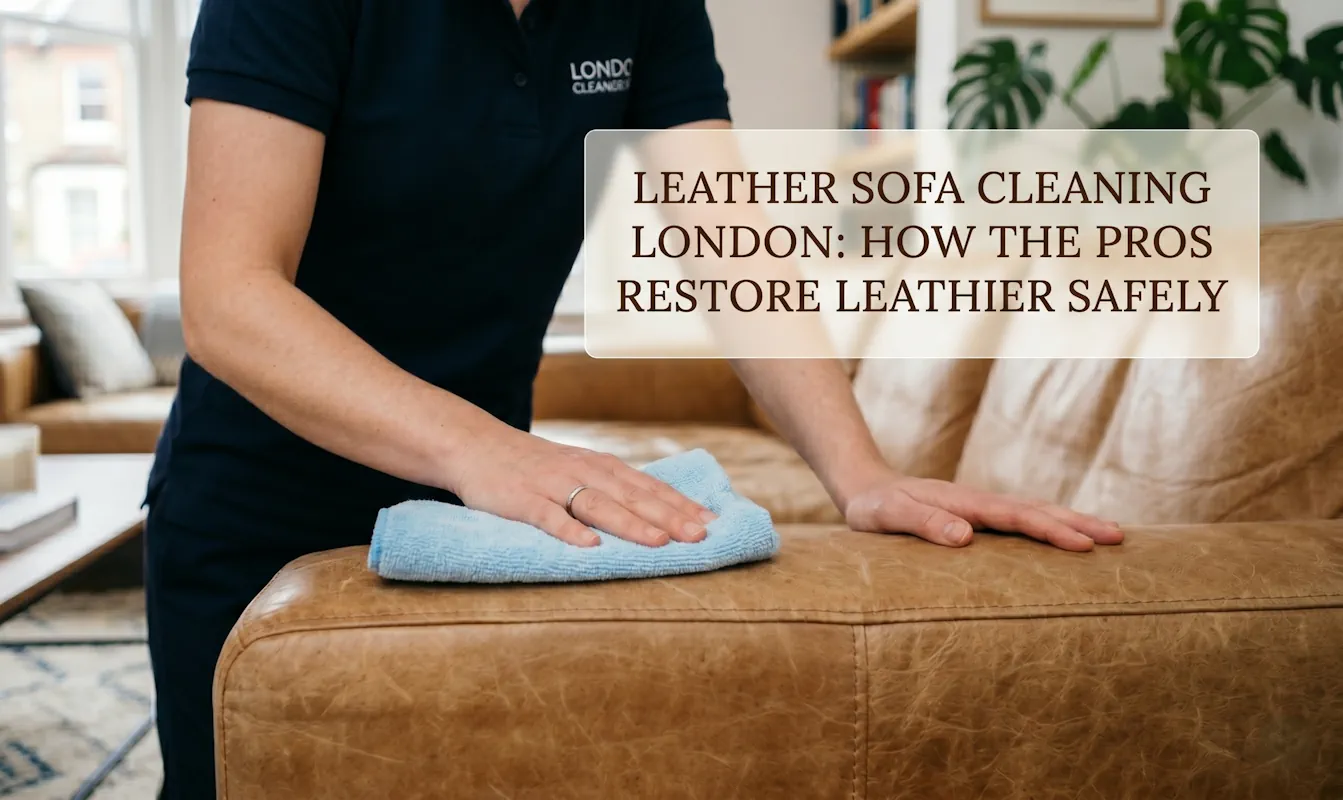
Why Leather Needs Completely Different Care from Fabric
Fabric upholstery is absorbent — it’s designed to be cleaned with water and extraction. Leather is the opposite. It’s a sealed, treated surface, and most of the cleaning happens on top of the material, not soaked into it.
That’s why the cheap “all-purpose upholstery cleaner” under the sink is risky on leather. Products with high alcohol, ammonia, or strong solvents can:
- Strip the protective top coat
- Pull out the natural oils that keep leather supple
- Cause cracking, fading, or a sticky residue
Treating leather like fabric is the single most common reason a sofa ends up looking worse after a “clean” than before it.
Know Your Leather Type First
Before any cleaning, identify what you’re working with — the right method depends on it.
- Pigmented (protected) leather — the most common and most durable. Has a surface coating, so it tolerates gentle cleaning well. Most family sofas are this type.
- Aniline leather — premium, soft, with little or no protective coating. It shows its natural grain and absorbs liquid easily, so it stains fast and needs the gentlest approach.
- Semi-aniline leather — a middle ground, with a light protective layer.
Quick test: put a drop of water on a hidden area. If it beads on the surface, you likely have protected leather. If it soaks in and darkens, it’s aniline or semi-aniline and needs specialist care.
If you’re not sure, don’t guess — book a professional. Misjudging aniline leather is how irreversible water marks happen.
Safe DIY Leather Sofa Cleaning (Step by Step)
For routine maintenance on protected leather, this is the safe routine:
- Dry dust and vacuum. Use a soft brush attachment to lift grit from seams and creases. Grit acts like sandpaper on the finish.
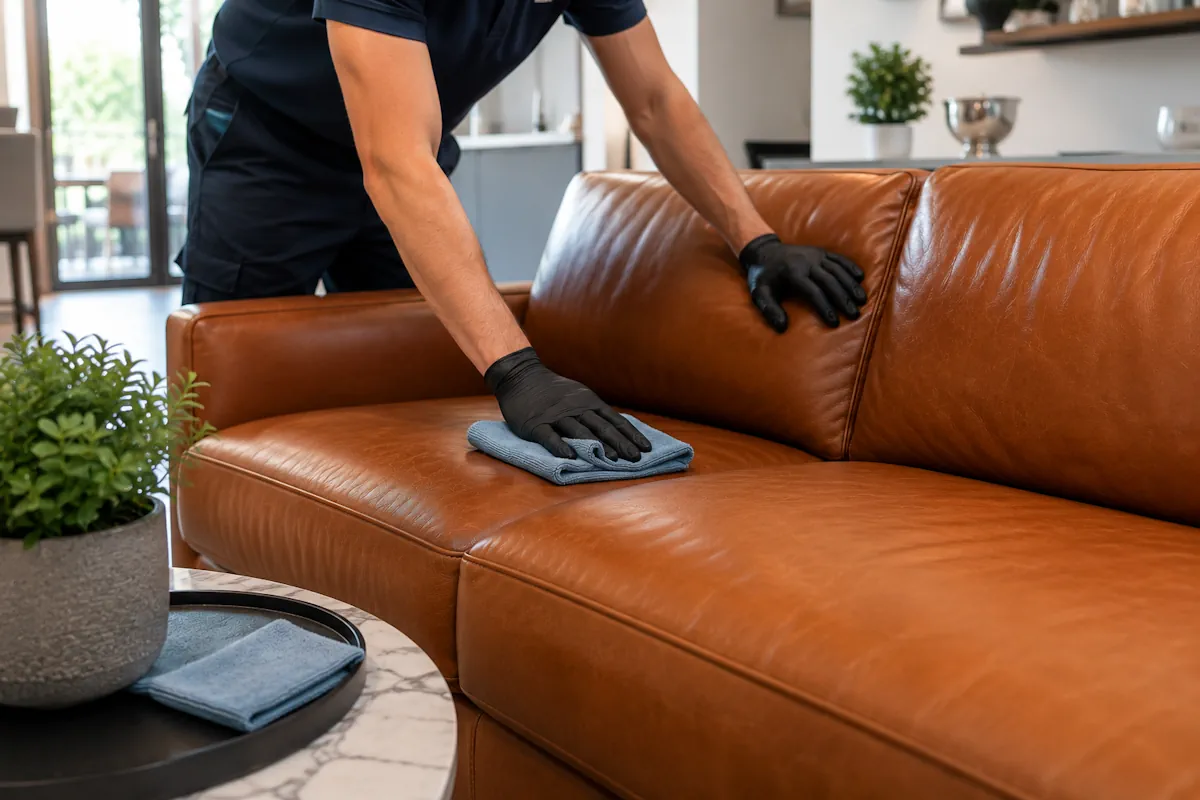
- Wipe with a barely-damp microfibre cloth. Distilled water is best in hard-water London. Wring it out so it’s almost dry.
- Use a dedicated leather cleaner (pH-balanced, made for leather). Apply to the cloth, not directly to the sofa. Work in small sections.
- Dry immediately with a second clean cloth. Never let moisture sit.
- Condition every few months with a proper leather conditioner to keep it supple and prevent cracking.
Always patch-test any product on a hidden spot first and wait for it to dry before doing the whole sofa.
Mistakes That Crack, Fade or Ruin Leather
Avoid these — they cause the damage we get called out to fix:
- Baby wipes — many contain alcohol and chemicals that break down the finish over time.
- Washing-up liquid or all-purpose spray — strips oils and dulls the surface.
- Soaking the leather — water marks on aniline leather are often permanent.
- Direct heat to dry (hairdryers, radiators) — causes cracking and shrinkage.
- Scrubbing hard — abrasion wears through the top coat.
- Skipping conditioner — dry leather cracks, and cracks can’t be undone.
When to Call a Professional
DIY is fine for light, regular upkeep. Call a professional leather sofa cleaning service when:
- There’s a set-in stain (ink, grease, dye transfer from clothing)
- The leather is aniline, antique, or high-value
- The finish is dull, flaking, or sticky
- You’ve got pet or odour issues soaked into the leather
- You simply want it restored properly without the risk
Our leather cleaning uses controlled, low-moisture techniques and leather-safe products — cleaning, then conditioning to restore softness and protect the finish. We cover Central, West, North, North-West, South and South-West London.
Book leather sofa cleaning today — call 020 3488 1970 or get a free quote online.
How Often Should You Clean a Leather Sofa?
- Weekly: quick dust and vacuum
- Monthly: light wipe-down with a damp microfibre cloth
- Every 3–6 months: condition the leather
- Annually (or with heavy use / pets): professional deep clean and recondition
Frequently Asked Questions
Can you steam clean a leather sofa?
We don’t recommend domestic steam cleaning on leather — excessive heat and moisture can damage the finish. Professional leather care uses controlled low-moisture methods instead.
How long does a leather sofa take to dry after cleaning?
Because leather cleaning uses very little moisture, surfaces are usually touch-dry within an hour or two. Conditioning needs a little time to absorb before normal use.
Can professionals remove ink or grease from leather?
Often, yes — especially if treated sooner rather than later. Results depend on the leather type and how long the stain has set. Avoid DIY solvents, which can spread the damage.
Do you cover my area of London?
We serve Central, West, North, North-West, South and South-West London. Call 020 3488 1970 to confirm.
Can grease stains be removed from leather?
Professional cleaners can often treat grease and oil contamination successfully. Attempting DIY removal with household products may spread the stain or damage the finish.
Is steam cleaning safe for leather sofas?
Traditional steam cleaning methods used on fabric upholstery are generally not suitable for leather furniture. Leather requires specialised low-moisture cleaning techniques and conditioning treatments.
Will professional cleaning make old leather look new again?
Professional cleaning and conditioning can dramatically improve appearance, softness, and colour vibrancy. While severe damage may not be fully reversible, many older sofas show significant improvement after treatment.
Keep Your Leather Looking Its Best
A leather sofa cleaned and conditioned correctly can look great for decades. Cleaned with the wrong product, it can be ruined in a single afternoon. When in doubt, go gentle — or let a professional handle it.
For a deeper read on long-term upkeep, see our complete leather sofa care guide. For all fabric and leather furniture, explore our sofa & upholstery cleaning service.
Ready to book? Call 020 3488 1970, email info@4seasonscarpetclean.co.uk, or request your free quote. Rated 5.0 stars from 290+ reviews.