Table of Contents
Choosing the right carpet cleaning method is not as simple as booking the first service you find online. Different carpet fibres, stain types, household conditions, and drying requirements all affect which process will deliver the best results.
Many homeowners search for the “best carpet cleaning method” expecting one universal answer. In reality, the ideal solution depends on your carpet material, level of soiling, allergies, pets, foot traffic, and even how quickly you need the carpet dry.
Professional cleaners use several proven systems, including hot water extraction, steam cleaning, dry carpet cleaning, encapsulation, and shampooing. Each method has strengths and limitations.
At 4 Seasons Carpet Clean, we regularly assess carpets across London properties ranging from family homes and apartments to offices, rental properties, and commercial spaces. In many cases, choosing the correct cleaning process makes a bigger difference than the cleaning chemicals themselves.
Why Carpet Cleaning Methods Matter
Carpets trap dust, allergens, bacteria, pet dander, pollen, and soil deep within the fibres. Over time, this buildup affects appearance, indoor air quality, and carpet lifespan.
Using the wrong cleaning method can cause:
- Overwetting
- Shrinkage
- Fibre damage
- Sticky residue
- Rapid resoiling
- Long drying times
- Colour fading
This is especially important for wool carpets, Persian rugs, delicate synthetic blends, and high-value commercial flooring.
The most effective carpet cleaning approach should:
- Remove deep dirt and allergens
- Eliminate stains and odours
- Preserve carpet fibres
- Dry within a reasonable timeframe
- Extend carpet lifespan
Hot Water Extraction Carpet Cleaning
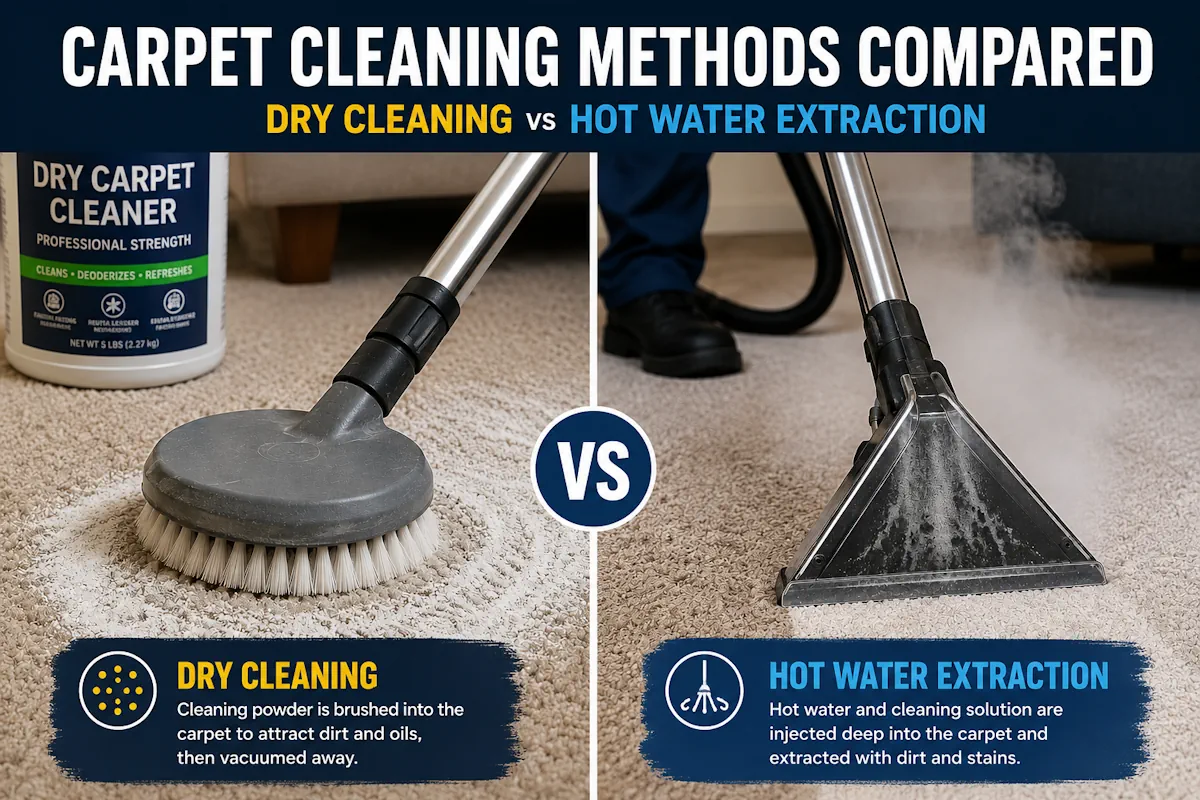
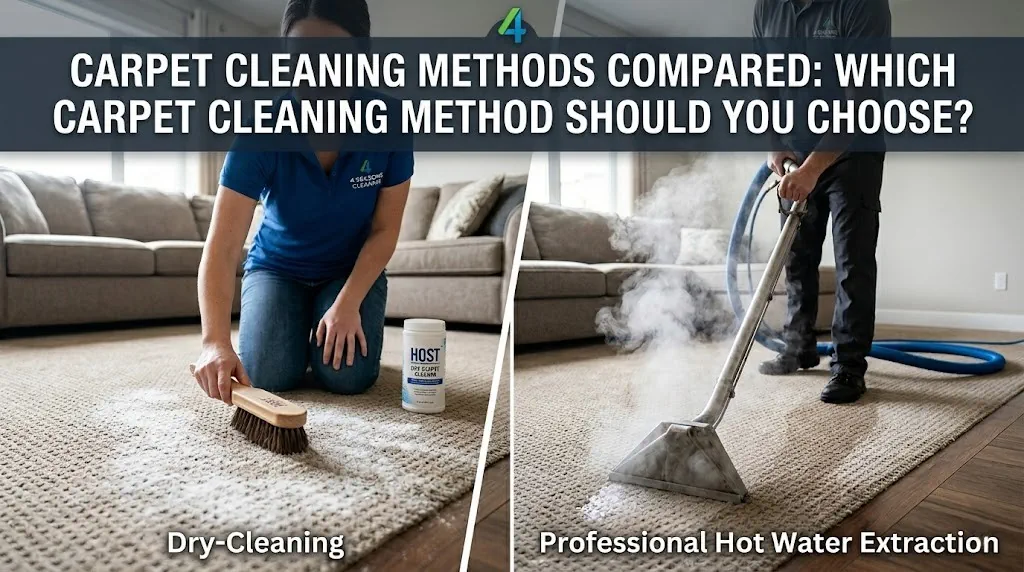
Hot water extraction, often called steam cleaning, is widely considered the most thorough carpet cleaning method available.
This process uses high-pressure hot water mixed with professional cleaning solutions. The water is injected deep into the carpet fibres and immediately extracted along with dirt, bacteria, allergens, and debris.
Professional-grade equipment is significantly more powerful than rental machines and removes far more moisture during extraction.
Best For
- Deep cleaning heavily soiled carpets
- Homes with pets or children
- Allergy sufferers
- End of tenancy cleaning
- Removing embedded dirt and odours
- High-traffic areas
Advantages of Hot Water Extraction
Deep Cleaning Performance
Hot water extraction reaches deep into the carpet pile where dirt accumulates. It removes contaminants that vacuuming cannot reach.
Excellent Stain Removal
This method is highly effective against:
- Mud
- Pet accidents
- Food spills
- Dust buildup
- General traffic marks
For specialist spot treatment, professional Stain Removal London services can be combined with extraction cleaning for stubborn stains.
Sanitisation Benefits
High-temperature cleaning helps reduce bacteria, dust mites, and allergens, making it ideal for healthier indoor environments.
Longer-Lasting Results
Because dirt is fully extracted rather than simply pushed around, carpets usually stay cleaner for longer.
Potential Drawbacks
- Longer drying times compared to dry cleaning
- Not ideal for moisture-sensitive fibres without specialist handling
- Requires professional equipment for best results
How Long Does It Take to Dry?
Most carpets dry within 4 to 12 hours depending on:
- Airflow
- Humidity
- Carpet thickness
- Room temperature
- Extraction power
Professional airflow systems can speed up drying considerably.
Is Steam Cleaning the Same as Hot Water Extraction?
Many homeowners use the term “steam cleaning” interchangeably with hot water extraction carpet cleaning.
True steam alone is rarely used for carpets. Most professional companies use hot water extraction systems that combine heated water, agitation, and vacuum extraction for a deep clean.
For more intensive sanitising, Steam Cleaning London services may also include high-temperature surface treatment for upholstery and hard surfaces.
Dry Carpet Cleaning and Encapsulation
Dry carpet cleaning has become increasingly popular in offices, hotels, and homes where fast drying times are essential.
Unlike hot water extraction, this method uses very little moisture.
A specialised cleaning compound or encapsulation solution is applied to the carpet. Machines agitate the fibres, allowing the cleaning agents to surround dirt particles. The residue is then vacuumed away after drying.
Best For
- Commercial environments
- Offices and retail spaces
- Light to moderate soiling
- Fast turnaround cleaning
- Moisture-sensitive carpets
Advantages of Dry Carpet Cleaning
Very Fast Drying
Most carpets are dry within 1 to 2 hours.
Minimal Disruption
This makes dry cleaning ideal for businesses that cannot close for long periods.
Professional Commercial Carpet Cleaning London often uses encapsulation systems in busy workplaces.
Reduced Risk of Overwetting
Low-moisture cleaning reduces shrinkage and water damage risks.
Potential Drawbacks
- Less effective for deep soil extraction
- May not fully remove heavy stains
- Not always suitable for severe odours or pet contamination
When Should You Choose Dry Carpet Cleaning?
Dry cleaning works best when carpets need maintenance cleaning rather than restoration cleaning.
For example:
- Office carpets cleaned regularly
- Hotel corridors
- Low-pile synthetic carpets
- Quick-refresh cleaning before events
Carpet Shampooing
Carpet shampooing was once the dominant cleaning method before modern extraction systems became common.
This process uses foaming detergents scrubbed into the carpet with rotary brushes.
Best For
- Surface-level cleaning
- Older commercial carpets
- Heavily soiled carpets requiring agitation before extraction
Advantages of Carpet Shampooing
Strong Agitation
The brushing action can loosen stubborn surface dirt.
Useful for Restoration Work
In some cases, shampooing is combined with extraction cleaning for extremely dirty carpets.
Potential Drawbacks
Residue Issues
Older shampoo methods often left sticky detergent behind, causing carpets to resoil quickly.
Longer Drying Times
Heavy moisture can increase drying time.
Less Popular Today
Most professional companies now prefer hot water extraction or encapsulation because they produce cleaner, longer-lasting results.
Bonnet Cleaning
Bonnet cleaning is commonly used in hotels and commercial buildings for surface maintenance.
A rotating machine with an absorbent pad spins across the carpet surface to remove dirt from the top layer.
Best For
- Commercial maintenance
- Surface appearance improvement
- Quick cosmetic cleaning
Advantages
- Fast drying
- Low cost
- Quick visual improvement
Drawbacks
- Does not deep clean fibres
- Dirt remains beneath the surface
- Frequent use can wear carpet fibres over time
Which Carpet Cleaning Method Is Best?
The answer depends on your specific situation.
Here is a simple comparison to help homeowners decide.
| Cleaning Method | Deep Cleaning | Drying Time | Best For | Main Limitation |
|---|---|---|---|---|
| Hot Water Extraction | Excellent | 4–12 hours | Deep cleaning, allergies, stains | Longer drying |
| Dry Carpet Cleaning | Moderate | 1–2 hours | Offices, quick turnaround | Less deep cleaning |
| Carpet Shampooing | Moderate | 6–12 hours | Heavy surface dirt | Residue risk |
| Bonnet Cleaning | Light | 1–2 hours | Commercial maintenance | Surface cleaning only |
Which Method Is Best for Pet Stains?
Pet urine and odours usually require hot water extraction combined with enzyme treatment.
Surface cleaning methods often fail to remove contamination trapped beneath the carpet backing.
Professional extraction cleaning helps neutralise odours rather than temporarily masking them.
Which Method Is Safest for Wool Carpets?
Wool carpets require careful moisture control and pH-balanced cleaning solutions.
Inexperienced cleaning can cause:
- Fibre distortion
- Browning
- Shrinkage
- Colour bleeding
Professional assessment is essential before cleaning delicate natural fibres or expensive rugs.
Specialist Rug Cleaning London services are recommended for Persian, Afghan, silk, and handwoven rugs.
How Often Should Carpets Be Professionally Cleaned?
Most homes benefit from professional cleaning every 12 months.
However, households with pets, children, allergies, or heavy foot traffic may need cleaning every 6 months.
Commercial spaces often require more frequent maintenance.
DIY Carpet Cleaning vs Professional Cleaning
Rental carpet cleaners can help with minor maintenance, but they rarely match professional equipment performance.
Common DIY issues include:
- Overwetting carpets
- Weak extraction power
- Soap residue buildup
- Incomplete stain removal
- Longer drying times
Professional systems use stronger vacuum extraction, advanced stain treatment, and fibre-safe solutions tailored to specific carpet types.
Choosing the Right Carpet Cleaning Company
Not all carpet cleaning services use the same equipment or training standards.
Before booking, ask:
- Which cleaning method do you recommend?
- Is the process suitable for my carpet type?
- How long will drying take?
- Are your products eco-friendly?
- Do you provide stain protection?
- Are technicians trained and insured?
Reputable companies should inspect the carpet before recommending treatment.
Final Thoughts
There is no single carpet cleaning method that works perfectly for every situation.
Hot water extraction carpet cleaning remains the best choice for deep cleaning, stain removal, allergen reduction, and restoring heavily used carpets. Dry carpet cleaning is ideal when rapid drying and minimal disruption are priorities. Shampooing and bonnet cleaning still have uses in specific commercial or restoration situations.
The right decision comes down to your carpet material, condition, lifestyle, and cleaning goals.
If you are unsure which process is best, a professional assessment can prevent unnecessary damage and help extend the life of your carpet while delivering better long-term results.
For homeowners and businesses looking for tailored solutions, Carpet Cleaning London services by 4 Seasons Carpet Clean include hot water extraction, steam cleaning, stain treatment, commercial cleaning, and specialist rug care across London.
FAQ
What is the most effective carpet cleaning method?
Hot water extraction is generally considered the most effective method for deep cleaning carpets because it removes embedded dirt, allergens, bacteria, and stains from deep within the fibres.
Is steam cleaning better than dry carpet cleaning?
Steam cleaning or hot water extraction provides a deeper clean, while dry carpet cleaning offers faster drying times. The better option depends on your carpet type and cleaning needs.
How long does carpet take to dry after professional cleaning?
Most professionally cleaned carpets dry within 4 to 12 hours after hot water extraction and 1 to 2 hours after dry cleaning.
Can professional carpet cleaning remove old stains?
Many old stains can be significantly improved or fully removed using professional stain treatment and extraction methods, although results depend on the stain type, carpet fibre, and how long the stain has been present.
Is professional carpet cleaning worth it?
Professional carpet cleaning helps extend carpet lifespan, improve indoor hygiene, remove allergens, and restore appearance more effectively than standard DIY machines.
Which carpet cleaning method is best for offices?
Dry carpet cleaning and encapsulation are often best for offices because they minimise downtime and allow carpets to dry quickly.
Does carpet cleaning remove dust mites and allergens?
Hot water extraction can significantly reduce allergens, dust mites, pollen, and bacteria trapped inside carpet fibres when performed using professional equipment.