Table of Contents
The best way to remove a fresh curry or turmeric stain from carpet is to lift away any solids, blot the liquid with a clean white cloth, then treat the remaining yellow mark with a small amount of mild detergent and cool water. Avoid rubbing, excessive water, heat and bleach. Turmeric contains curcumin, a strongly coloured natural pigment that can leave a persistent yellow mark. Natural daylight can help fade residual colour after the main spill has been removed.
Key Takeaways
- Turmeric contains curcumin, a strongly coloured natural pigment that can leave a persistent yellow mark.
- Remove curry solids first, then blot rather than scrub.
- Use small amounts of cool water and mild detergent; avoid soaking the carpet.
- Do not use bleach or aggressive heat on carpet.
- Natural daylight may help fade residual turmeric colour after cleaning.
- Old, large or stubborn stains may need professional treatment.
Why Is Curry So Hard to Get Out of Carpet?
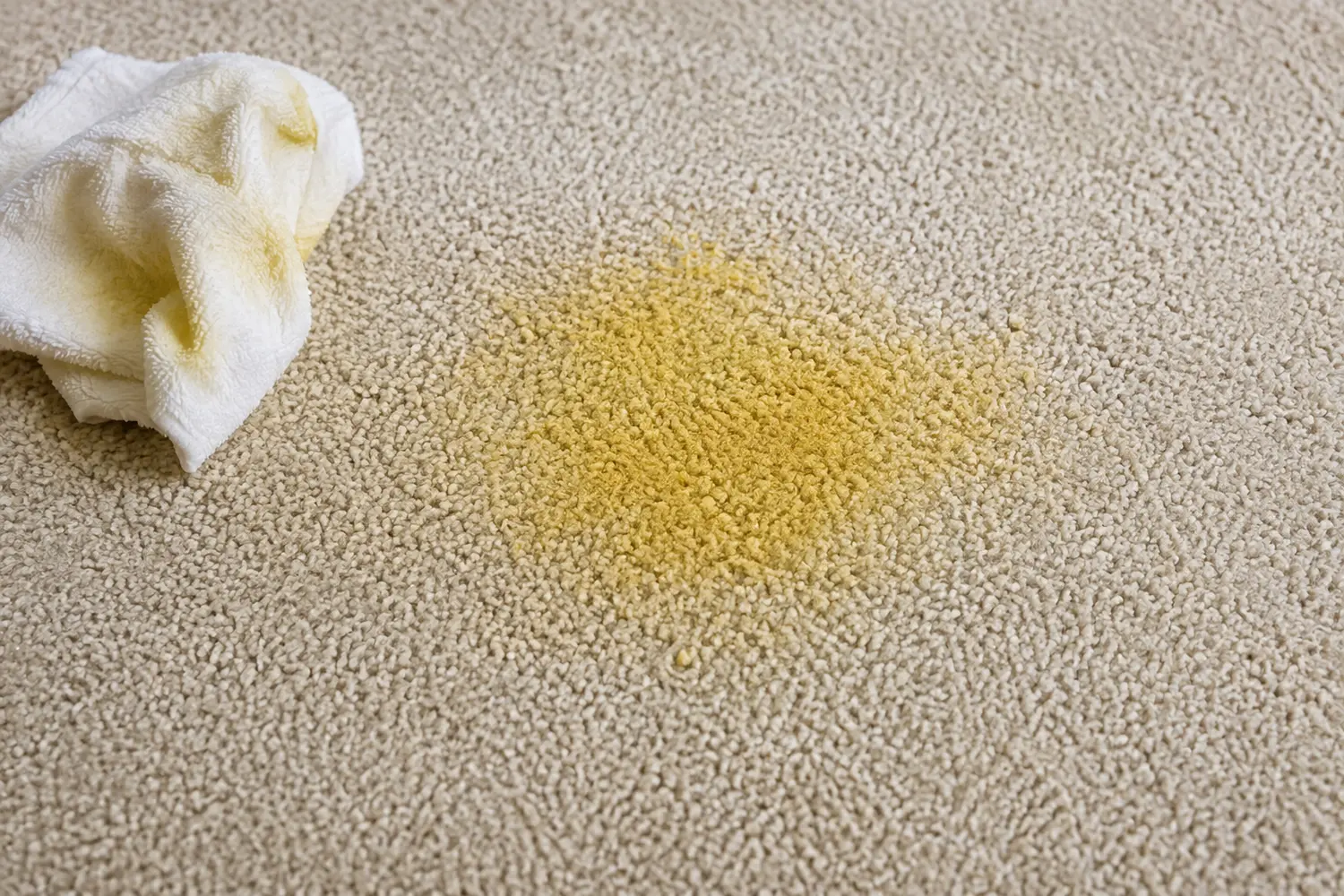
Curry stains are stubborn because turmeric is a genuine dye. Turmeric contains curcumin, a strongly coloured natural pigment that can cling to carpet fibres and leave a persistent yellow mark. Add oil from the sauce, and you get a combined grease-and-dye stain that needs two different treatments.
That’s why ordinary spot cleaners often lift the brown sauce but leave a bright yellow shadow behind. Once the sauce has been removed, the remaining problem is often the turmeric pigment rather than the food residue itself.
What we see on the job: Customers often contact us after the brown curry sauce has been removed but a yellow shadow remains. Repeated scrubbing can spread that remaining pigment into a larger area. Fresh spills are generally easier to improve, which is why early, gentle treatment matters.
For the wider approach to food spills, see our guide to the most common carpet stains.
What Should I Do Immediately After a Curry Spill?
Remove the solids before you touch the liquid, because pressing curry into the pile drives both oil and dye deeper. Lift, don’t wipe.
Work in this order:
- Scoop the solids with a spoon or blunt knife, lifting away from the carpet.
- Blot the liquid with a clean white cloth, pressing straight down — no circular rubbing.
- Work outside in so the stain doesn’t spread wider.
- Rinse with cold water, blotting after each application.
- Avoid hot water and steam when treating the stain yourself. Excessive heat can make some stains harder to remove and may damage or discolour certain carpets.
Keep swapping to a clean part of the cloth. Once colour stops transferring, move on to treating the yellow.
How Do I Get Dried Curry Stains Out of Carpet?
Add a dedicated answer for dried/set-in stains.
Cover:
- Remove loose dried residue.
- Vacuum the area.
- Apply a small amount of cool water.
- Use mild detergent.
- Blot repeatedly.
- Rinse lightly.
- Repeat rather than soaking.
- Escalate to professional treatment if the yellow remains.
How Do I Remove the Yellow Turmeric Stain?
Treat the yellow with a mild detergent solution and patience, repeating light applications rather than soaking the carpet once. Turmeric responds to gentle, repeated treatment far better than aggressive scrubbing.
Try these in order:
- Washing-up liquid and cold water — one teaspoon in a cup of cold water, dabbed on and blotted off
- White vinegar solution — one part vinegar to two parts water, applied after the detergent step
- Bicarbonate of soda paste — left on the dried stain, then vacuumed away
- Natural daylight — open the curtains; UV genuinely breaks down curcumin over days
Test any solution on a hidden patch first, especially on wool. Avoid bleach entirely — it strips carpet colour and leaves a worse pale patch than the curry did.
Does Curry Stain Come Out of Wool Carpet?
Wool is more vulnerable than synthetic carpet because its natural protein fibres absorb dye readily and react badly to alkaline cleaners. Curry on wool needs cooler water, gentler solutions and, usually, professional treatment.
Never use strong alkaline products or high heat on wool — both cause felting, shrinkage and colour loss that can’t be reversed. If the stain sits on a wool carpet or an expensive rug, stop DIY treatment early and call a professional. The same caution applies to Persian and Oriental rugs, where dye migration is a real risk.
When Should I Call a Professional?
Call a professional when the yellow persists after several treatments, the stain covers a large area, or it’s on wool, silk or a valuable rug. Professional hot water extraction flushes dye from deep in the pile with fibre-safe solutions household products can’t match.
Curry stains also respond much better when they’re fresh, so a same-day visit gives the best result. If the spill happened before guests arrive, our emergency and same-day carpet cleaning covers urgent stain call-outs across London. For planned visits, see our carpet cleaning prices or book online.
Frequently Asked Questions
Does turmeric stain come out of carpet permanently?
Turmeric rarely stains permanently. Curcumin fades with light exposure, so residual yellow usually lightens over several days even after cleaning. Fresh stains treated with cold water and mild detergent often disappear completely. Persistent marks on wool or older stains generally need professional hot water extraction to remove the dye fully.
Can I use bleach on a curry stain?
No — avoid bleach on carpet. It strips the carpet’s own dye along with the turmeric, leaving a pale patch that’s more noticeable than the original stain and impossible to reverse. Use mild washing-up liquid, a diluted vinegar solution, or professional treatment instead, and always test on a hidden area first.
Why did my curry stain turn bright yellow after cleaning?
Because you removed the brown sauce but left the turmeric dye behind. Curry stains are two problems in one: oily sauce and curcumin dye. Cleaning lifts the sauce first, revealing the yellow underneath. Continue with gentle detergent treatments and daylight exposure, or book professional cleaning to remove the remaining dye.
Does sunlight really fade turmeric stains?
Yes. UV light breaks down curcumin, which is why turmeric marks on fabric and carpet fade noticeably over days of daylight exposure. Open curtains and let natural light reach the treated area. It won’t replace cleaning, but it genuinely helps residual yellow disappear faster after the main stain is removed.
The Bottom Line
Curry is a dye stain, not just a food stain, so the rules change: scoop the solids, blot cold, never apply heat, and treat the yellow with gentle repeated applications rather than one aggressive scrub. Daylight finishes the job that cleaning starts.
Yellow won’t budge, or the spill landed on wool? Book professional stain removal in London before the dye sets any further.