To clean a bouclé sofa safely, start with its care instructions, remove loose dirt gently and blot fresh spills with a clean white cloth. Use water or a cleaner only when the manufacturer permits it for your exact upholstery. The aim is to lift dirt without soaking the filling or pulling the fabric’s loops.
If you are working out how to clean a bouclé sofa after a spill, resist the urge to scrub until the mark disappears. Some stains need assessment rather than another product. Our sofa cleaning service explains the professional option for London homeowners; ask about suitability for your particular fabric before arranging treatment.
Jump to: care instructions, loose dirt, fresh spills, spot testing, drying or FAQs.
Key takeaways
- Check the exact fabric’s care instructions before adding moisture or detergent.
- Use gentle dry maintenance; stop if an attachment catches or lifts loops.
- Blot a fresh spill rather than rubbing it into the upholstery.
- Test any permitted treatment in a hidden area and let it dry before judging it.
- Avoid steam, soaking and improvised cleaners unless the manufacturer expressly approves the method.
Why bouclé needs fabric-specific care
Bouclé describes a looped texture, not a universal cleaning specification. Castlery’s bouclé overview describes its distinctive looped finish. Two sofas with a similar appearance can have different fibres, backing and finishes, so instructions for one cannot establish what is safe for the other.
The raised texture also changes how you handle it. A tool that glides over a flat weave may catch a loop. Inspect the seat, arms and seams before cleaning: look for pulled threads, worn patches and previous water marks. Photograph existing damage so you can compare the area after it dries. Do not tug loose loops or trim them as part of cleaning.
Step 1: Check the label and prepare
Label first: Look beneath removable cushions, on the underside of the sofa and in the supplier’s care booklet. Find the model and fabric name, not just the word bouclé. If the label is missing or unclear, ask the retailer for the correct instructions before wet cleaning. A removable cover or zip does not mean the cover is machine washable.
If your label uses a cleaning code, follow the accompanying explanation. Permission for water-based spot cleaning does not automatically permit steam, extraction or washing the whole cover. Do not choose a cleaning method from a code alone when the manufacturer gives more specific restrictions.
- Gather clean white absorbent cloths and the care booklet.
- Choose a clean upholstery attachment without a rotating brush, if vacuuming is permitted.
- Set aside only the treatment expressly allowed for this fabric; follow its dilution instructions.
- Plan for ventilation and keep children and pets away from the treated area while it dries.
Stop here: If instructions say professional cleaning only, or you cannot confirm whether moisture is allowed, limit care to permitted dry maintenance. Do not use a hidden patch test to override a prohibition.
Step 2: Remove loose dirt gently
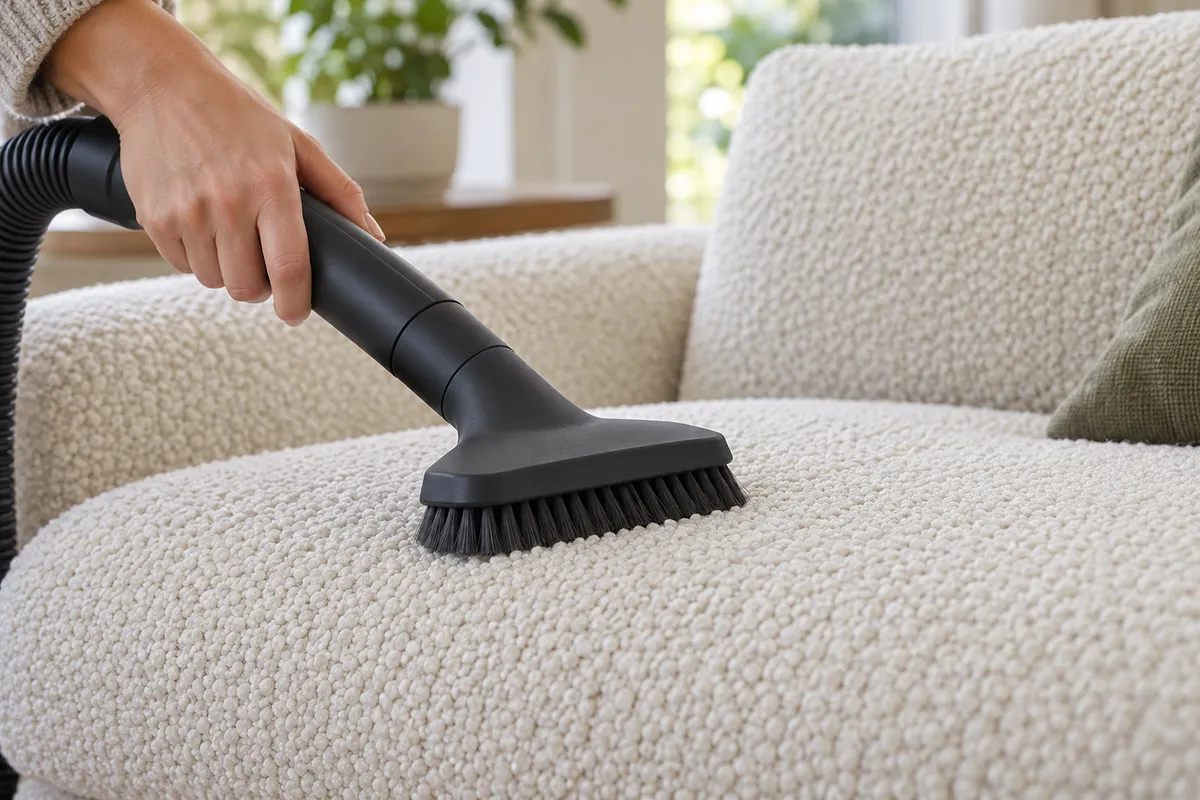
DFS’s bouclé care advice recommends gentle weekly vacuuming with a soft brush attachment. Treat this as guidance for DFS upholstery, alongside the instructions supplied with your own sofa.
Light contact: Where vacuuming is allowed, begin on a hidden section with low suction. Keep the attachment moving and avoid pressing it into the surface. Work across the seat and arms, then accessible cushion edges. Lift loose crumbs from seams carefully rather than forcing a narrow nozzle against the weave.
Check the loops: Stop if the fabric lifts towards the nozzle, threads catch or the texture changes. Switch to a gentler permitted attachment or seek advice. Avoid stiff brushes, powered brush heads and aggressive pet-hair scraping. Dry maintenance should leave the original texture intact, not make it smoother through abrasion.
Step 3: Deal with a fresh spill
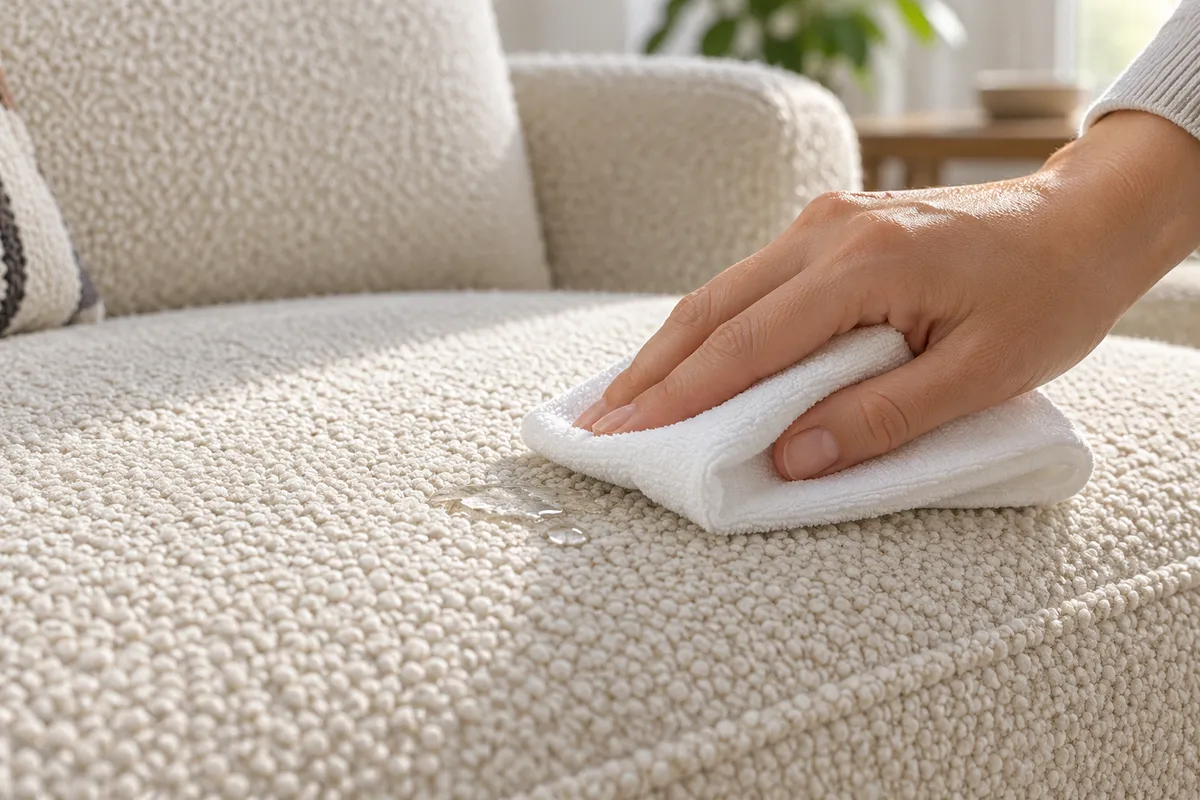
Blot first: DFS advises dabbing liquid with a clean, dry white microfibre cloth, rather than rubbing. It suggests a lightly dampened cloth for stubborn spills and warns against cleaners that it has not approved. Follow your sofa’s own moisture restrictions before moving beyond dry blotting.
For a thick spill, carefully lift loose material with the edge of a spoon without scraping the yarn. Use a fresh section of cloth as it becomes soiled. Keep the work local: spreading treatment over an entire cushion can turn a small problem into a larger drying task.
Stop if the mark spreads: Colour moving into surrounding fabric, a growing wet edge or a change in texture is a reason to pause. Dry blotting may remove liquid while leaving pigment behind. That does not mean you should increase pressure or add more water.
| What you find | Cautious first response | Stopping point |
|---|---|---|
| Loose crumbs or dust | Use permitted gentle dry maintenance. | The tool catches loops or lifts fabric. |
| Fresh liquid | Blot with a clean white cloth. | The stain spreads or moisture reaches seams. |
| Dried, oily or unknown stain | Check the fabric instructions and identify the spill. | No approved treatment is specified. |
| Large wet patch or persistent odour | Seek advice about the upholstery and filling. | Do not keep adding liquid to mask the problem. |
Step 4: Test only an approved spot treatment
Permission before product: Mild detergent is not suitable for every bouclé sofa. Use it only if your manufacturer expressly approves it for the exact fabric, and follow the specified concentration and method. An Easy Clean description on a different sofa is not permission to use that treatment on yours. DFS specifically cautions against liquid or spray cleaners it has not approved for its bouclé upholstery.
- Choose an inconspicuous area of the same upholstery, away from visible damage.
- Apply the manufacturer-approved treatment exactly as directed, using the smallest practical amount.
- Allow the patch to dry completely before comparing its colour, feel and loop texture with the surrounding fabric.
- If the patch remains unchanged, treat the stain locally according to those same instructions, then remove residue only by the approved method.
Stop after an adverse test: Colour on the cloth, a pale patch, stiffness, puckering or a ring means the method has not passed. A successful small test also cannot guarantee that a larger wet treatment will behave the same way. Do not repeatedly re-treat a stain that remains after drying. For difficult marks, request a professional stain assessment and describe what you have already applied.
Step 5: Dry and inspect before using the sofa
Airflow first: After permitted damp treatment, keep the area uncovered and improve room ventilation when weather allows. A fan circulating room air can help; keep cables safely out of the way. Avoid a hairdryer, radiator contact or concentrated heat to force the patch dry.
Leave cushions in the position recommended by the manufacturer. Do not remove fitted covers simply to speed drying, and do not put a throw over a damp seat. The fabric surface can feel dry while moisture remains beneath it. Drying depends on how much liquid entered, the filling and the room conditions, so a fixed waiting time is unreliable.
Check before sitting: Compare the treated area with an untouched section. Check accessible seams and cushion undersides for dampness without opening sealed upholstery. Look for a ring, altered colour or flattened loops. If it remains damp, smells musty or develops a new mark, seek advice before further cleaning. More water can make the drying problem worse.
Avoid steam and improvised cleaning recipes
Do not assume that a steam cleaner, clothes steamer or hired carpet machine is suitable. Heat, moisture and agitation each need approval for the fabric and sofa construction. Our general sofa steam-cleaning guide is background reading, not permission to steam bouclé. Even water-based cleaning permission does not establish steam compatibility.
Keep vinegar, bicarbonate of soda, washing-up liquid, bleach and scented sprays out of your routine unless your manufacturer expressly approves them. Avoid mixing products or experimenting with stronger solutions. A stain-resistant finish does not make upholstery immune to damage. For overall soiling, water rings, large spills or an unidentified fabric, professional assessment is the sensible next step.
Frequently asked questions
Can I machine wash bouclé sofa covers?
Only if the care instructions explicitly permit washing that cover and specify the method. A zip may exist for fitting or servicing. Do not infer washability from it. Check drying and refitting instructions too, because washing is only one part of the process.
Is white bouclé cleaned differently from darker colours?
Colour alone does not determine the cleaning method. Follow the fabric specification and use white cloths so you can notice transferred colour. Do not bleach a cream sofa to make it whiter; its original shade and finish may be permanently changed.
What if my sofa has no care label?
Find the order details and ask the retailer for instructions matching the model and upholstery. Photographs can help identify it but cannot confirm cleaning compatibility. Until you have reliable guidance, avoid wet treatment, detergent and steam rather than guessing from appearance.
What should I do about pet urine or a lingering smell?
Blot fresh liquid, then seek advice if it may have reached the filling. Do not saturate the area with an enzyme cleaner unless the manufacturer approves that product and method. Surface spot cleaning may leave contamination underneath, and fragrance does not resolve the source.
How much does professional bouclé cleaning cost?
Ask for a quote based on the fabric, sofa size, condition and proposed method. The London cleaning price guide provides general context, not a guaranteed bouclé price. Confirm suitability and what the quote includes before booking.
Get advice before escalating treatment
If your approved routine has reached its stopping point, contact 4 Seasons Carpet Clean with photographs, the fabric name, care instructions and details of previous treatments. Ask whether cleaning is suitable and how drying will be managed. Preserving the texture matters more than chasing a mark with repeated home treatments.
About this guidance: Published by 4 Seasons Carpet Clean. The linked manufacturer guidance supports the texture and routine-care discussion. The preparation, testing and drying checks are cautious general guidance, not results from testing your sofa. Instructions for your exact product take priority.