Table of Contents
Short answer: carpet cleaning in a basement flat needs a drying plan. Clear access, report damp or mould before booking, arrange ventilation, and ask the cleaner how moisture will be recovered from the carpet and underlay. Do not use carpet cleaning to hide an active leak, penetrating damp or recurring mould.
Basement rooms often have less natural airflow and cooler floors than upper-floor rooms. After cleaning, those conditions can extend drying time and make odours return if moisture remains in the backing or underlay. This guide covers preparation, warning signs, drying and when to involve your landlord, managing agent or a damp specialist.
For professional service information, see our carpet cleaning service in London.
Key Takeaways
- Check for active moisture, mould, leaks and musty odours before booking carpet cleaning.
- Tell the cleaner that the property is below ground and explain ventilation, access and floor construction.
- Plan airflow and re-entry before cleaning; do not seal damp rooms or cover wet carpet.
- Persistent damp is a property issue, not a stain-removal problem.
Why Does Carpet Dry More Slowly in a Basement Flat?
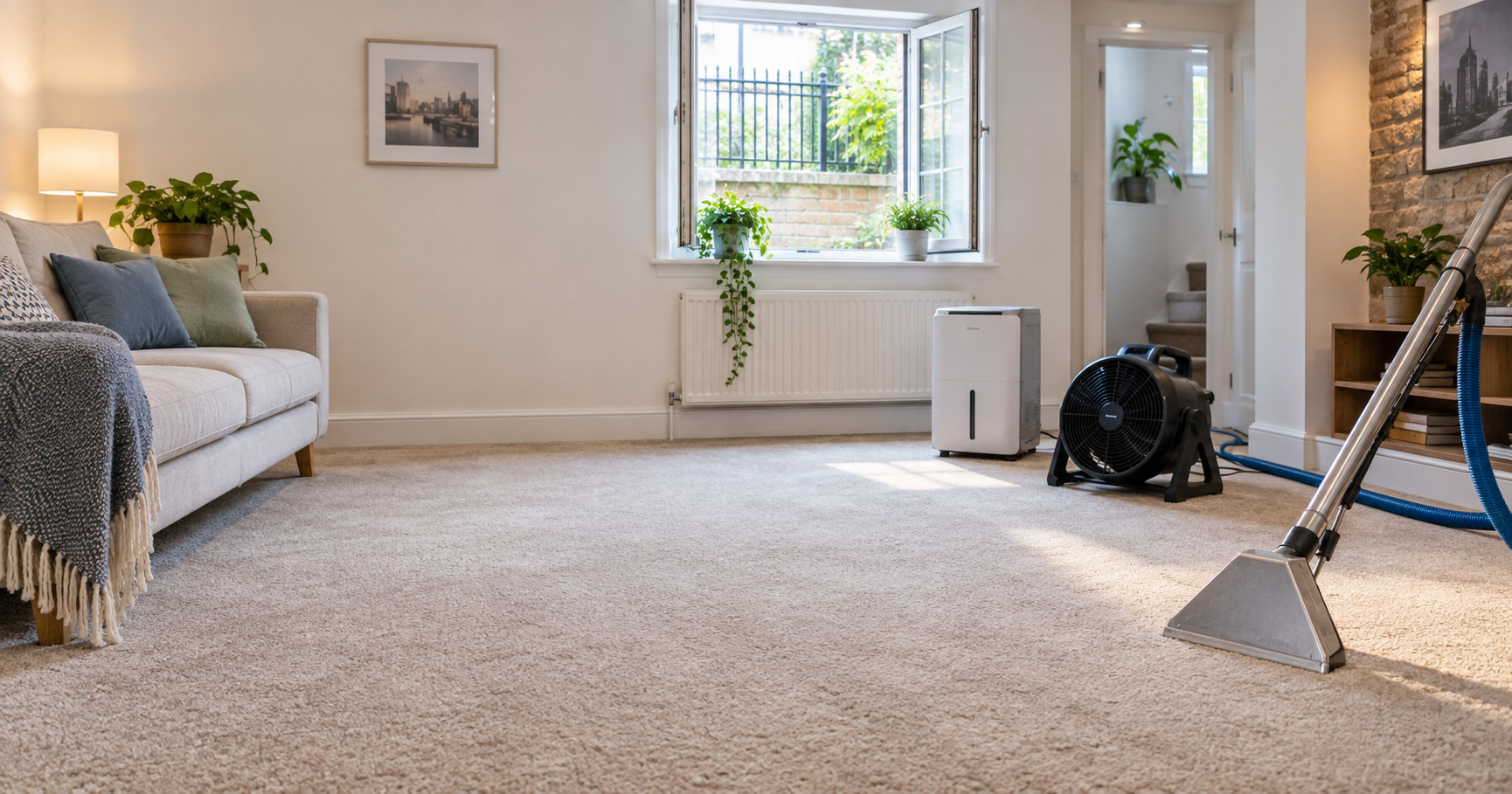
Drying is affected by airflow, temperature, humidity, carpet construction, underlay and cleaning method. A basement flat may have fewer windows, cooler surfaces and limited cross-ventilation. Moisture can therefore leave the carpet more slowly than it would in a warm, well-ventilated upper-floor room.
Do not judge dryness only by touching the pile. Carpet can feel dry at the surface while the backing or underlay remains damp. Ask the technician what signs show that normal use is safe, and whether furniture should remain raised or protected.
If the smell is already musty, the floor feels damp, or you see mould, stop and investigate. The UK government’s damp and mould guidance says moisture and ventilation need to be addressed as part of the underlying property condition, not treated as a cosmetic issue.
What Should You Check Before Booking?
Walk through the flat and look for the source of moisture. Check around external walls, windows, skirting boards, radiator pipes, bathrooms, kitchens and floor-level storage. Note whether the problem follows rainfall, showering, cooking or a plumbing event.
- Active leak: arrange repair before cleaning.
- Condensation: check extractor fans, trickle vents and safe window ventilation.
- Penetrating or rising damp: request a proper building assessment.
- Mould: do not brush or vacuum visible mould into the air; seek appropriate advice.
- Persistent odour: identify whether it comes from carpet, underlay, walls, drains or stored belongings.
Renters should report suspected damp or mould to the landlord or managing agent. GOV.UK advises contacting the landlord when a rented property needs repairs or has mould; carpet cleaning does not replace that report. See our first-hour flood response guide if water has recently entered the property.
What Information Does the Cleaner Need?
Tell the company that the property is a basement or lower-ground flat. Include room sizes, stairs, lift access, parking, tap and socket locations, window access and any restrictions on opening windows. Explain the carpet fibre and whether the floor sits over concrete, timber or another surface if you know.
Also disclose:
- Previous flooding, leaks, damp treatment or mould cleaning.
- Pet accidents, smoke odour or long-standing mustiness.
- Furniture that cannot be moved and areas that must remain accessible.
- Children, pets, asthma, allergies or fragrance sensitivity.
- Building rules about hoses, noise, access times and ventilation.
A cleaner can plan better when the site conditions are honest. Use our carpet-cleaner selection checklist and ask what drying support is included.
Which Cleaning Method Works Best in a Basement Flat?
Method choice is site-specific. The cleaner should balance soil removal against the flat’s drying capacity. A lower-moisture approach may be useful where ventilation is limited, while controlled extraction may be appropriate where the carpet and underlay can be dried properly. The right answer depends on fibre, backing, soiling and the source of any odour.
Do not choose solely by phrases such as “deepest clean” or “fastest dry”. Ask how much solution is applied, how recovery is performed, how edges are handled and what the technician expects the drying conditions to be. Our carpet-cleaning methods comparison explains the main decision factors.
Strong fragrance is not proof that odour has been removed. If smell comes from damp underlay, contaminated subfloor or a recurring source, deodoriser may mask it temporarily while the cause remains.
How Should You Prepare the Flat?
Move small furniture, cables, toys, shoes, plants and breakables. Leave large furniture only when the cleaner confirms it can stay safely. Clear the route from entrance to every room, protect valuables and arrange building access before the appointment.
- Vacuum loose debris if practical.
- Do not apply several stain products or perfume before the visit.
- Write down stain locations, causes and previous treatments.
- Secure pets and plan a safe area for children.
- Remove items stored directly on the carpet, especially against external walls.
- Confirm parking, lift access, keys, permits and a water source if required.
Do not move wet boxes, mouldy textiles or contaminated belongings through clean rooms without advice. If a flood or sewage event occurred, use an appropriate restoration service rather than treating it as routine carpet cleaning.
How Can You Improve Drying After Cleaning?
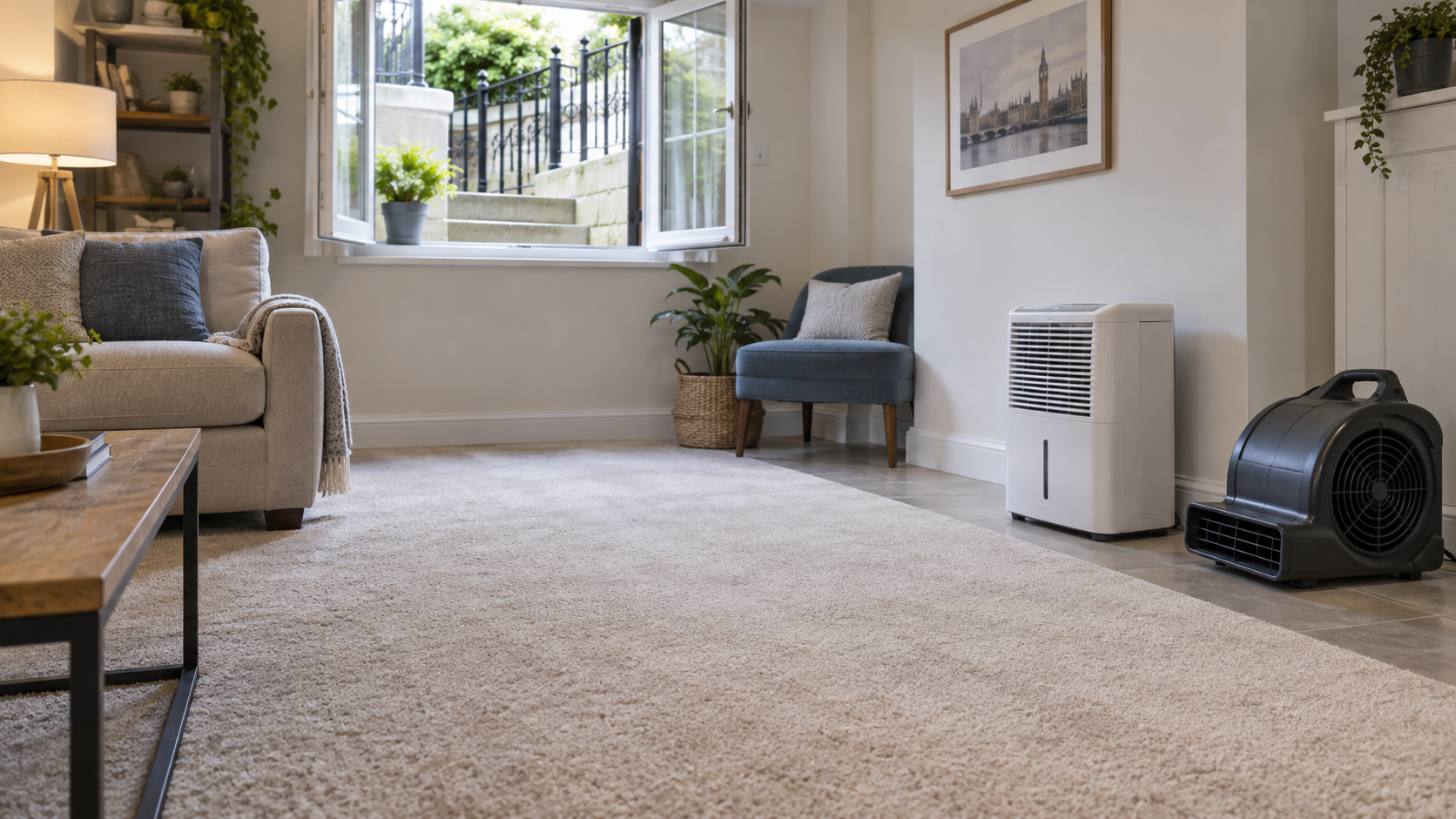
Agree the aftercare plan before work begins. Use safe ventilation, keep internal doors positioned as advised, and run existing extractor fans where they discharge correctly. A fan or dehumidifier may help when used safely and when the cleaner confirms placement.
- Keep children and pets off the carpet until the technician approves re-entry.
- Do not cover damp carpet with rugs, plastic or storage boxes.
- Do not push heavy furniture back immediately.
- Keep air moving without creating trip hazards or blowing contaminated dust around.
- Monitor corners, edges and areas beneath furniture for lingering moisture or odour.
Historic or solid-wall buildings can need careful moisture management. Historic England notes that investigating damp requires understanding how moisture moves through an older building; avoid sealing symptoms with impermeable coatings or furniture placement without professional advice. See Historic England’s moisture-conscious maintenance advice where historic materials are involved.
When Is Carpet Cleaning Not the Right First Step?
Delay routine cleaning when carpet is actively wet, mould is spreading, sewage has contaminated the area, or the source of water is unknown. Cleaning can disturb contamination and may make the floor look better while the building problem continues.
Contact the landlord or managing agent about repairs in rented accommodation. Use a qualified damp, leak or flood-restoration professional where the issue needs diagnosis, removal of contaminated materials or structural drying. Once the source is controlled, a carpet cleaner can assess whether the carpet and underlay are suitable for cleaning or need replacement.
Frequently Asked Questions
Can I have carpets cleaned in a basement flat?
Yes, if the carpet and building are suitable and there is no active moisture problem. Tell the cleaner about the basement location and agree a realistic drying plan before booking.
How long will basement-flat carpet take to dry?
There is no reliable fixed time. Drying depends on method, moisture applied, fibre, underlay, temperature, humidity and airflow. Follow the technician’s property-specific instructions rather than relying on a generic estimate.
Will carpet cleaning remove a damp smell?
It may remove odour held in surface soil, but it will not fix a leak, condensation, mould or damp underlay. Persistent smell needs source investigation.
Should I use a dehumidifier after cleaning?
A dehumidifier may help in some rooms when used safely, but it is not a substitute for ventilation, leak repair or professional drying advice. Keep cables and equipment clear of wet areas.
What if mould is visible on the carpet?
Do not brush or vacuum visible mould into the air. Keep people away from the affected area and report the issue to the landlord or managing agent if rented. Seek suitable damp or mould-remediation advice.
Can I put furniture back as soon as the carpet feels dry?
Wait for the technician’s instruction. Moisture can remain below the surface, and heavy furniture can restrict airflow, transfer dye or leave marks.
Basement-Flat Carpet-Cleaning Checklist
- [ ] No active leak, flooding or unexplained damp is present.
- [ ] Mould or property repairs have been reported.
- [ ] Basement access, parking and ventilation details shared.
- [ ] Carpet fibre and previous treatments disclosed.
- [ ] Drying equipment and re-entry instructions agreed.
- [ ] Furniture, pets and children managed safely.
When the building is dry and the method is planned properly, professional cleaning can refresh a basement flat without masking the problems that matter. Book an assessment through our London carpet-cleaning booking page and include any damp, odour or access details.