Table of Contents
The reliable way to remove chewing gum from carpet is to freeze it hard, then break it off. Gum is sticky when warm and brittle when cold, so ice or a freezer pack turns a smeared mess into pieces you can lift out. Never pull warm gum — it stretches deeper into the pile and takes carpet fibres with it.
Key Takeaways
- Freeze the gum solid with ice before touching it; cold makes it brittle instead of stretchy.
- Break and lift the frozen pieces out — never pull, twist or scrub warm gum.
- Residual stickiness responds to a small amount of white vinegar or washing-up liquid.
- Cutting the pile should be an absolute last resort, and leaves a visible bald patch.
Why Does Freezing Chewing Gum Work?
Freezing works because gum’s base is a polymer that becomes brittle at low temperature. Warm gum is elastic and grips carpet fibres; frozen gum shatters cleanly and releases them. It’s a physical change, not a chemical one, which is why it’s safe on almost every carpet type.
That makes ice the safest first move on wool, synthetic and blend carpets alike. No solvents, no colour risk, no wet patch to dry out afterwards.
What we see on the job: Nearly every ruined gum patch we’re called to was made worse by someone pulling at it while warm. The gum stretched into a wide sticky film across ten times the original area — a two-minute freeze would have prevented it.
How Do I Remove Chewing Gum Step by Step?
Freeze first, break second, clean third. Rushing straight to scrubbing is what turns a coin-sized blob into a hand-sized problem.
Follow this sequence:
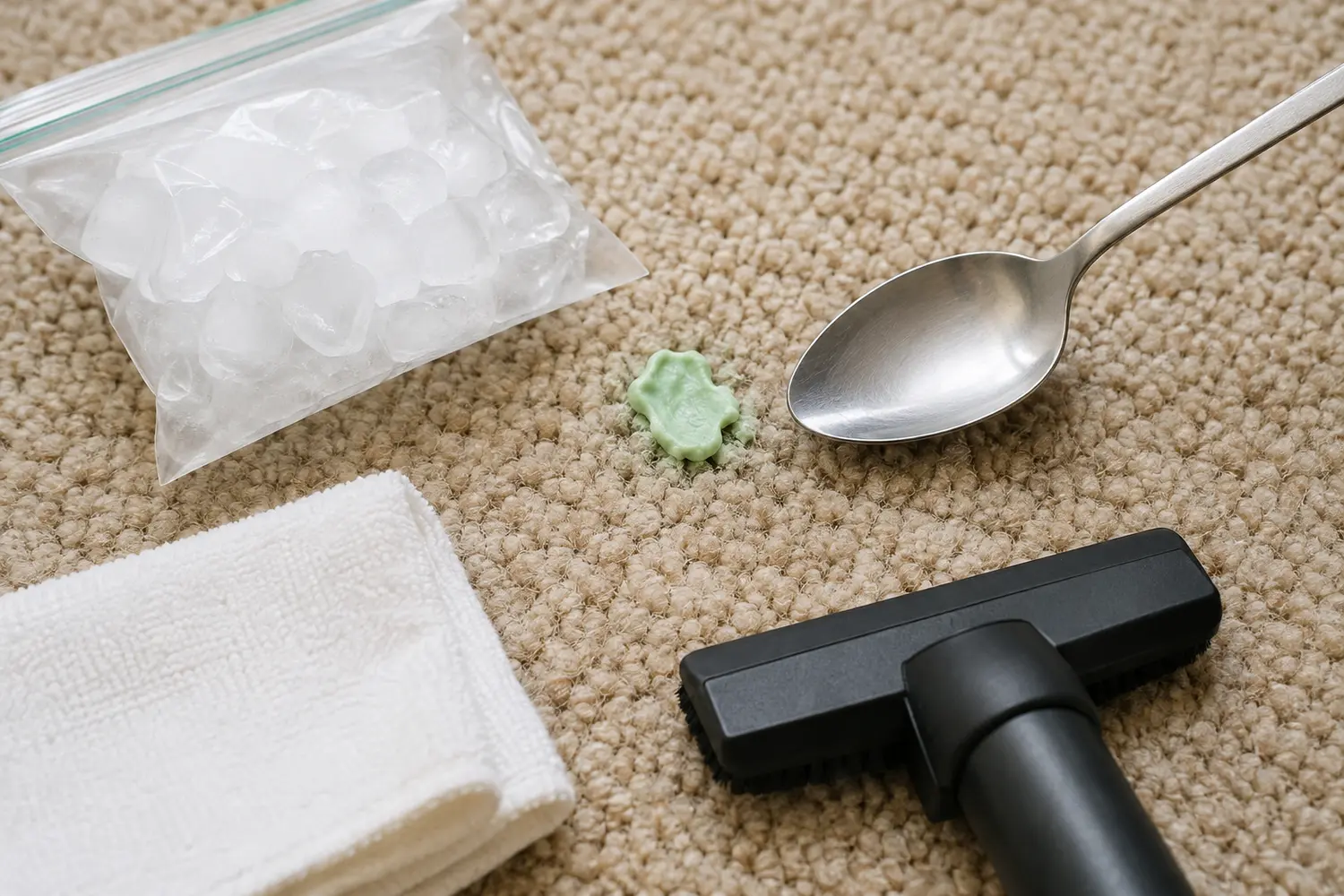
- Bag some ice cubes or use a freezer block, and press it onto the gum.
- Hold for 5–10 minutes until the gum is rock hard all the way through.
- Break it apart with the back of a spoon or a blunt knife — it should crack, not stretch.
- Lift the pieces out of the pile with your fingers or tweezers, working from the edges.
- Vacuum the fragments before they warm up and re-stick.
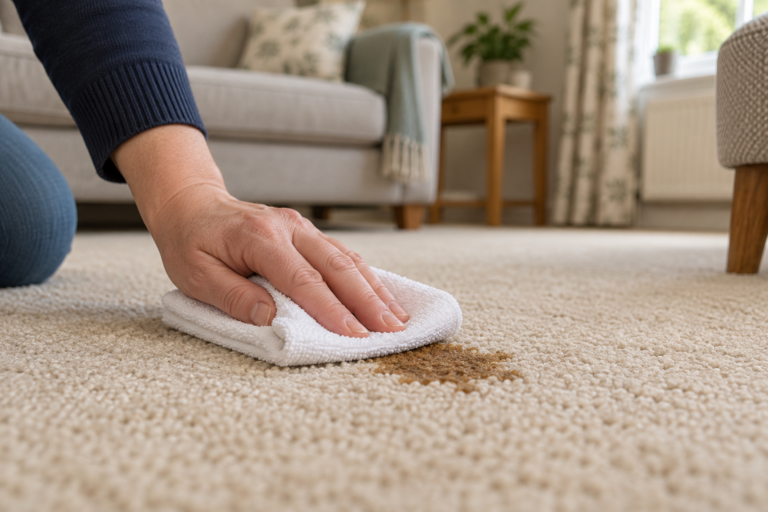
- Treat any residue with a dab of white vinegar or washing-up liquid solution, then blot.
If the gum softens before you’ve finished, re-freeze it. Repeat cycles are far safer than forcing it.
What Removes the Sticky Residue Left Behind?
A mild solvent or detergent lifts the thin sticky film that remains after the bulk is gone. Work gently — the hard part is already done, and aggressive scrubbing at this stage damages the pile.
Options that work:
- White vinegar — warmed slightly, dabbed on with a cloth, then blotted
- Washing-up liquid solution — a teaspoon in a cup of warm water
- Surgical spirit or rubbing alcohol — effective on stubborn residue; always patch-test first
- Commercial gum remover — follow the label and test on a hidden area
Test any product on a hidden patch, especially on wool. For a broader look at sticky and greasy marks, see our guides to removing wax from carpet and grease stains on carpet and upholstery.
Should I Ever Cut Gum Out of Carpet?
Cutting should be a last resort, because it leaves a permanent bald patch that’s usually more visible than the gum was. Only consider it when gum is deeply matted into a small area and repeated freezing has failed.
If you must trim, snip only the very tips of the affected fibres with small scissors, staying above the carpet backing. Never cut down to the base. Before reaching for scissors, get a professional opinion — hot water extraction combined with proper solvents removes most gum that DIY methods leave behind, and it costs far less than a patch repair.
When Is It Worth Calling a Professional?
Call a professional when gum has been walked in across a wide area, is embedded in wool or a valuable rug, or when a previous attempt has spread it. Professionals use fibre-safe solvents and extraction that lift both the gum and its residue without damaging the pile.
It’s also the right call when several patches are involved — trodden-in gum across a hallway or stairs is a job that DIY freezing rarely finishes cleanly. See our London carpet cleaning service or book a visit online.
Frequently Asked Questions
Does WD-40 remove chewing gum from carpet?
WD-40 can loosen gum, but it leaves an oily residue that attracts dirt and creates a second stain needing its own treatment. Freezing is safer and cleaner for carpet. If you do use a solvent, patch-test first and follow with a detergent clean to remove the oily film completely.
How long should I freeze gum before removing it?
Five to ten minutes of direct ice contact usually hardens gum right through. Test it by pressing gently — properly frozen gum feels solid and cracks rather than stretching. If it still gives, keep icing. Re-freezing between attempts is normal and far safer than pulling gum that’s started to soften.
Will chewing gum leave a permanent stain on carpet?
Plain gum rarely stains, since the problem is stickiness rather than pigment. Coloured or sugary gum can leave a faint mark, which usually responds to a mild detergent solution. Permanent damage almost always comes from pulling or cutting the pile, not from the gum itself.
Can I use a hairdryer instead of ice?
Heat is the opposite of what you want. A hairdryer softens gum, making it stretch deeper into the fibres and spread wider. Some guides suggest heating to scrape gum off hard floors, but on carpet it makes removal significantly harder. Always freeze rather than heat.
The Bottom Line
Chewing gum on carpet looks worse than it is. Freeze it solid, crack it apart, lift the pieces, then clean the residue gently — and resist every urge to pull at it while it’s warm. Cutting the pile is a last resort that leaves a mark of its own.
Gum trodden across a room or stuck in a wool rug? Book professional carpet cleaning in London and keep your pile intact.