Table of Contents
To get crayon out of carpet safely, pick up the crayon and gently lift loose fragments without rubbing them into the pile. Identify the crayon product and the carpet before treating remaining colour. Do not automatically use an iron, solvent or household cleaner: a method suitable for one product or surface may damage another.
A red or blue scribble is not simply a candle-wax spill. Coloured residue may remain after loose wax is removed. Our carpet stain-removal guide covers general spill decisions; this article focuses on crayon fragments, pigment and choosing a controlled next step.
Key takeaways
- Keep shoes and cleaning tools from carrying crayon into clean carpet.
- Lift loose fragments with a blunt spoon without scraping or digging into yarns.
- Check whether the product is regular or washable crayon; the label does not establish carpet compatibility.
- Use only a carpet-approved treatment, following its instructions and testing as directed.
- Stop when colour spreads, texture changes or further removal needs force.
Jump to: identify the materials, loose fragments, remaining colour, heat and solvents, drying checks or FAQs.
Identify the crayon and carpet
Start with the packaging. Keep the crayon wrapper or box and note whether it is a regular wax crayon, a washable product or a different colouring stick. Photograph the affected area before touching it. Check for loose pieces, pressed-in colour or material already softened by heat; these are different starting conditions.
Crayola explains that its crayons are made primarily from paraffin wax and colour pigment. That explains why removing a loose wax piece does not necessarily remove the visible colour. The description is specific to Crayola crayons, not a verified formula for every art product.
Find the carpet’s manufacturer and care instructions. Fibre, backing, dyes and finishes all affect treatment choices. Do not identify a carpet by feel alone or assume a wool-safe product suits every wool carpet. If the carpet or colouring product is unidentified, limit handling to loose pieces and seek advice before adding chemicals.
Lift loose crayon without scraping the pile
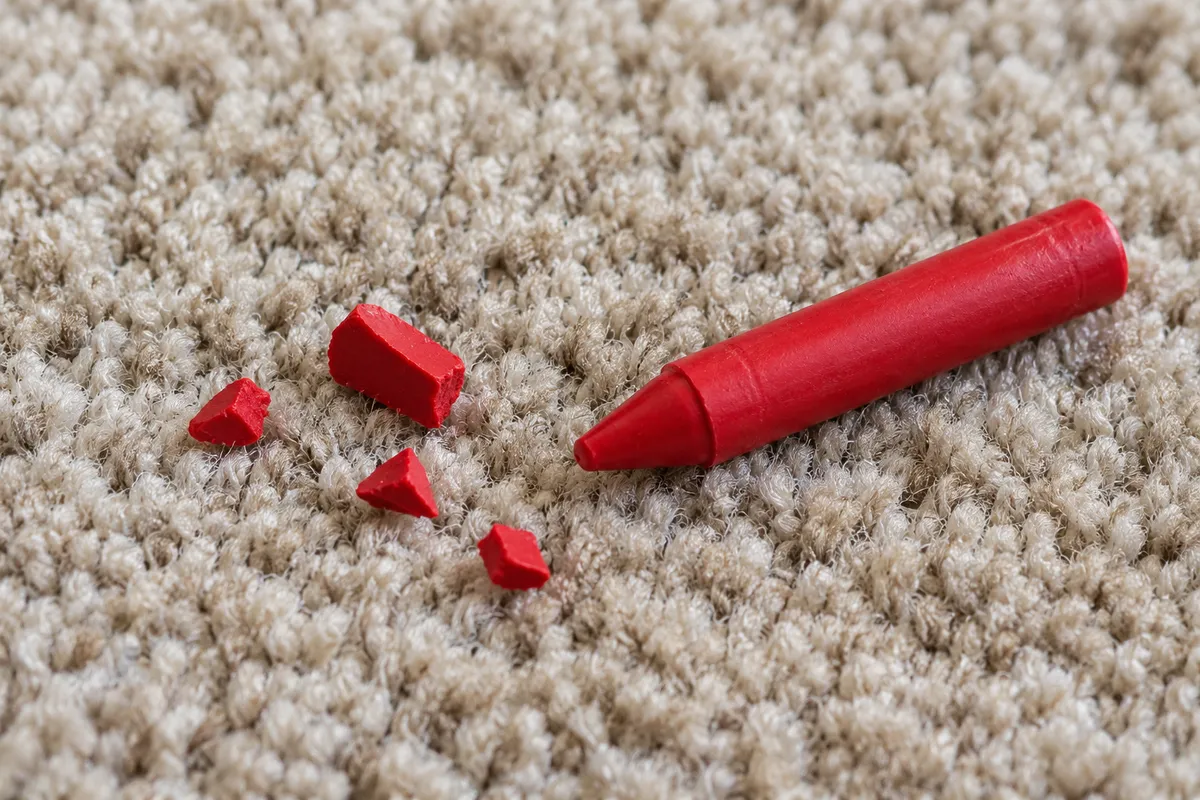
Remove what is sitting on top, not what is bonded into the yarns. Pick up whole crayons and accessible pieces. Use a clean blunt spoon to lift loose fragments carefully, placing each piece onto a separate disposable surface. Keep the spoon clear of loops and do not drag it across the mark.
- Keep people and pets away so fragments are not pressed into the pile.
- Work from the affected edge towards the centre, collecting only pieces that lift readily.
- Clean the spoon between lifts so coloured residue is not transferred elsewhere.
- Stop if the tool catches yarns, smears wax or needs downward pressure.
Vacuuming is not the automatic next step. Check the carpet and equipment instructions before collecting any remaining loose dry debris. Do not vacuum softened, sticky or wet material with equipment intended for dry dust. Avoid powered brushing across a coloured mark: the aim is containment, not forcing pigment out through agitation.
Choose an approved treatment for remaining colour
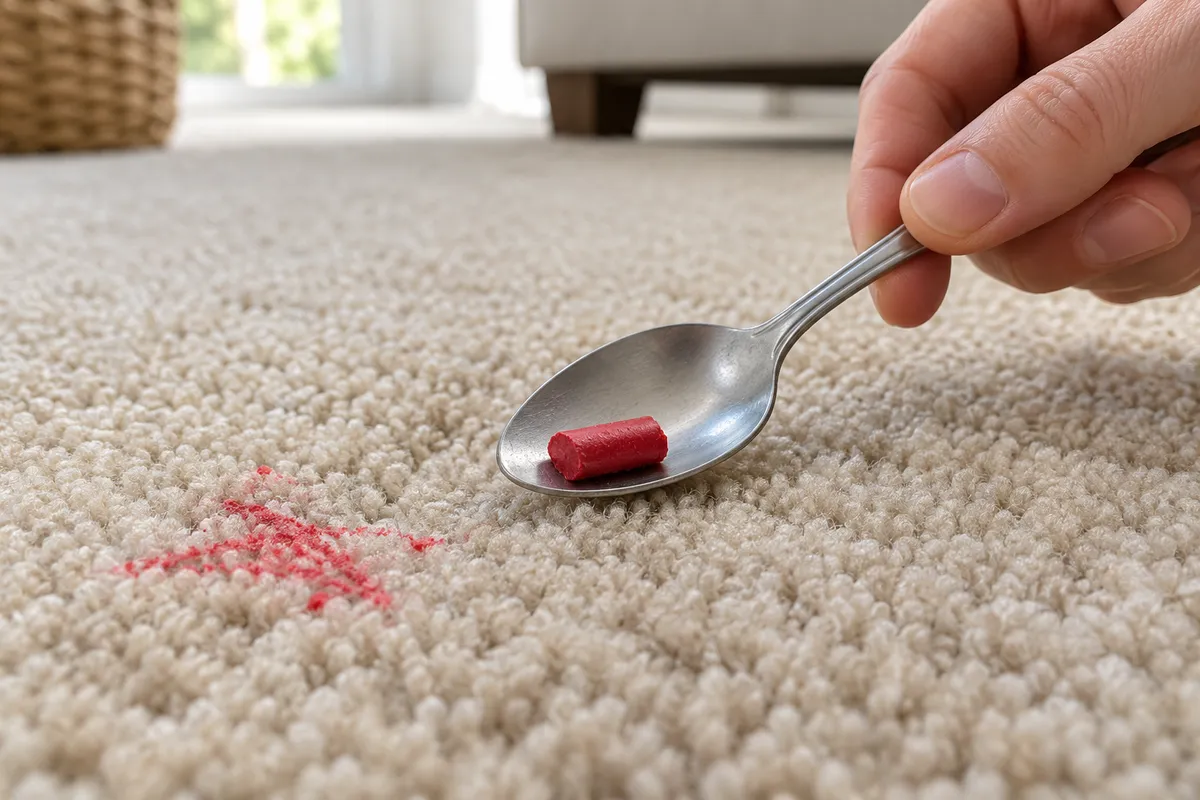
Check both sets of instructions. In its regular-crayon stain tips, Crayola’s carpet-and-upholstery section lists a dull knife or metal spoon for excess crayon and directs readers to follow the carpet cleaner’s instructions. This is product-specific guidance, not approval to scrape delicate carpet or use any named cleaner on an unknown fibre.
Establish approval before a hidden-area test. For example, Shaw’s carpet-care guidance specifies Shaw-approved cleaners and advises against abrasive scrubbing. That is a useful example of manufacturer-specific restrictions, not permission to use a Shaw product on another carpet.
- Find the carpet maker and exact range using purchase records or installation paperwork; do not guess fibre from appearance.
- Locate that range’s stain-care guidance and check whether it covers crayon or wax-and-pigment residue.
- Cross-check the proposed cleaner’s stated surfaces, restrictions and application instructions against the carpet guidance.
- If either instruction set is unclear, ask the manufacturer or assessor what exact product and method are permitted before testing.
Test an inconspicuous area of the same carpet as instructed, then let it dry fully. Compare colour, feel and pile with untouched carpet. Lightening, colour transfer, stiffness or a ring means you should not proceed. If approved treatment is permitted and the test is unchanged, keep application local and follow the stated method without increasing strength or contact time.
| What you see | Next step | Stop if |
|---|---|---|
| Loose crayon pieces | Lift loose pieces; no force | Yarn catches or wax smears |
| Colour in yarns | Check carpet and crayon care | No approved method |
| Soft or melted wax | Stop adding heat; seek advice | Colour spreads |
| Previously treated mark | Record products used | New colour or pile change |
Why heat and household solvents are not default fixes
Do not copy a heat-transfer recipe without carpet-specific permission. An iron or hairdryer adds another variable to a coloured-wax problem. You cannot establish safe temperature, contact time or compatibility simply from a video. Keep hot tools away from the carpet while deciding what treatment is appropriate.
Our separate candle-wax guide addresses a related but different spill. Linking to it does not make a candle-wax method suitable for a crayon scribble. When the residue includes strong colour, explain that to the person assessing the mark rather than describing it only as wax.
Likewise, do not reach for acetone, petrol-based products, adhesive remover, bleach or washing-up liquid because they removed crayon from a wall or clothing. Instructions for a hard surface or washable fabric do not transfer to installed carpet. Avoid mixing cleaners or repeatedly wetting a mark that is not improving.
Regular and washable crayons need separate decisions
Washable is a product description, not a promise for every carpet. Check the exact product’s stain guidance and the carpet’s care restrictions together. Do not substitute instructions for another crayon range, marker or pastel just because the colour looks similar. Retain the packaging if you request professional advice.
If someone has already tried a method, record what was used, how much was applied and whether the mark changed after drying. A washable crayon treated with an incompatible cleaner is still a treatment-history problem. Sharing that information helps an assessor distinguish the original residue from a change caused during cleaning.
Dry and check before another attempt
After an approved damp treatment, follow its drying instructions and keep foot traffic off the area. Allow appropriate room airflow; do not place a heater directly against carpet or cover a damp patch with a rug. Do not assume the backing is dry because the surface feels dry.
Inspect the fully dried area in similar light to your original photograph. Check whether the coloured boundary has spread or whether the pile is stiff, flattened or sticky. A remaining stain is not permission for a stronger mix. Persistent moisture, new odour or altered texture calls for assessment before more treatment.
When professional assessment makes sense
Seek advice for melted crayon, a large scribble, delicate or unidentified carpet, colour change or residue that remains after permitted treatment. The London stain-removal service is the relevant starting point for a local mark. Wider professional carpet cleaning may have a different scope, so confirm what is appropriate rather than assuming a full-room clean will remove every pigment.
Frequently asked questions
Can I use an iron to remove crayon from carpet?
Not as a default method. Crayon combines wax with colour, and safe heat exposure depends on the carpet and treatment instructions. Seek carpet-specific advice before using heat rather than copying a candle-wax technique.
Will washable crayon always come out?
No outcome is guaranteed for every carpet. Check the exact crayon range and carpet instructions. Colour, treatment history and carpet construction can change what is possible; washable does not establish compatibility with any cleaner.
Should I scrub a red crayon mark?
Avoid aggressive brushing or scrubbing. Lift only loose pieces, then assess remaining colour separately. Stop if handling spreads pigment or changes the pile instead of increasing pressure.
Why is colour left after the wax pieces are removed?
Crayon can include coloured pigment as well as wax. Loose-piece removal does not establish that all residue has left the yarns. Remaining colour needs a compatible treatment decision, not more scraping.
How much does professional crayon stain treatment cost?
Ask for a quote based on carpet details, mark size and previous treatment. The cleaning price guide gives general context, not a guaranteed price for crayon removal. Confirm likely limitations before booking.
Get advice before escalating treatment
Contact 4 Seasons Carpet Clean with photographs, carpet information and the crayon packaging. Say whether the residue is loose, pressed in or melted and list all products already applied. That is more useful than continuing until the coloured patch becomes larger.