Table of Contents
To clean a fabric headboard while reducing the risk of water marks, check its care instructions, remove loose dust gently and protect the bedding, mattress and wall. Use moisture only when approved for the exact upholstery, test the method in a hidden area and let it dry before judging the result. Do not soak or repeatedly scrub a visible patch.
A headboard is more than its visible fabric: padding, seams, backing and the frame also affect what treatment is suitable. This guide explains how to clean a fabric headboard with clear stopping points. Our sofa and upholstery cleaning service provides related service information; ask whether headboard cleaning is available and suitable for your model before arranging work.
Key takeaways
- Check the exact fabric and headboard instructions before choosing tools or products.
- Begin with permitted dry care; keep the mattress and bedding clear of the work.
- Test approved spot treatment and inspect the test only after it dries.
- Avoid soaking, scrubbing and adding more liquid to chase a ring.
- Check the upholstery, accessible edges and nearby surfaces before replacing pillows.
Jump to: preparation, dry care, spot treatment, drying or FAQs.
Check the label and protect the surroundings
Find the model, fabric name and care booklet first. DFS’s bed frame cleaning guide puts manufacturer instructions first. Its guidance for simple woven upholstery includes a soft cloth or clothes brush; its damp-dabbing advice mentions cool soapy water. These are DFS product recommendations, not permission to use that recipe on every headboard.
A beige linen-look finish does not establish the fibre content or whether water is allowed. Ask the supplier if instructions are missing. A zip does not establish that a cover is washable. Record existing marks in a photograph so you can compare them after treatment.
- Remove pillows and fold bedding away from the headboard; keep clean linen outside the work area.
- Place a clean protective barrier and absorbent cloths over the exposed mattress near the work, without wrapping the headboard.
- Protect adjacent frame finishes and the floor from drips; keep cleaning cloths off painted or wallpapered walls.
- Gather clean white cloths and only the tools or treatment approved for this upholstery.
Keep the headboard securely attached. Do not pull a wall-mounted panel forward or undo fittings just to reach its back. If access requires moving a heavy bed or disconnecting integrated lighting, arrange suitable help and follow its instructions. The mattress is a separate cleaning surface: our mattress cleaning service concerns that surface, not permission to apply the same method to your headboard.
Remove dust with permitted dry care
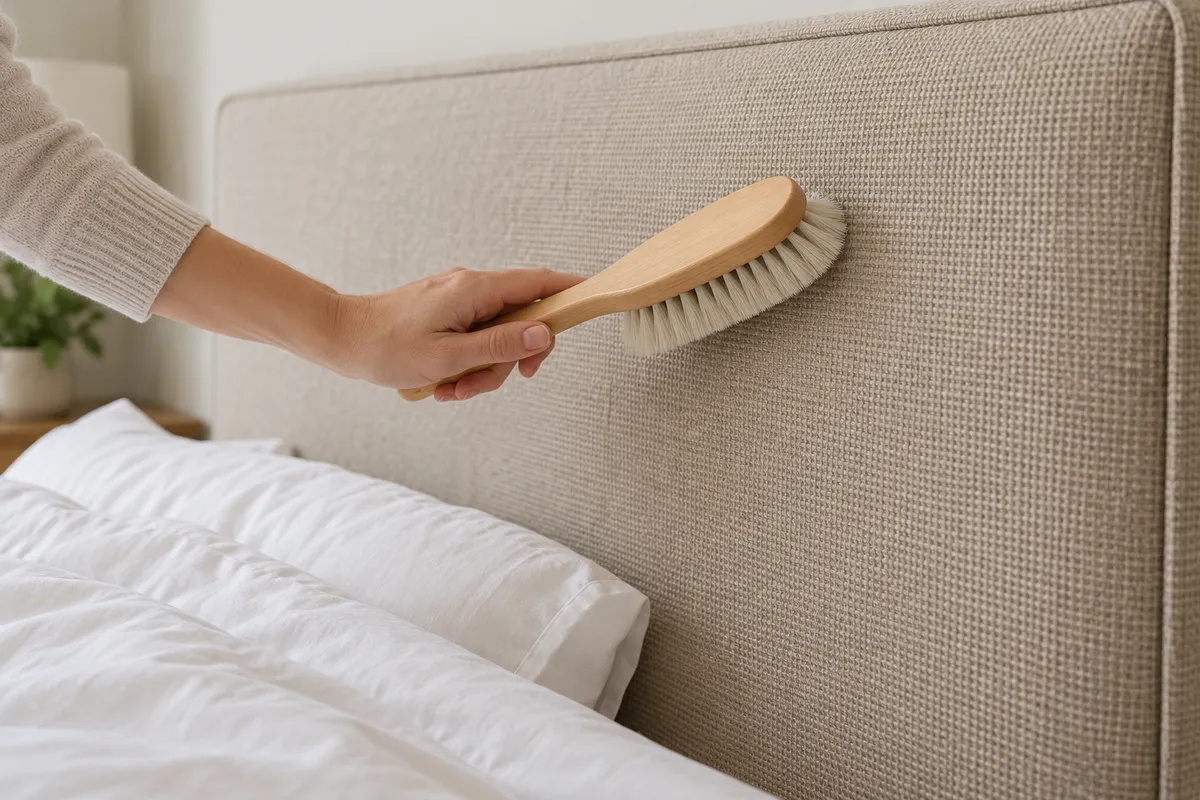
Begin on a small, inconspicuous area with a clean soft dry cloth or brush if the care instructions permit it. Use light contact and lift loosened dust away. Avoid vigorous back-and-forth brushing, especially around buttons, piping and decorative stitching. Check for caught threads or a changed surface before continuing.
Do not default to a vacuum nozzle. DFS warns that vacuuming its upholstered bed frames may disturb fillings and that nozzles can damage deep-pile velvet. Those restrictions belong to DFS’s bed guidance. For another manufacturer’s headboard, confirm its own tool instructions instead of assuming either universal permission or a universal ban.
Keep the brush on the fabric rather than scraping it across exposed timber or metal trim. Work on accessible sections without forcing bristles beneath buttons or into seams. If dust removal leaves a mark behind, pause to identify it. Increasing pressure is not a substitute for an approved stain method.
Test before treating a local mark
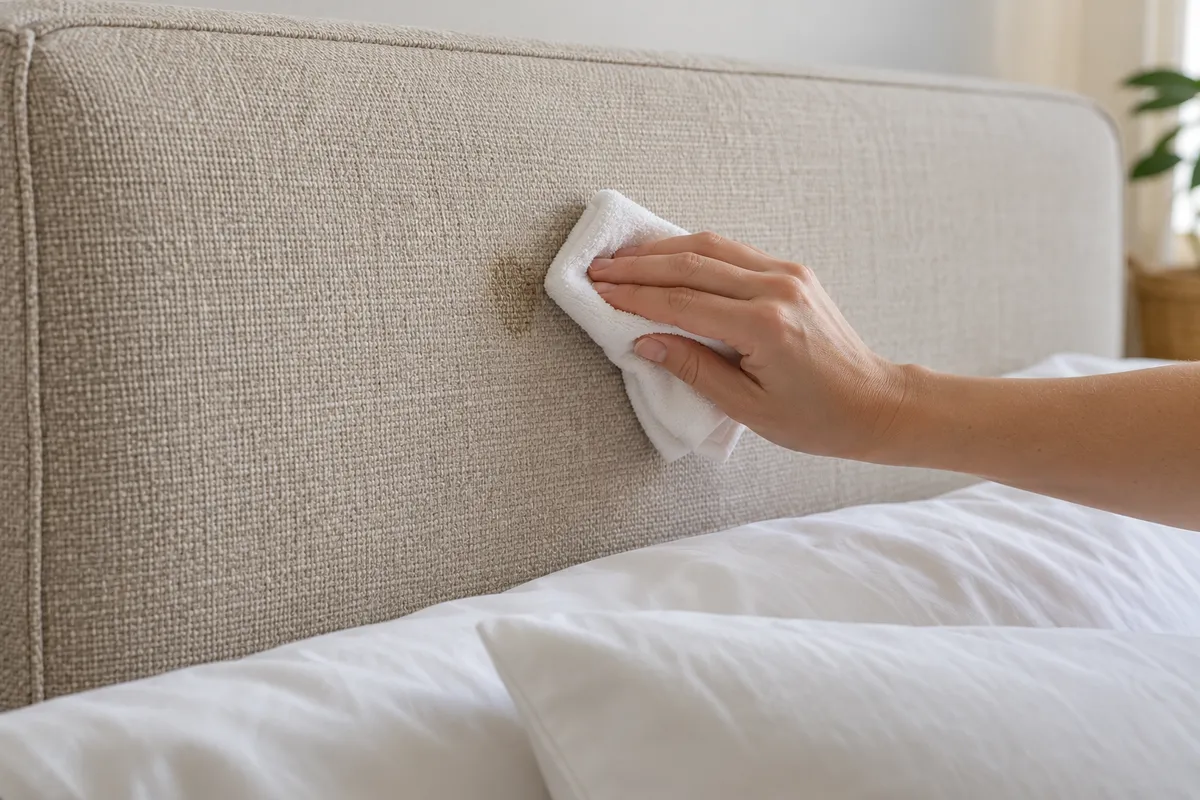
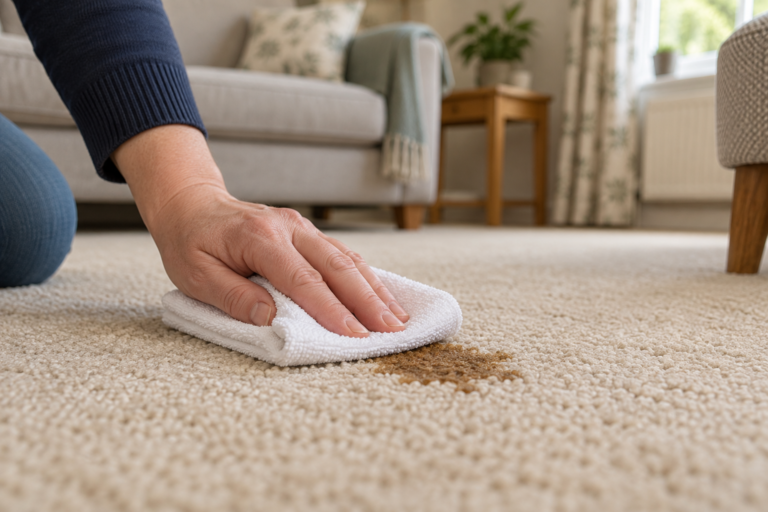
For a fresh liquid spill, gently blot with a clean dry white cloth. Change to a fresh section as it absorbs the spill, without rubbing or spreading liquid across the panel. For a dry or oily mark, identify what caused it and consult the fabric instructions before adding a cleaner. An old stain is not a reason to wet the upholstery first.
Where damp treatment is expressly approved, follow the specified product, concentration and application method. Apply it to a cloth rather than spraying the headboard unless the instructions say otherwise. Use only the permitted amount: the cloth should not drip onto the mattress or frame. Work within the approved treatment area, without improvising a whole-panel rinse.
- Choose a hidden, accessible patch of the same fabric, away from electrical fittings and existing damage.
- Test the approved method exactly as directed, with the surrounding surfaces protected.
- Let the patch dry completely and compare its colour, feel and texture with untreated fabric.
- If unchanged, treat the local mark according to the same instructions, including any required residue removal.
Stop if colour transfers, the fabric puckers or the test leaves a ring, stiffness or altered pile. Do not continue because the stain seems lighter while wet. A small successful test also cannot guarantee a larger treatment will behave identically. If the mark spreads or remains after drying, seek a professional stain assessment and confirm that headboard upholstery can be assessed.
Dry and inspect before making the bed
Follow the approved treatment’s drying instructions and keep pillows away until the area is dry. Allow room airflow without directing concentrated heat at the fabric. Avoid hairdryers, radiator contact or a steamer to speed drying. Remove protective cloths if they become damp, so they do not leave moisture against the mattress or frame.
Check accessible seams and the lower edge, where moisture may be less obvious. Do not open sealed upholstery to inspect its padding. Also check that the mattress protection, frame and nearby wall stayed dry. No single waiting time suits every headboard: the amount of moisture, construction and room conditions differ.
Once dry, inspect in ordinary daylight from the same position used before treatment. Look for a fixed outline, changed shade, stiffness or disturbed texture. Photograph any new ring instead of repeatedly wetting its edge. Persistent dampness, a musty smell or moisture against the wall is a reason to seek advice before restoring the bedding.
Reduce contact marks between cleans
DFS identifies makeup, skincare, hair products and natural skin oils as sources of marks on fabric headboards. It recommends removing makeup and allowing lotions to dry before bed, while avoiding contact with hair treatments. Prevention reduces the occasions when stain treatment is needed; it does not make the fabric stain-proof.
Keep an eye on areas where heads or hands regularly rest and remove loose dust using the approved routine. Check behind pillows when changing bedding, rather than waiting for a large dark patch. If you use a removable protective cover, confirm it is suitable and wash it according to its own label.
Frequently asked questions
Can I use washing-up liquid on a fabric headboard?
Check the specified cleaner rather than substituting a kitchen detergent. If the instructions name a soap, use its stated concentration and residue-removal method. Avoid guessing a dilution or mixing products; a visible mark does not justify increasing the strength.
Should I wet the whole headboard to prevent a ring?
Only follow a whole-panel method if your exact product instructions require it. Do not enlarge a damp patch to chase an edge. If a ring remains after drying, stop and request advice about the fabric and previous treatment rather than repeating the process.
Can I steam clean a fabric headboard?
Use steam only where expressly approved for the fabric, padding and construction. Permission for damp spot cleaning does not establish steam compatibility. Buttons, backing, frame finishes and wall proximity also need consideration before choosing a machine-based treatment.
Does a no-vacuum mattress rule also apply to the headboard?
Not automatically. Hypnos’s bed care guidance includes a soft-brush and no-vacuum instruction concerning upholstery fillings in its mattress-care context. Check headboard-specific instructions separately; restrictions for one component cannot establish the method for another.
How much does professional headboard cleaning cost?
First confirm the cleaner offers headboard cleaning and accepts your fabric and mounting arrangement. Our London cleaning price guide gives general context, not a headboard price. Request a quote covering access, stain history, the proposed method and drying arrangements.
Ask about suitability before booking
For unexplained marks or an unsuccessful approved treatment, contact 4 Seasons Carpet Clean with photographs, the fabric name, care instructions and details of products already used. Ask whether headboard cleaning is available and suitable, and what result is realistic.
Editorial scope: Prepared for 4 Seasons Carpet Clean from the linked manufacturer guidance and cautious general preparation, testing and drying checks. Product instructions take priority. This guide does not report first-hand headboard testing or guarantee stain removal or prevention of water marks.