Table of Contents
To clean a sofa before moving out, compare its condition with the check-in inventory, confirm who owns it and follow its care instructions. Collect loose dry debris only by a permitted method, seek advice about stains and allow any treated upholstery to dry fully. Photograph the final condition before handing back keys or covering your own sofa for transport.
In a furnished London flat, the sofa may stay while your boxes leave. That changes the task: you need to account for the supplied cushions and existing marks as well as surface cleanliness. If treatment needs assessment, the London sofa-cleaning service is a relevant starting point.
Key takeaways
- Separate landlord-owned furniture from your own sofa before planning cleaning or removal.
- Match check-in photographs and keep records of existing marks, labels and permissions.
- Use manufacturer-permitted care; a zip does not mean a cushion cover is washable.
- Schedule treatment around checkout and removals, leaving time for complete drying.
- Keep final photographs and service records; a receipt does not guarantee deposit repayment.
Jump to: ownership and photos, move-out planning, care instructions, loose debris, stains or FAQs.
Check ownership and the inventory

Identify whether the sofa belongs to the landlord, to you or to someone sharing the flat. For supplied furniture, find the inventory description and original photographs. Count seat cushions, back cushions and any supplied scatter cushions. Check that you are comparing the same sofa, particularly if furniture changed during the tenancy.
- Take a wide photograph showing the sofa in its room.
- Repeat the check-in angles, including both arms, seat fronts, backrest and accessible sides.
- Record existing stains, fading, pulled threads and damage separately from loose dirt.
- Keep original files and relevant messages together, labelled by date and location.
For your own sofa, the main decisions are safe cleaning, drying and removal. Do not leave it behind without agreement. For a landlord-owned sofa, confirm where it should remain at checkout and ask before dismantling it, removing fixed upholstery or arranging an unfamiliar treatment. If the original inventory is vague, request clarification rather than trying to recreate an assumed condition.
Plan cleaning around your move
Work backwards from key handover and the removal van booking. Ask about appointment availability and drying requirements before choosing a date. A clean on the final morning may leave insufficient time for inspection or drying, especially in a small flat where windows cannot safely stay open after you leave.
Keep a clear route between the entrance and sofa. Tell a cleaner about stairs, lift access, parking restrictions and any building booking requirements. Put boxes in another dry space so they do not obstruct the work or sit against treated upholstery. The separate carpet-cleaning appointment guide covers room access; confirm sofa-specific preparation with your provider.
| When | Sofa task |
|---|---|
| Before booking | Check ownership, label and photos |
| Before treatment | Agree scope and clear access |
| During drying | Keep upholstery uncovered |
| Before handover | Check condition and take photos |
| Before transport | Confirm your sofa is fully dry |
Arrange another seat while upholstery is drying. If your sofa is going into storage, discuss that deadline explicitly with the cleaner and removal company. Keep blankets and wrapping ready elsewhere, but do not apply them until drying is complete.
Follow the care label before cleaning
Find the maker’s instructions and photograph the care label without forcing the sofa over or reaching into an unsafe mechanism. Ask the landlord or agent for product information if necessary. Fabric appearance alone does not identify the permitted cleaning method; an upholstery code also needs to be read alongside the maker’s full guidance.
Removable cushions and removable covers are different things. A zip may be provided for assembly, not home washing. Check whether covers can be removed, washed and refitted, including any restrictions affecting their fillings. For landlord-owned furniture, get written permission before a treatment outside routine permitted care. Permission does not establish material compatibility.
If a product and method are expressly permitted, follow all instructions, including any hidden-area test and drying check. Stop if colour transfers or texture changes. If guidance is missing or contradictory, pause chemical treatment and seek manufacturer or professional advice.
Collect loose debris gently
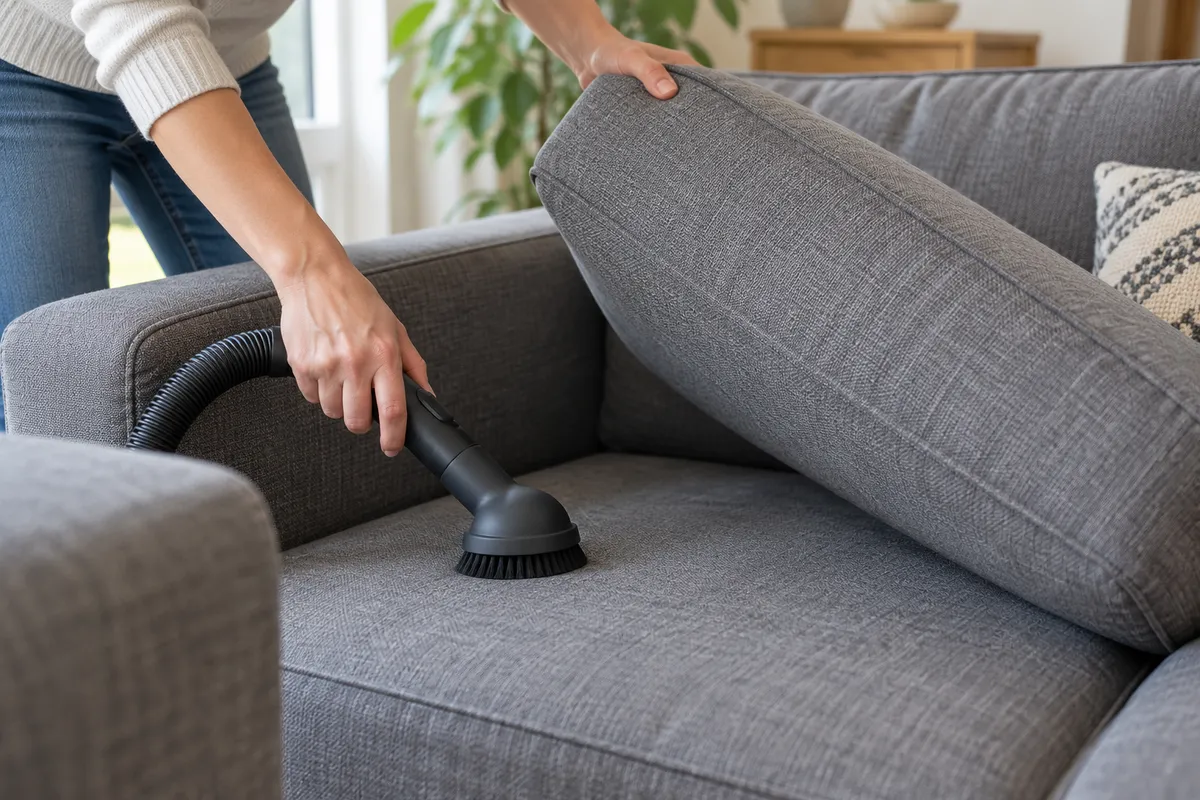
Collect accessible coins and other loose objects by hand first. For ordinary dry crumbs and dust, use a vacuum only if the sofa maker and equipment instructions permit it. Select the specified upholstery attachment and suction setting. A clean, rounded soft tool may be suitable for some fabrics, but it is not permission to vacuum every upholstery type.
- Lift only cushions designed to be lifted and set them on a clean, dry surface.
- Make gentle passes over permitted areas without pressing the tool into the fabric.
- Keep tools clear of loose threads, trims, damaged seams and moving parts.
- Stop if fabric pulls, loops catch or material sheds unusually; photograph the issue.
Do not vacuum wet spills or sticky residues with a dry-dust machine. Avoid powered brushes and scraping into seams. Leave inaccessible undersides and heavy furniture handling to an agreed safe approach. Replace each cushion in its original position after checking the seating recess.
Decide what to do about stains
Treat a stain as a separate decision from removing crumbs. Record its position, probable cause and any products already used. Do not apply a universal vinegar, bicarbonate, washing-up liquid or steam recipe. Even a small mark needs a method compatible with the fabric, dye, backing and filling.
Seek assessment for unidentified fabric, persistent odour, widespread soiling or a mark that remains after permitted care. Report suspected damp or mould promptly rather than masking it with fragrance. Tell the assessor about previous attempts and any known damage so the proposed work reflects the actual condition.
Agree professional scope and exclusions
A booking should identify the sofa and exactly what will be treated. Ask whether the quote includes all cushions, arms, back, loose covers and stain assessment. Confirm access costs, drying advice and exclusions. Do not assume repairs, fabric restoration, pest treatment, mould remediation or complete odour removal are part of upholstery cleaning.
Use the London cleaning price guide for general context, then obtain a sofa-specific quote. Request a dated receipt describing the item and work completed, plus any recorded limitations. Keep it with your photographs, but remember that payment proves a service was purchased, not that every mark disappeared or that your deposit will be returned.
Dry fully and record the handover
Follow the maker’s and cleaner’s drying instructions, using safe ventilation as advised. Do not force drying with a heater against the sofa. Check treated cushions and concealed contact areas as directed; a dry-feeling surface alone does not confirm dry filling. If moisture persists or an unusual smell develops, contact the cleaner before covering or using it.
Your own sofa must be fully dry before packing, wrapping or covering for transport or storage. For a supplied sofa, inspect it once dry and repeat the inventory photographs in comparable light. Replace supplied cushions, note remaining marks and send relevant records to the agent before key handover. Keep copies somewhere accessible after moving.
Cleaning standards and deposits in England
For England, DPS guidance on fair disputes explains that fair wear must be considered and deductions cannot fund an improvement over the starting condition. A landlord cannot insist on professional hire when a tenant can achieve the required cleaning standard. Decisions depend on the evidence in each case.
The government’s tenant-fees guidance, updated 7 July 2026, applies to England and explains permitted payments and routes for challenging prohibited fees. It is general fees guidance. This article is not legal advice; rules elsewhere in the UK differ. For a separate carpet question, see carpet cleaning between tenancies.
Frequently asked questions
Must I hire a professional sofa cleaner before checkout?
In England, DPS distinguishes achieving the required standard from compulsory professional hire where a tenant can meet it themselves. Check the starting evidence and obtain advice if a requirement is disputed.
Can I wash zipped sofa covers?
Only where the maker permits it for those covers. Check removal, washing and refitting instructions; a zip alone is insufficient. Confirm permission for landlord-owned upholstery before proceeding.
What if my removal van arrives while the sofa is damp?
Contact the cleaner and removal company to rearrange the handling plan. Do not seal damp upholstery in wrapping or pack it into storage. Confirm complete drying before covering it.
What if a mark was already there when I moved in?
Compare the check-in description and photographs with your new images. Identify the exact cushion or panel and retain any earlier messages about it. Ask the agent to record the comparison.
Does a cleaning receipt guarantee my deposit back?
No. A receipt records purchased work, while DPS considers the evidence of each dispute. Keep it alongside photographs and any treatment limitations; it is not a deposit guarantee.
Ask for assessment before your deadline
If care instructions or remaining marks need assessment, contact 4 Seasons Carpet Clean with sofa photographs, the care label, ownership details and your checkout or transport date. Include previous treatments and ask about scope and drying before booking.