Table of Contents
To clean a chenille sofa without flattening the pile, check its fabric instructions, remove loose dirt with permitted gentle dry care and blot fresh spills. Brush only if allowed, using a soft brush in the direction of the nap. Add moisture or cleaner only as directed for your exact upholstery, then let it dry before assessing the colour and texture.
A darker seat patch is not automatically dirt. Chenille’s fuzzy surface can look different where the pile lies differently or catches the light. This guide explains how to clean a chenille sofa while avoiding unnecessary treatment. For broader service information, see our sofa cleaning in London page; confirm a suitable method for your fabric rather than assuming the general service description applies.
Key takeaways
- Chenille describes a texture; the exact fabric and model instructions decide its care.
- Check a patch from different viewing angles before treating it as a stain.
- Use light vacuum contact, and brush with the nap only where permitted.
- Blot spills; avoid scrubbing, excess water and improvised hot treatments.
- Judge treated upholstery only after drying, without expecting worn pile to recover permanently.
Jump to: care instructions, brushing, shading or soil, spills, drying or FAQs.
Check the fabric instructions first
Find the care label, order details and fabric name before choosing a method. Sofology’s chenille fabric overview describes a soft pile and materials including cotton, polyester and viscose. That variation matters: chenille is not one fibre with one cleaning recipe. Similar-looking sofas may have different care restrictions.
Ask the retailer for instructions matching your upholstery if the label is missing. Check whether vacuuming, hand brushing and damp spot treatment are each allowed. Permission for one does not establish permission for the others. A care kit sold by another retailer is not automatically suitable, and a stain-resistant description does not remove the need to check.
- Prepare clean white absorbent cloths and a clean, soft upholstery attachment.
- Set out a soft upholstery brush only if hand brushing is permitted.
- Photograph existing rings, wear and flattened patches in ordinary room light.
- Keep any approved product’s instructions nearby, including drying and residue-removal directions.
Remove loose dirt without compressing the pile
Use gentle vacuuming where the manufacturer allows it. Sofology’s chenille care guidance says normal use can flatten or crush its upholstery pile and recommends a soft brush vacuum attachment to help revive it. This is Sofology’s product guidance, not a guarantee that vacuuming will reverse wear on every chenille sofa.
For permitted vacuuming, begin on an inconspicuous area with low suction and light contact. Keep the attachment moving rather than pressing it into the cushion. Lift accessible loose crumbs from seams without forcing the tool against the fabric. Check that the head is clean before moving from another surface onto the sofa.
Pause if suction lifts the upholstery, the head drags or the surface becomes visibly disturbed. Avoid rotating brush heads, stiff bristles and repeated scraping for pet hair. A patch that remains dark after loose dirt is removed needs inspection, not stronger suction. Dry maintenance should not become an attempt to grind the fabric into an even finish.
Brush with the nap only when permitted
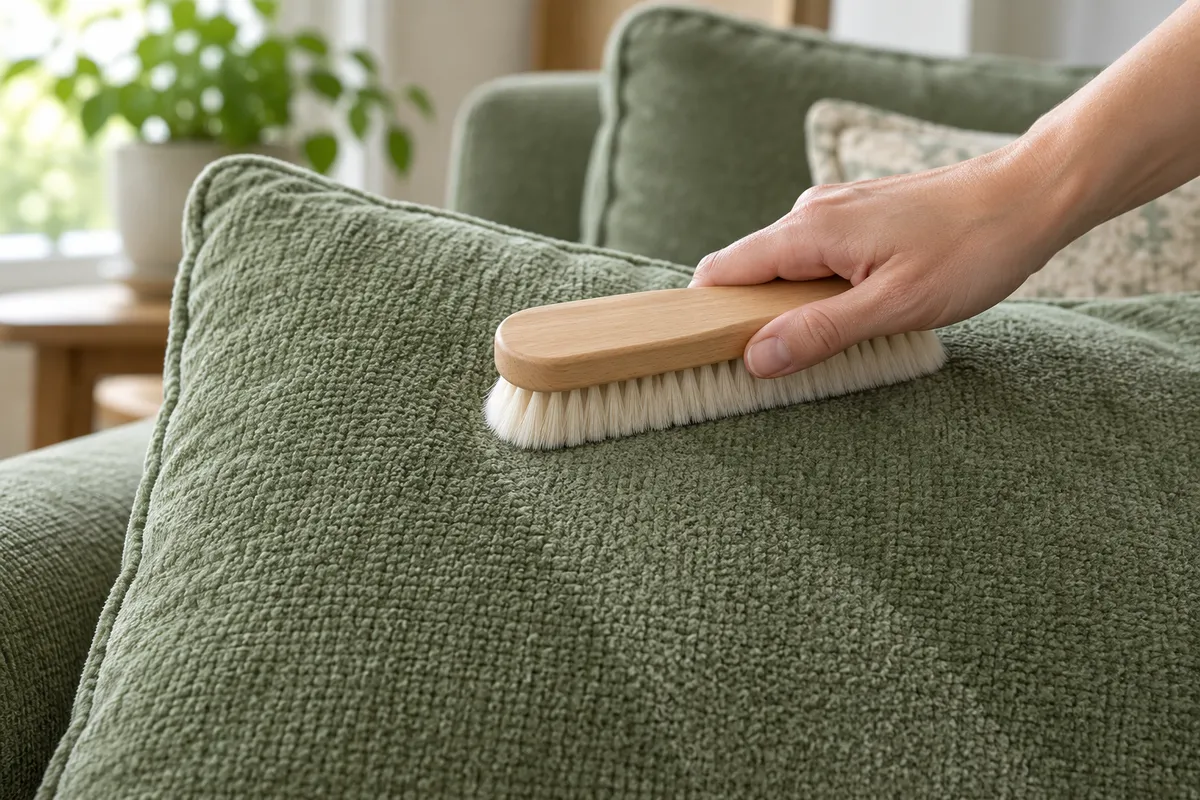
Where your care instructions allow brushing, use a soft brush with the nap and minimal pressure. DFS’s chenille buying guide recommends brushing its chenille in the nap direction. Follow the instructions for your own model before adopting that routine.
The nap is the direction in which the surface fibres lie. On a small, dry, hidden area, check which direction lets an approved soft brush glide without resistance. Use that direction for light strokes, lifting the brush between passes. If the direction is unclear, ask the retailer rather than repeatedly brushing both ways to find a preferred colour.
Do not scrub back and forth, bear down on a seat depression or brush wet upholstery unless its instructions expressly require it. Stop if fibres lift, fuzz develops or the brush catches. The purpose is gentle surface care. A worn or persistently crushed patch may remain different even after careful maintenance; more friction is not a restoration method.
Tell nap shading from a stain
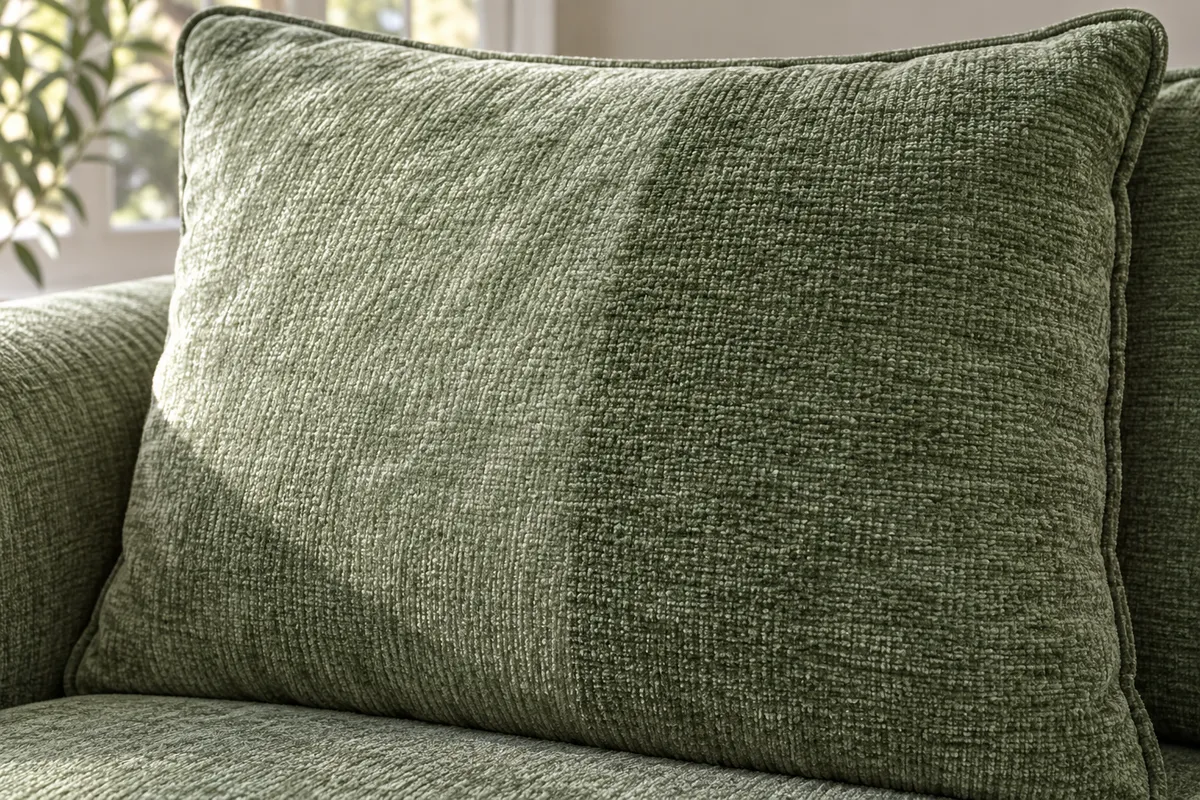
Compare the patch from several angles before applying a cleaner. DFS describes chenille as a pile fabric that catches light differently across the furniture. Directional shading can therefore resemble uneven colour. A viewing check can help you decide what to investigate, but cannot prove that a patch is clean or undamaged.
Keep the cushion in place and walk around it in ordinary daylight. Does the patch become less obvious from another position, or does its outline remain fixed? Compare it with the photographs taken before cleaning. Avoid adding water just to see whether the colour changes: dampness introduces another variable and can make the comparison harder.
| What you notice | What it may suggest | Useful next check |
|---|---|---|
| Light and dark areas change with viewing angle | Nap direction or the fabric’s sheen may contribute | Compare in consistent light; use only permitted dry care |
| A fixed edge follows a known spill | A stain or previous watermark needs consideration | Check the spill history and approved treatment instructions |
| The patch feels rough, stiff or sticky | Residue, soil or altered texture may be involved | Pause further brushing and seek fabric-specific advice |
| A seat area stays smooth or depressed | Compression or wear may contribute | Ask for assessment; do not assume cleaning will restore the pile |
Treat these as clues rather than diagnoses. Soil, wear and directional shading can occur together. If a smooth patch remains visible from different angles, do not keep brushing until it matches its neighbour. Record what you see and describe the difference to the retailer or cleaner.
Blot spills and limit spot treatment
Blot a fresh liquid spill with a clean, dry white cloth. DFS advises prompt dabbing for its chenille sofas and directs owners to the instructions supplied with its fabric care kit for stubborn stains. Neither recommendation makes every spray or damp treatment suitable for other chenille upholstery.
Use a fresh section of cloth as it absorbs liquid. Lift loose thick material carefully without scraping the pile, then blot what remains. Do not rub a spreading wet edge or press a brush into the spill. If liquid has reached the filling, surface appearance alone cannot tell you how much moisture remains beneath it.
Sofology warns against using excessive water on its chenille. Keep any permitted treatment within your own manufacturer’s method: do not turn a local mark into whole-cushion wetting without explicit instructions. Advice to treat an entire panel belongs to the product for which it was written; it is not a general chenille rule.
- Confirm the exact cleaner and method are approved for your fabric, including any dilution.
- Test a hidden area of the same upholstery as directed and allow it to dry completely.
- Check the dry test for colour transfer, a ring, stiffness, puckering or changed pile.
- Proceed only if the test is unchanged, following the approved stain-treatment and residue-removal instructions.
A successful small test does not guarantee that a larger treatment will behave identically. Stop after an adverse result or a stain that persists after drying. For an unknown or oily mark, request professional stain assessment and disclose every product already used. Confirm suitability for chenille before any treatment.
Dry fully and inspect in consistent light
Let permitted damp treatment dry before deciding whether another pass is needed. Follow the product’s drying directions, keep the area uncovered and allow room airflow. Avoid hairdryers, radiator contact and concentrated heat. Do not put a throw over a damp seat or sit on it to judge whether the texture feels normal.
Check accessible seams and cushion undersides without opening sealed upholstery. A dry-feeling surface does not establish that the filling is dry. There is no reliable universal waiting time: the amount of moisture, cushion construction and room conditions all matter. If dampness or a musty smell persists, seek advice rather than adding fragrance or more liquid.
Once dry, compare the treated area from the same position and in similar light to your earlier photograph. Look for a fixed ring, changed colour, stiffness or an unusually smooth patch. Check from another angle too. Resume permitted dry care only if appropriate; new texture changes deserve assessment, not an attempt to hide them with vigorous brushing.
Frequently asked questions
Can I steam clean a chenille sofa to lift the pile?
Only if the manufacturer expressly approves steam for that upholstery and construction. Water-based spot-cleaning permission does not establish heat tolerance. Do not use a clothes steamer or steam cleaner as a pile-restoration shortcut, and do not expect permanently compressed fibres to recover.
Can I use washing-up liquid, vinegar or bicarbonate of soda?
Use only products and methods expressly approved for your fabric. A household recipe is not validated by the chenille name. Do not mix cleaners, sprinkle powder into the pile or increase detergent strength because a patch remains visible after drying.
Can removable chenille cushion covers go in the washing machine?
Only where their care instructions explicitly permit machine washing and specify drying and refitting. A zip does not establish washability. Check the complete cover instructions; treating the outer fabric separately may be inappropriate for its backing, finish or fitted shape.
What if a flat patch stays after gentle cleaning?
Stop trying to make it match through repeated brushing. Persistent compression, wear or a previous treatment may need assessment. Send the retailer clear photographs from different angles and your care details. Cleaning can address suitable soil; it cannot promise to rebuild damaged or worn pile.
How much does professional chenille sofa cleaning cost?
Request a fabric-specific quote based on size, condition, previous treatments and the proposed method. Our London cleaning price guide provides general context, not a guaranteed chenille price. Ask what drying arrangements and treatment limitations are included.
Ask for assessment when the texture changes
For water rings, persistent dampness, unexplained marks or altered pile, contact 4 Seasons Carpet Clean with the model, fabric instructions, photographs and treatment history. Ask whether the upholstery is suitable for cleaning and what outcome is realistic before arranging work.
Editorial scope: Prepared for 4 Seasons Carpet Clean using the linked manufacturer guidance and cautious general inspection checks. Manufacturer advice is scoped to its products. This guide does not report testing on your sofa or guarantee stain removal or pile restoration; your exact care instructions take priority.