Table of Contents
TL;DR
If your carpets have light dirt and only need a refresh, a DIY carpet cleaner may be sufficient. However, for stubborn stains, pet odours, allergies, expensive carpets, or carpets that haven’t been professionally cleaned in over a year, hiring an experienced carpet cleaning company usually delivers better results and protects your investment. Professional hot water extraction removes significantly more embedded soil, allergens and moisture than consumer machines while reducing the risk of fibre damage, detergent residue and prolonged drying times.
Why Trust This Guide?
This guide is based on the real-world experience of the technicians at 4 Seasons Carpet Clean, who have professionally cleaned carpets across London since 2016. Every day we inspect carpets affected by heavy foot traffic, pet accidents, drink spills and DIY cleaning mistakes. Our teams use commercial hot water extraction equipment, specialist Prochem cleaning solutions and fibre-specific cleaning techniques while following recognised industry best practices aligned with NCCA and BICSc recommendations. That practical experience allows us to explain not only what works, but why.
Quick Answer
Choose DIY carpet cleaning if:
- Your carpet is lightly soiled.
- You’re carrying out routine maintenance.
- There are no stubborn stains or odours.
- The carpet is relatively new.
Choose a professional carpet cleaner if:
- There are pet accidents or lingering smells.
- Your carpet has heavy traffic lanes.
- You own wool, Persian or delicate carpets.
- Someone in your home suffers from allergies.
- It’s been over 12 months since the last deep clean.
- You want the carpet to last as long as possible.
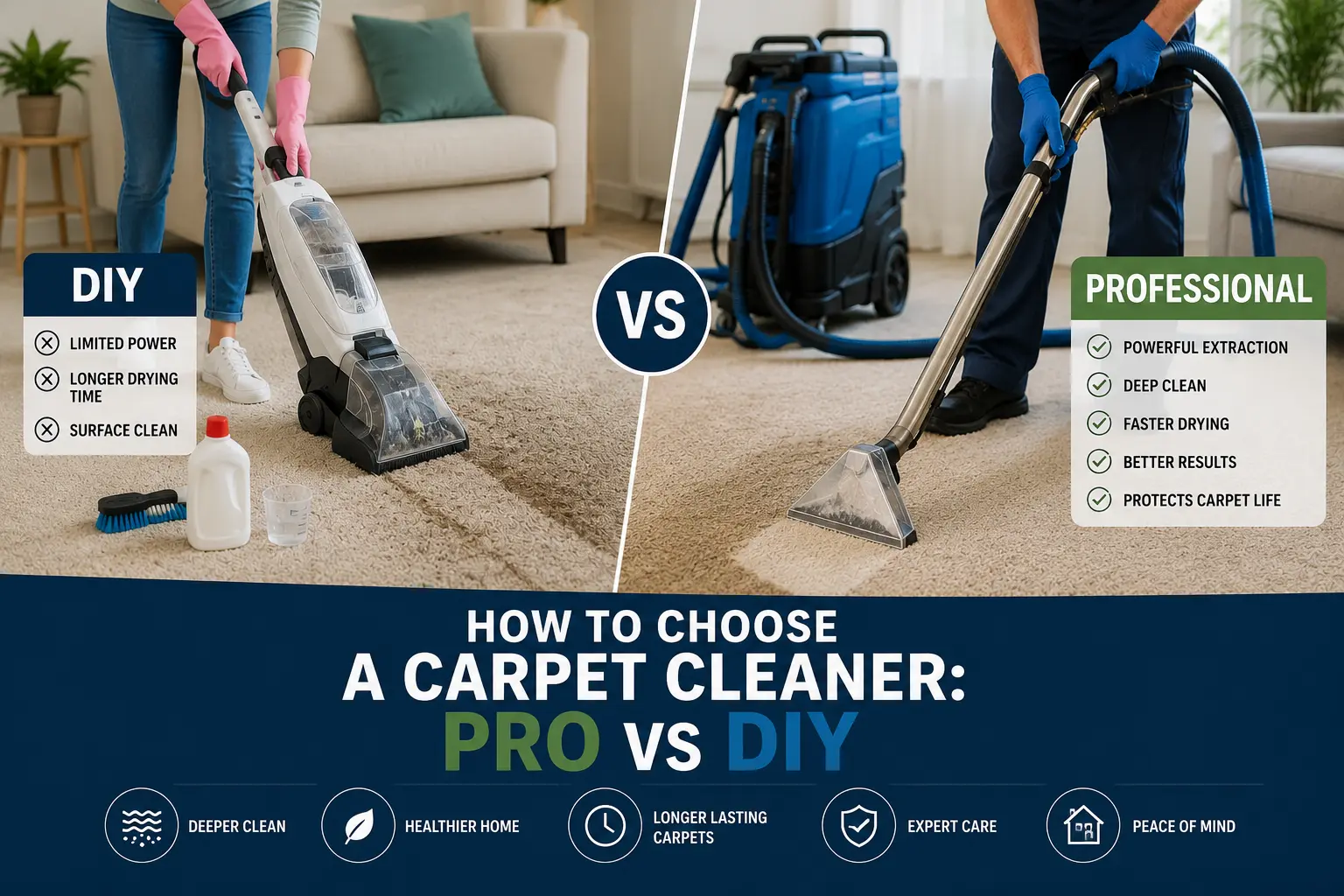
DIY vs Professional Carpet Cleaning at a Glance
| Factor | DIY | Professional |
|---|---|---|
| Equipment Power | Consumer grade | Commercial grade |
| Cleaning Depth | Moderate | Deep extraction |
| Drying Time | 8–24+ hours | Usually 2–6 hours |
| Stain Removal | Limited | Advanced treatments |
| Pet Odour Removal | Sometimes | Excellent |
| Fibre Protection | Depends on user | Professionally assessed |
| Risk of Damage | Moderate | Low |
| Overall Results | Good for maintenance | Best for restoration |
How to Decide in Under 30 Seconds
| Your Situation | Best Choice |
|---|---|
| Light household dirt | DIY |
| Annual maintenance between deep cleans | DIY |
| Pet urine or odours | Professional |
| Red wine, coffee or grease stains | Professional |
| Wool carpet | Professional |
| End of tenancy | Professional |
| Allergy sufferers | Professional |
| Expensive fitted carpet | Professional |
Understanding the Biggest Difference
Many homeowners believe professional cleaners simply use stronger detergents.
That isn’t the biggest difference.
The biggest difference is soil removal.
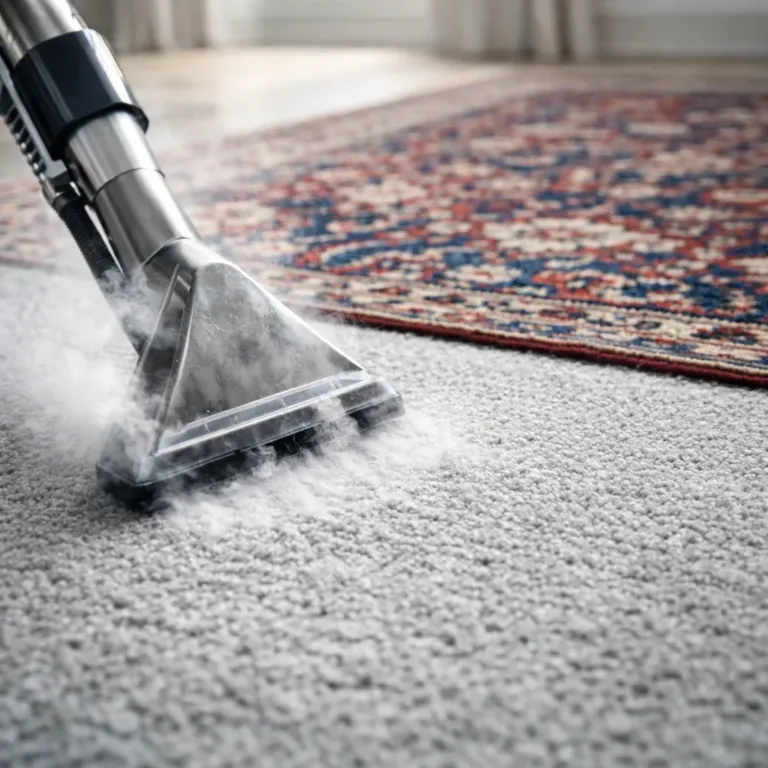
Commercial extraction machines produce considerably higher vacuum lift, stronger water recovery and more consistent cleaning temperatures than domestic machines. This allows technicians to flush contaminants from deep within the carpet while recovering most of the moisture immediately.
Consumer machines simply cannot achieve the same extraction performance.
Technician Insight
One of the most common problems we see across London isn’t dirty carpets—it’s carpets that have been cleaned incorrectly.
Rental machines often leave detergent residue behind because they recover only part of the water applied. The carpet may initially look cleaner, but sticky residues attract fresh dirt quickly, causing it to become dirty again within a few weeks.
In many homes, the solution isn’t stronger chemicals—it’s better extraction.
When DIY Carpet Cleaning Works Well
DIY cleaning is a practical option when your carpet only needs a refresh.
It works best for:
- Seasonal maintenance
- Guest bedrooms
- Recently installed carpets
- Small spills treated immediately
- Homes without pets
Vacuum thoroughly beforehand, follow the manufacturer’s dilution rates, avoid over-wetting the carpet and allow adequate drying time.
DIY should be viewed as maintenance, not restoration.
When Professional Cleaning Is the Better Choice
Professional carpet cleaning becomes worthwhile whenever contaminants extend below the visible surface.
This includes:
- Heavy traffic lanes
- Food spills
- Coffee and wine stains
- Pet urine
- Dust mite build-up
- Smoke odours
- Embedded dirt
- Long-neglected carpets
These situations require commercial extraction equipment and fibre-specific stain treatments.
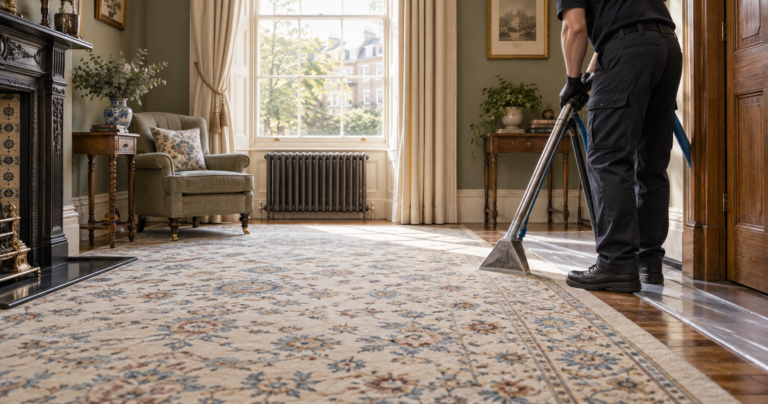
For homeowners looking for a complete deep clean, our professional carpet cleaning service in London uses commercial hot water extraction systems designed to remove deep-seated soil while protecting carpet fibres.
Professional Equipment Makes the Difference
Professional technicians don’t rely on a single machine.
Instead, they combine several specialist tools depending on the carpet’s condition.
Typical equipment includes:
- High-temperature hot water extraction machines
- Low-moisture encapsulation systems
- Specialist carpet rakes
- Rubber squeegees for embedded pet hair
- Commercial air movers
- Moisture meters
Each tool serves a specific purpose throughout the cleaning process.
Professional Cleaning Products Aren’t Just Stronger
Many DIY products focus on appearance.
Professional chemistry focuses on contamination.
Our technicians commonly use specialist Prochem formulations selected according to the stain type rather than applying one detergent to everything.
Examples include treatments for:
- Protein stains
- Coffee
- Tannins
- Food oils
- Grease
- Organic contamination
- Pet urine
For pet accidents, enzyme treatments and oxidising solutions are chosen specifically to break down organic uric acid crystals rather than simply masking unpleasant odours.
Technician Insight
Many homeowners judge success by the colour of the dirty water coming out of a machine.
Experienced technicians don’t.
We assess fibre condition, remaining contamination and detergent recovery—not simply how dark the waste tank looks.
Dark extraction water doesn’t necessarily mean the carpet is fully clean.
Common DIY Carpet Cleaning Mistakes
Most carpet damage isn’t caused by the machine.
It’s caused by incorrect use.
The mistakes we encounter most often include:
- Using far too much detergent.
- Over-wetting the carpet.
- Scrubbing stains aggressively.
- Using supermarket spot removers on delicate fibres.
- Skipping pre-vacuuming.
- Walking on carpets before they’re dry.
- Ignoring manufacturer care instructions.
Each of these can shorten a carpet’s lifespan.
Choosing the Right Cleaning Method for Your Carpet
Different fibres require different approaches.
| Carpet Type | Recommended Method |
|---|---|
| Synthetic twist | Hot water extraction |
| Wool | Controlled extraction |
| Berber | Fibre-specific treatment |
| Loop pile | Encapsulation or extraction |
| Delicate natural fibres | Professional assessment first |
Using the wrong cleaning method may cause:
- Colour bleeding
- Shrinkage
- Browning
- Delamination
- Fibre distortion
Cost vs Long-Term Value
DIY cleaning usually appears cheaper.
However, the true comparison includes:
| DIY Costs | Professional Service |
|---|---|
| Machine hire | Included |
| Cleaning chemicals | Included |
| Spot removers | Included |
| Your time | None |
| Repeat cleaning | Rarely needed |
| Risk of mistakes | Very low |
Professional cleaning often proves more economical over the lifespan of an expensive carpet because it reduces premature wear and helps maintain appearance.
What Professionals Check Before Cleaning
No reputable technician starts cleaning immediately.
A proper inspection includes:
- Fibre identification
- Colour-fastness testing
- Existing damage
- Previous stain treatments
- Moisture levels
- Traffic patterns
- Pet contamination
- Manufacturer recommendations
This assessment determines the safest and most effective cleaning method.
Local Expertise Matters
Local knowledge can make a noticeable difference.
Properties across Paddington and Central London often present unique challenges such as high foot traffic, rental turnover and urban dust accumulation.
Our dedicated Paddington carpet cleaning specialists regularly adapt cleaning methods to suit these environments while protecting different carpet constructions commonly found in London homes and apartments.
Combined with a verified 5.0-star Google rating, a strong Checkatrade reputation and years of experience serving London households, this local expertise gives customers confidence that the correct method will be chosen rather than applying the same process to every carpet.
Expert Recommendation
If your carpet only has light dirt, DIY maintenance can help keep it looking presentable between professional visits.
If you’re dealing with persistent stains, unpleasant odours, valuable carpets or allergy concerns, professional cleaning is almost always the better investment.
It delivers:
- Better extraction
- Faster drying
- Improved indoor air quality
- Longer carpet life
- Lower risk of damage
Bottom Line
DIY carpet cleaning has an important role in regular home maintenance, but it cannot replicate the performance of commercial equipment or experienced technicians.
Think of DIY as routine maintenance and professional cleaning as preventative maintenance for one of the largest soft furnishings in your home.
Choosing the right option at the right time protects your investment, improves indoor air quality and keeps carpets looking their best for years.
Frequently Asked Questions
Is hiring a carpet cleaner better than buying one?
For occasional use, hiring is usually more cost-effective. Neither option matches commercial extraction equipment.
Is professional carpet cleaning worth the money?
For heavily soiled carpets, pet odours and expensive flooring, professional cleaning often extends carpet life and improves results enough to justify the cost.
Can DIY carpet cleaning damage carpets?
Yes. Over-wetting, incorrect detergents and excessive scrubbing can permanently damage some carpet fibres.
Does professional carpet cleaning remove pet urine?
Professional treatments can break down the organic compounds responsible for odours far more effectively than standard household cleaners.
How often should carpets be professionally cleaned?
Most homes benefit from professional cleaning every 12–18 months, while homes with pets or allergy sufferers often benefit from cleaning every 6–12 months.
Is hot water extraction the best cleaning method?
For most synthetic carpets, hot water extraction is considered the most effective deep-cleaning method because it removes embedded soil while thoroughly rinsing fibres.
Are professional cleaning products safe?
When correctly applied and fully extracted by trained technicians, professional products are designed to be safe once the carpet has dried.
Should wool carpets always be professionally cleaned?
In most cases, yes. Wool requires controlled moisture levels and fibre-specific cleaning chemistry.
Can professional cleaning help allergy sufferers?
Yes. Deep extraction removes dust, pollen, pet dander and other allergens trapped within carpet fibres.
What should I look for when choosing a carpet cleaner?
Look for proven experience, verified customer reviews, recognised industry standards, commercial-grade equipment, transparent pricing and a cleaning method suited to your carpet—not a one-size-fits-all approach.