Table of Contents
Short answer: professional carpet cleaning can be suitable for a period home, but the method must match the carpet fibre, backing, subfloor, furniture and moisture sensitivity of the building. Protect thresholds and original surfaces, identify delicate materials before work starts, and avoid treating a historic floor like a modern synthetic carpet.
Period properties often combine wool carpets, natural-fibre rugs, timber thresholds, original skirting boards and rooms with limited ventilation. That combination makes careful inspection more important than choosing the strongest-looking machine. This guide explains how to prepare, what to ask a cleaner and how to protect original flooring while improving indoor cleanliness.
For the service itself, see our professional carpet cleaning service in London.
Key Takeaways
- Identify carpet fibre, backing, rug construction and vulnerable thresholds before cleaning.
- Use controlled moisture and suitable chemistry; more water or stronger detergent is not automatically better.
- Protect timber, tiles, vents and decorative details from overspray, standing moisture and equipment contact.
- Ask for a written method, drying plan and stain-removal expectations before work begins.
Why Do Period Homes Need a More Careful Carpet-Cleaning Plan?
Older homes can contain materials and construction details that react differently to moisture, heat and movement. A carpet may look ordinary while its backing, underlay or fixing method needs special care. Timber thresholds can mark if they stay damp, and narrow staircases or delicate furniture can restrict equipment placement.
Historic England advises that damp in historic buildings should be assessed before choosing remedial work, because moisture can have several causes and inappropriate interventions may create further problems. The same principle applies to cleaning: inspect first, then select a proportionate method. Read Historic England’s guidance on assessing damp in historic buildings if you are investigating a wider moisture issue.
Carpet cleaning will not repair rising damp, leaking plumbing, failed gutters or condensation. If you see active damp, salt deposits, mould or a persistent wet smell, pause cleaning and investigate the building problem first.
What Should You Check Before Booking a Cleaner?
Give the cleaner useful information before the appointment. Send photographs of the carpet, stairs, thresholds and any visible damage. Mention whether the carpet is wool, sisal, viscose, silk, cotton or synthetic, and say whether the property is listed or has conservation requirements.
- Fibre and construction: ask whether the cleaner can identify the material and backing.
- Age and condition: disclose fraying, loose edges, faded areas, previous repairs and dye transfer.
- Moisture history: mention leaks, flooding, damp patches and rooms that dry slowly.
- Access: explain stairs, narrow corridors, parking restrictions and fragile furniture.
- Surface protection: ask how timber, stone, tiles, skirting boards and door thresholds will be protected.
Our guide to choosing a carpet cleaner covers questions about equipment, insurance, experience and realistic results.
Which Carpet-Cleaning Method Is Safest for an Older Property?
There is no single safest method for every period home. The correct choice depends on fibre, backing, soiling, access and drying conditions. A professional should inspect a hidden area, check colourfastness where appropriate and explain the proposed moisture level before cleaning the full room.
Low-moisture cleaning
Low-moisture methods can suit rooms where fast drying matters, but they still need correct chemistry and agitation. Excessive rubbing can damage a fragile pile, and powder or compound residue must be removed properly.
Hot-water extraction
Hot-water extraction can remove embedded soil when the carpet and backing are suitable. It should be controlled, followed by strong recovery and supported by ventilation. “Steam cleaning” is often used loosely in marketing, so ask what temperature, moisture level and extraction process the company actually means. See our hot-water extraction explainer.
Natural-fibre caution
Sisal, viscose, silk and some wool constructions can be sensitive to water, agitation or alkaline products. Do not approve a generic treatment solely because it worked on a synthetic carpet. Our natural-fibre carpet guide gives further background.
How Can You Protect Timber, Tiles and Decorative Details?
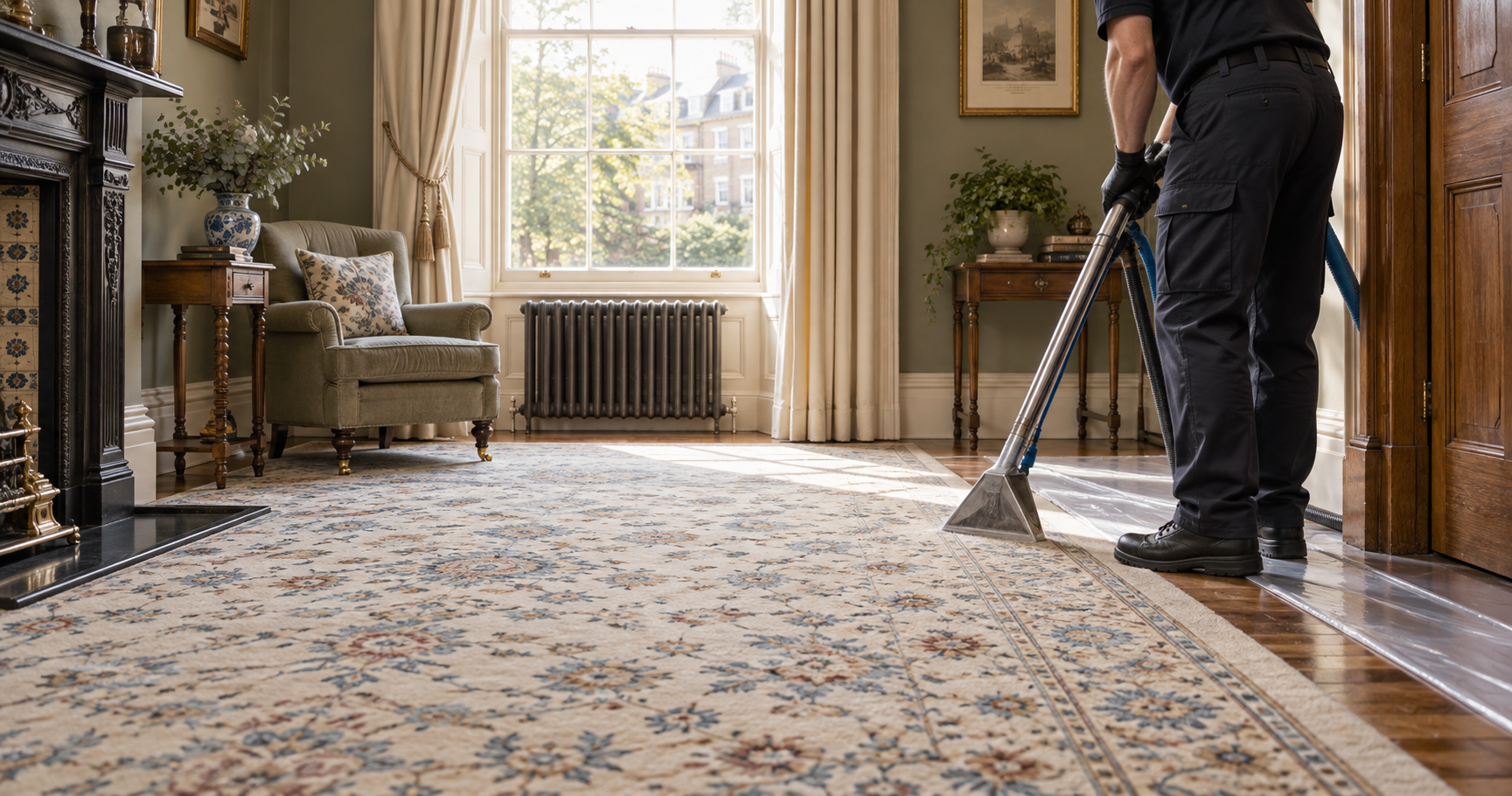
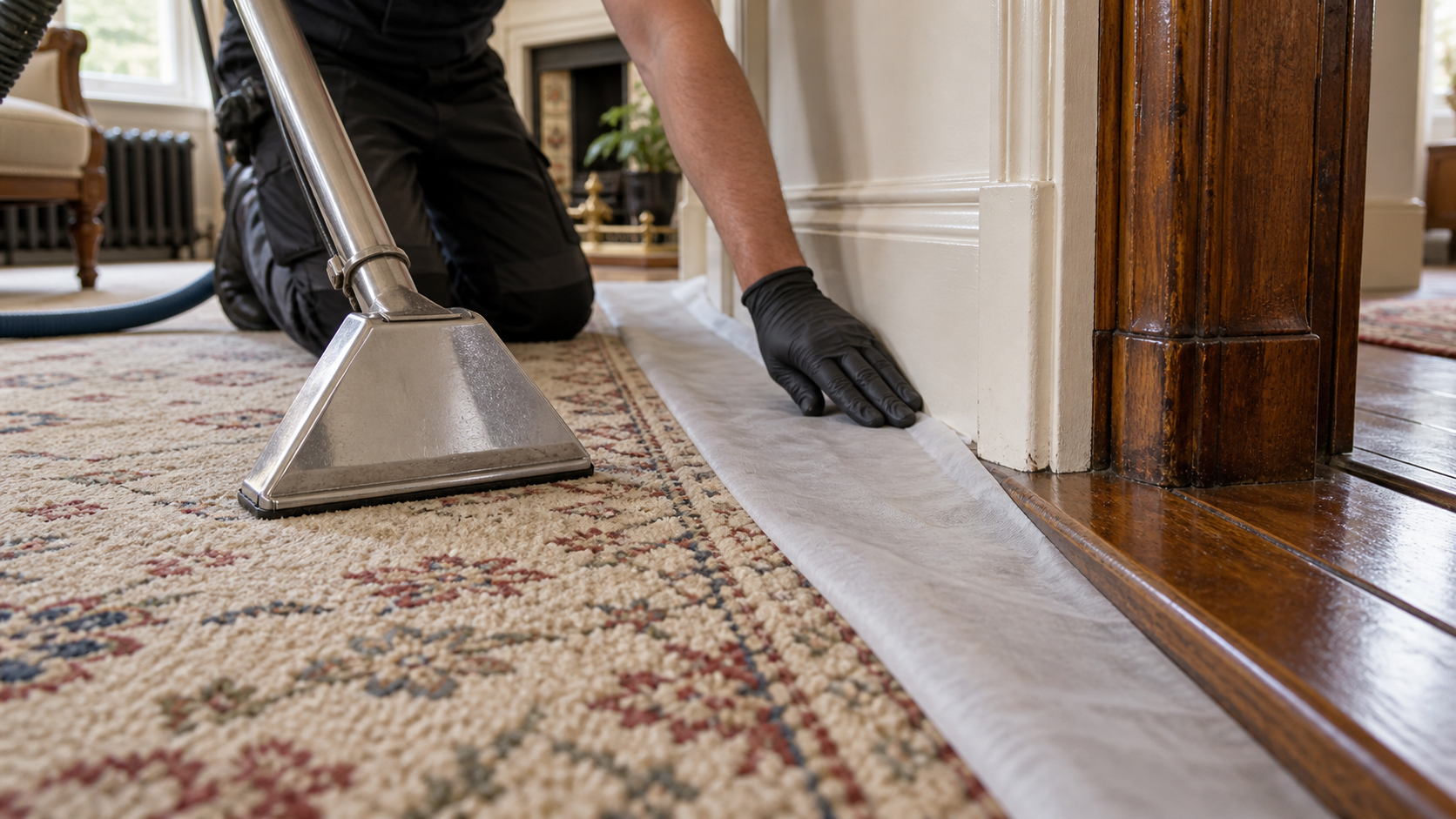
Protect adjoining surfaces before the machine enters the room. Use clean, suitable barriers where needed, keep hoses and tools from dragging across finished timber, and prevent cleaning solution from pooling at edges. The technician should decide how to route equipment safely; householders should not create improvised cable or hose hazards.
- Place protective material at vulnerable door thresholds.
- Keep solution away from fireplaces, vents, electrical points and decorative joinery.
- Check furniture feet for rust, unstable finishes or dye transfer before returning furniture.
- Do not tape coverings to delicate paint, wallpaper or historic finishes without checking adhesion.
- Photograph existing marks and damage before the appointment.
If the home has historic tiles or other protected decorative surfaces, avoid over-wetting and use an appropriately experienced specialist. Historic England’s advice on caring for historic architectural tiles highlights the importance of moisture control and suitable conservation expertise.
How Should You Prepare the Room?
Remove small ornaments, cables, toys, lamps and breakable objects. Do not move an antique cabinet, piano, overfilled bookcase or heavy wardrobe unless the cleaner has confirmed that it can be moved safely. Vacuum loose debris if practical, but do not apply several stain products before inspection.
Record stains and existing marks. Note what caused each mark, how old it is and which products have already been used. Stain removal is not guaranteed: age, heat, previous chemicals, fibre damage and permanent dye change can limit the result. Use our stain-removal advice for general guidance.
What Should You Ask Before Work Starts?
- What fibre and backing do you believe this carpet has?
- What moisture level and cleaning method will you use?
- How will you protect timber thresholds and nearby surfaces?
- What areas or stains may not respond fully?
- How long should the room remain ventilated and unused?
- When can furniture return, and what protection should stay under its feet?
- What should I do if dampness, dye bleed or a returning mark appears?
Clear answers show whether the cleaner has assessed this property or is offering a one-size-fits-all process. If the cleaner cannot explain how the plan changes for wool, natural fibre or vulnerable flooring, get another opinion.
How Do You Dry Carpet Safely in a Period Home?
Drying depends on the carpet, method, ventilation, humidity, temperature and amount of soil. Follow the technician’s site-specific instructions. Ventilate when safe, keep traffic low and avoid replacing heavy furniture until the carpet is ready.
Do not use intense heat to force drying or cover damp carpet with rugs and furniture. If the carpet stays wet unusually long, develops a musty odour or shows moisture at an edge, contact the cleaner. Our carpet-drying guide explains practical aftercare.
Frequently Asked Questions
Can professional cleaners clean carpet in a listed building?
Usually, carpet cleaning itself is routine maintenance, but the method must respect the building and its materials. Cleaning does not authorise alterations or repairs. Ask the owner, conservation professional or building manager when the work affects protected fabric.
Is hot-water extraction safe for wool carpet in a period home?
It can be suitable for some wool carpets when the cleaner confirms the construction, uses compatible chemistry and controls moisture and recovery. It is not automatically suitable for every wool carpet.
Can carpet cleaning fix damp caused by the building?
No. Cleaning may remove surface soil or an odour source, but it cannot repair leaks, rising damp, condensation or defective ventilation. Investigate active moisture before cleaning.
Should furniture be removed from an older room?
Remove small and fragile items. Leave heavy or antique furniture unless its movement has been agreed and can be done safely. Confirm how furniture feet will be protected during drying.
How do I prevent damage to original floorboards?
Ask for a moisture and protection plan, keep equipment from dragging across finished timber, protect thresholds and avoid leaving damp barriers or furniture in place longer than advised.
Final Checklist for Period-Home Carpet Cleaning
- [ ] Fibre, backing and existing damage discussed.
- [ ] Damp, leaks and slow-drying rooms disclosed.
- [ ] Listed-building or conservation considerations checked.
- [ ] Timber, tile and threshold protection agreed.
- [ ] Furniture movement and drying instructions confirmed.
- [ ] Stain history and realistic results discussed.
Ready to arrange an assessment? Use our London carpet-cleaning booking page and include the property type, fibre details, access limits and any moisture concerns.