Table of Contents
Short answer: remove fresh acrylic paint from carpet by lifting excess, blotting rather than rubbing and working from the outside towards the centre. Dried paint needs careful softening and scraping. Stop if colour transfers, the pile changes or the paint has reached the backing. A professional cleaner is safer for large, old or delicate-fibre stains.
Acrylic paint is common after decorating, crafts and children’s projects. It can be easier to treat while wet, but aggressive scrubbing can spread the mark and damage carpet fibres. This guide explains what to do, what to avoid and when professional stain treatment is the sensible option.
For broader stain advice, see our carpet stain-removal guide.
Key Takeaways
- Lift wet paint immediately; do not rub it deeper into the pile.
- Use a blunt plastic scraper for dried surface paint, not a sharp blade.
- Test any cleaning solution in a hidden area and stop if colour or fibre changes.
- Never use bleach, heat or harsh solvent without confirming carpet compatibility.
- Large, old, repeated or delicate-fibre stains need professional assessment.
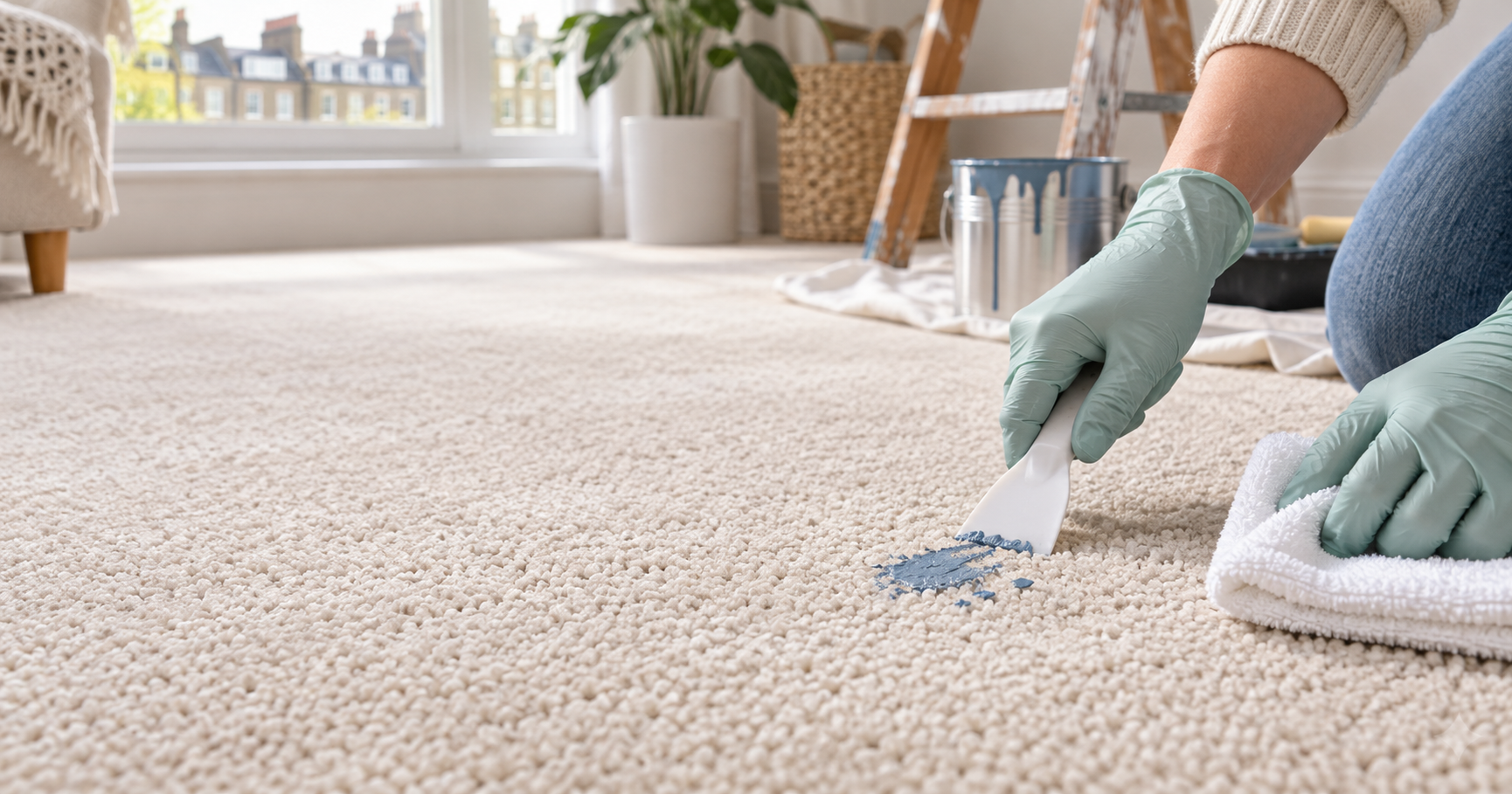
Can You Remove Acrylic Paint from Carpet?
Often, yes, especially when the spill is still wet and has not reached the backing. The result depends on paint age, amount, carpet fibre, colourfastness and previous treatment. No home method can guarantee complete removal from every carpet.
Before starting, check the carpet-care label if available. Wool, sisal, viscose and other natural fibres can react differently from synthetic carpet. Our natural-fibre carpet guide explains why material identification matters.
How Do You Remove Wet Acrylic Paint?
- Protect the area: keep shoes, pets and children away from the spill.
- Lift excess paint: use a spoon or blunt plastic edge, working from the outside inward.
- Blot: press a white absorbent cloth onto the mark. Replace the cloth as paint transfers.
- Use minimal moisture: if the carpet-care instructions allow it, lightly dampen a clean cloth with cool water and blot.
- Rinse by blotting: use a separate cloth lightly dampened with clean water to reduce residue.
- Dry: press with a dry towel and ventilate the room safely.
Do not pour water directly onto the carpet. Excess moisture can spread paint into the backing and create a larger mark.
How Do You Remove Dried Acrylic Paint?
Dried paint needs patience. First vacuum loose debris around the spot, then gently break the surface with a blunt plastic scraper. Keep the scraper nearly flat and work in short strokes. Pick up loosened flakes instead of grinding them into the pile.
After lifting the surface paint, test a small amount of a carpet-compatible cleaning solution in an unseen area. Follow its label exactly. Blot the stain in short passes, checking the cloth and carpet after each pass. Stop if the carpet colour changes, fibres become rough or the paint softens into a wider patch.
Never use a knife, iron, hairdryer or open flame. Heat can set some marks, melt synthetic fibres or create a burn. Strong solvents can affect dye, backing, adhesives and indoor air quality.
What If Acrylic Paint Has Reached the Carpet Backing?
Surface cleaning may not remove paint that has soaked through the pile. Avoid flooding the area. Paint in the backing or underlay can reappear as the carpet dries, and repeated DIY treatments can make professional correction harder.
Photograph the mark, note the paint type and tell the cleaner whether it was wet or dry when discovered. A professional can assess fibre, backing, colourfastness and the safest treatment. Use our DIY versus professional stain-removal guide when deciding whether to continue.
How Do You Remove Acrylic Paint from Wool or Natural-Fibre Carpet?
Use extra caution. Natural fibres may shrink, distort, brown, bleed or respond poorly to rubbing and moisture. Do not assume a method that worked on a polypropylene carpet is safe for wool, sisal or viscose.
Remove surface excess only, avoid aggressive agitation and arrange a professional assessment if the paint is dried, widespread or close to a seam. Share the fibre information before booking so the cleaner can plan the visit.
Common Mistakes That Make Paint Stains Worse
- Rubbing wet paint: spreads pigment sideways and deeper.
- Using a coloured towel: transfers dye into damp carpet.
- Adding several products: creates residue and unknown chemical reactions.
- Scraping with a blade: cuts or pulls carpet fibres.
- Soaking the spot: moves paint into backing and underlay.
- Using heat: can set residue or damage synthetic fibres.
Frequently Asked Questions
Can washing-up liquid remove acrylic paint from carpet?
It may help with a small fresh mark on some synthetic carpets, but test first and use very little. Residue can attract soil. Follow the carpet manufacturer’s instructions where available.
Does vinegar remove dried acrylic paint?
Do not assume it is safe. Household acids can affect dyes, finishes and natural fibres. Test any product in a hidden area or ask a professional.
Can a carpet cleaner remove old acrylic paint?
A professional may improve or remove some marks, but success depends on paint age, amount, fibre, backing and previous treatment. Complete removal is not guaranteed.
Should I use acetone on carpet?
Do not use acetone unless a qualified professional confirms it is compatible. It can damage dyes, synthetic fibres, backing and adhesives.
What should I do if paint spills on a rug?
Lift excess, avoid rubbing and check the care label. Valuable, wool, silk, Persian or delicate rugs should be assessed by a specialist rather than soaked at home.
Final Acrylic-Paint Checklist
- [ ] Excess paint lifted, not rubbed.
- [ ] White cloth used for blotting.
- [ ] No sharp blade, bleach, heat or untested solvent used.
- [ ] Fibre and backing checked.
- [ ] Professional help arranged for large, old or delicate stains.
For an assessment, use our London carpet-cleaning booking page and describe the paint, carpet fibre and stain age.