Table of Contents
If you’ve discovered small bald patches in your carpet or noticed tiny beige moths flying near skirting boards, you’re likely dealing with carpet moths. The adult moths are harmless, but their larvae feed on natural fibres like wool, cashmere, and silk. They can cause permanent damage before most homeowners realise there is a problem. The fastest way to eliminate carpet moths is to identify the infestation early, remove eggs and larvae through intensive vacuuming, treat affected areas appropriately, deep clean carpets to remove organic debris, and adopt preventative maintenance to stop them returning. This guide explains how professional carpet cleaning teams handle carpet moth infestations in London homes. It also shows what you can do to protect your carpets long term.
How to Get Rid of Carpet Moths (Quick Answer)
If you need the fastest solution, follow these seven steps:
| Step | Action |
|---|---|
| 1 | Confirm the infestation by checking for larvae, holes and damaged fibres. |
| 2 | Vacuum every affected area thoroughly, including under furniture and along skirting boards. |
| 3 | Dispose of the vacuum contents immediately outside the property. |
| 4 | Apply an appropriate moth treatment to kill remaining eggs and larvae. |
| 5 | Professionally deep clean carpets to remove dust, pet hair and organic debris that feed larvae. |
| 6 | Continue vacuuming weekly for at least a month. |
| 7 | Use pheromone traps to monitor future activity. |
Following these steps removes the existing infestation while reducing the conditions that allow carpet moths to return.
What Are Carpet Moths?
Despite the name, carpet moths are usually clothes moths that have found an ideal breeding environment inside carpets and rugs made from natural fibres.
The damage is caused by larvae, not the flying adult moths.
Larvae feed on keratin found in:
- Wool carpets
- Persian rugs
- Oriental rugs
- Sheepskins
- Silk rugs
- Wool underlay
- Animal hair trapped within carpets
Synthetic carpets are rarely eaten directly, although accumulated dust and pet hair can still support developing larvae.
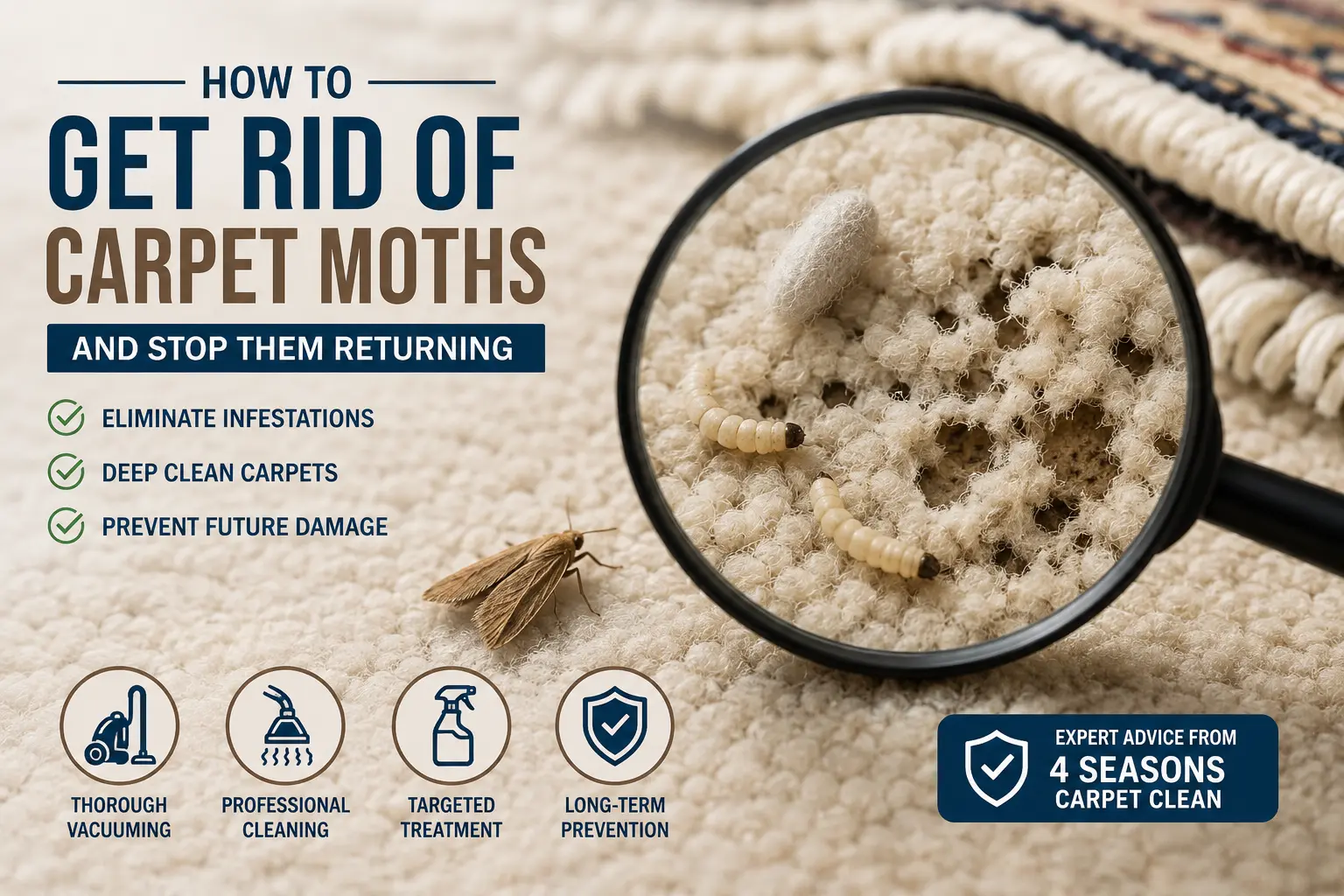
Signs You Have Carpet Moths
The sooner you identify an infestation, the easier it is to control.
| Sign | What it Indicates |
|---|---|
| Small bald patches | Larvae have eaten fibres |
| Tiny creamy-white caterpillars | Active infestation |
| Silken tubes or cocoons | Developing larvae |
| Flying moths near carpet edges | Breeding adults |
| Loose fibres beneath furniture | Feeding damage |
| Damage under heavy furniture | Common breeding location |
Technician’s Insight
One of the most common mistakes our technicians see across London is homeowners inspecting only the centre of the room. In reality, larvae usually begin feeding beneath sofas, wardrobes and beds where carpets remain undisturbed for months.
Why Carpet Moths Choose Certain Homes
Carpet moths aren’t attracted to dirty homes—they’re attracted to the right environment.
During inspections throughout London, our teams consistently find infestations in properties with several of these conditions:
- Wool carpets
- Pet hair build-up
- Dust accumulation
- Rooms rarely vacuumed
- Heavy furniture left unmoved
- High indoor humidity
- Spare bedrooms with little foot traffic
Organic debris acts as an additional food source while dark, quiet areas allow larvae to develop undisturbed.
Can Professional Carpet Cleaning Get Rid of Carpet Moths?
Yes—but only as part of a complete treatment plan.
Professional carpet cleaning removes:
- Hair
- Dust
- Skin flakes
- Food particles
- Organic contamination
- Many eggs and larvae hidden deep within the pile
However, severe infestations often require professional pest treatment alongside cleaning because some eggs may survive without targeted insecticides.
At 4 Seasons Carpet Clean, our technicians frequently recommend combining professional cleaning with moth treatment to achieve the best long-term results.
Our professional carpet cleaning service in London uses commercial-grade hot water extraction to remove embedded contamination that encourages moth larvae to thrive.
Step 1: Locate the Infestation
Before treating anything, inspect:
- Carpet edges
- Under sofas
- Behind wardrobes
- Under beds
- Stair corners
- Wool rugs
- Dark storage rooms
Finding the breeding area is often more important than killing the visible moths.
Step 2: Vacuum Like a Professional
Vacuuming is your first line of defence.
Professional technicians don’t simply vacuum the visible carpet—they systematically work every edge where eggs accumulate.
Focus on:
- Skirting boards
- Furniture legs
- Stair edges
- Radiator pipes
- Door thresholds
- Under heavy furniture
Use slow overlapping passes.
Immediately empty the vacuum outdoors and seal the waste before disposal.
Step 3: Deep Clean the Carpet
Removing larvae alone isn’t enough.
You also need to eliminate the environment they depend on.
Our technicians use different methods depending on carpet construction.
| Professional Method | Why It’s Used |
|---|---|
| High-temperature hot water extraction | Flushes deep contamination and removes embedded debris |
| Low-moisture encapsulation | Suitable for commercial and moisture-sensitive carpets |
| Specialist carpet rakes | Lift compressed fibres and expose hidden debris |
| Rubber squeegee agitation | Removes deeply embedded pet hair |
| Professional Prochem formulations | Break down organic contamination, pet dander and uric acid residues |
This combination not only improves carpet hygiene but removes many of the food sources larvae depend on.
Step 4: Kill Remaining Eggs and Larvae
Vacuuming removes many eggs, but not all.
Depending on the severity of the infestation, treatment may include:
- Residual insecticide sprays
- Insect growth regulators
- Professional pest treatments
- Targeted application around affected areas
Pheromone traps help monitor adult moth populations but should never be relied upon as the sole treatment.
Step 5: Check Nearby Soft Furnishings
Carpet moths rarely stay confined to one carpet.
Inspect:
- Curtains
- Upholstered furniture
- Wool blankets
- Cushions
- Decorative rugs
- Wardrobes containing wool clothing
If these areas remain untreated, reinfestation becomes much more likely.
If you’re dealing with multiple household pests, our guide on eliminating bed bugs from your home explains another common issue affecting soft furnishings.
Why Professional Experience Matters
Many homeowners rent a machine or use supermarket carpet shampoo, believing the infestation has been eliminated.
In practice, our technicians regularly inspect carpets that appear clean on the surface but still contain larvae beneath compressed fibres around room edges.
Commercial equipment provides significantly greater water pressure, extraction power and soil removal than domestic machines.
Professional inspection also helps identify whether damage has been caused by moths, carpet beetles or another pest—something that’s often misdiagnosed.
Common Mistakes That Keep Carpet Moths Coming Back
Avoid these common errors:
- Vacuuming only the centre of the room
- Ignoring carpets beneath furniture
- Relying only on moth traps
- Shampooing without removing larvae first
- Forgetting nearby rugs and upholstery
- Storing wool textiles without cleaning them first
- Stopping treatment after adult moths disappear
Remember, adult moths don’t cause the damage—the larvae do.
How to Prevent Carpet Moths Permanently
The best prevention combines cleanliness with regular inspection.
Vacuum Weekly
Pay special attention to:
- Corners
- Edges
- Under furniture
- Stairs
Rotate furniture occasionally to expose hidden breeding areas.
Reduce Organic Debris
Larvae survive far better where carpets contain:
- Pet hair
- Human hair
- Dust
- Skin flakes
- Food particles
Professional cleaning removes these materials far more effectively than routine household vacuuming.
Control Humidity
Keep carpets dry by:
- Ventilating rooms
- Cleaning spills promptly
- Drying carpets quickly after cleaning
Inspect Wool Rugs
Every few weeks, check:
- Fringes
- Undersides
- Folded edges
- Areas beneath furniture
Early detection dramatically reduces repair costs.
Carpet Moth Treatment Timeline
| Time | Recommended Action |
|---|---|
| Day 1 | Inspect and vacuum thoroughly |
| Day 2 | Apply appropriate moth treatment |
| Week 1 | Arrange professional deep cleaning |
| Week 2 | Reinspect affected areas |
| Weeks 3–4 | Continue weekly vacuuming |
| Every Month | Monitor with pheromone traps |
Why London Homeowners Choose Professional Cleaning
Many London homes—particularly Victorian and Edwardian properties—still contain high-quality wool carpets that deserve specialist care.
At 4 Seasons Carpet Clean, we’ve restored thousands of carpets throughout the capital using commercial hot water extraction equipment, specialist fibre-safe cleaning solutions and proven maintenance techniques.
Our technicians also serve homes through our Paddington carpet cleaning specialists, where traditional wool carpets remain common in period properties.
With a verified 5.0-star Google rating, an excellent Checkatrade record and cleaning methods aligned with recognised NCCA and BICSc industry best practices, our focus is always on protecting carpets while removing the contamination that allows pests to thrive.
Carpet Moths vs Other Carpet Pests
| Pest | Damage | Professional Cleaning Helps? |
|---|---|---|
| Carpet moths | Eat natural fibres | Yes, as part of treatment |
| Fleas | Live within carpet pile | Yes, alongside appropriate flea treatment. Learn more in our guide on whether carpet cleaning can kill fleas |
| Carpet beetles | Feed on natural materials | Yes, combined with pest control |
Frequently Asked Questions
What kills carpet moths permanently?
The most effective approach combines intensive vacuuming, targeted treatment against eggs and larvae, professional deep cleaning and ongoing preventative maintenance.
Can steam cleaning kill carpet moths?
Professional hot water extraction can remove many larvae, eggs and their food sources, but heavy infestations usually require dedicated pest treatment as well.
How long does it take to eliminate carpet moths?
Minor infestations can often be controlled within a few weeks, while severe infestations may require repeated inspections and follow-up treatment over several months.
Are carpet moths dangerous to people?
No. Carpet moths do not bite humans or pets. Their larvae feed on natural fibres rather than people.
Why do carpet moths keep coming back?
Recurring infestations usually indicate that eggs were left behind, nearby wool items were not treated, or the carpets still contain enough dust, pet hair and organic debris to support new larvae.
Is professional carpet cleaning worth it after a moth infestation?
Yes. Professional cleaning removes embedded contamination, restores carpet hygiene and eliminates many of the conditions that encourage larvae to survive. While it cannot repair fibres already eaten by moths, it is one of the most effective ways to help prevent future infestations.
Carpet moths are far easier to prevent than to repair. The key is acting early, removing larvae before extensive damage occurs and maintaining a clean, well-inspected carpet throughout the year. By combining routine vacuuming with professional deep cleaning and targeted moth treatment where necessary, you can protect valuable wool carpets and reduce the likelihood of another infestation.