To get rid of carpet smell, identify and treat its source—not just cover it with fragrance. Blot fresh spills, avoid soaking carpet, and check the care label. Pet urine or a musty smell may come from backing, underlay or a moisture problem, so surface deodoriser alone may not solve it.
Different smells need different responses. A stale surface odour may improve with vacuuming and airflow; pet urine can penetrate below pile; damp or mould-like smells call for moisture investigation. Do not apply one treatment to every carpet.
Key takeaways
- Identify likely source before using a cleaner or deodorising product.
- For fresh pet urine, blot promptly and follow carpet-maker and product instructions.
- Do not use fragrance to mask persistent damp or urine odour.
- If smell returns after drying or cleaning, investigate deeper contamination or moisture.
Why does my carpet smell?
Common sources include pet accidents, food or drink spills, smoke, tracked-in soil and moisture left after cleaning. The location and timing can help: a localised smell after an accident differs from a musty odour across a damp room or a smell that appears after carpet gets wet.
Before treating it, check whether carpet feels damp, whether the smell is strongest in one spot, and whether a recent clean or spill could explain it. If you suspect a leak, visible mould or damp subfloor, address that cause first. Our carpet-flood response guide explains immediate water-damage steps.
How to freshen carpet safely
For a mild, dry, general stale smell with no sign of a spill or moisture, start with basic care. Follow carpet-maker guidance and avoid overwetting.
- Vacuum slowly, including room edges and beneath movable furniture.
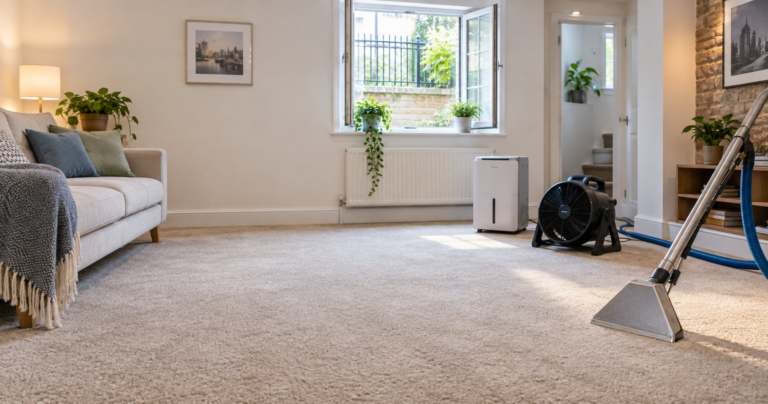
- Improve ventilation when outdoor conditions allow; keep carpet uncovered while it airs.
- If using a carpet-care product, check its label and test a hidden area first.
- Use only the amount and dwell time stated on the product label, then remove residue as directed.
Baking soda or scented powders are not a reliable fix for urine or dampness. They do not remove contamination beneath carpet and can leave residue if not fully removed. Do not sprinkle powder onto damp carpet or use a product that conflicts with the carpet warranty or care instructions.
How to handle pet urine smell in carpet
For a fresh accident, blot promptly with clean absorbent material; do not rub or flood the area. Follow the carpet manufacturer’s guidance and the spot-treatment label. CRI’s pet urine and carpet bulletin explains that urine may affect dyes and backing, and that some odours can return when humidity rises if contamination remains.
CRI also notes that a product may mask odour rather than remove its source. Choose a treatment labelled for the affected material, test as directed, and never mix cleaning chemicals. Do not apply heat or use a steam-cleaner on a urine spot without checking carpet instructions; CRI warns heat can set urine stains and smell. Its urine spot guidance gives product-specific steps.
If odour returns after the surface dries, urine may have reached carpet backing, underlay or subfloor. Repeatedly soaking the same spot can spread moisture. Ask a professional to assess the affected area; severe contamination may need a different remedy than surface cleaning.
What if carpet smells musty or damp?
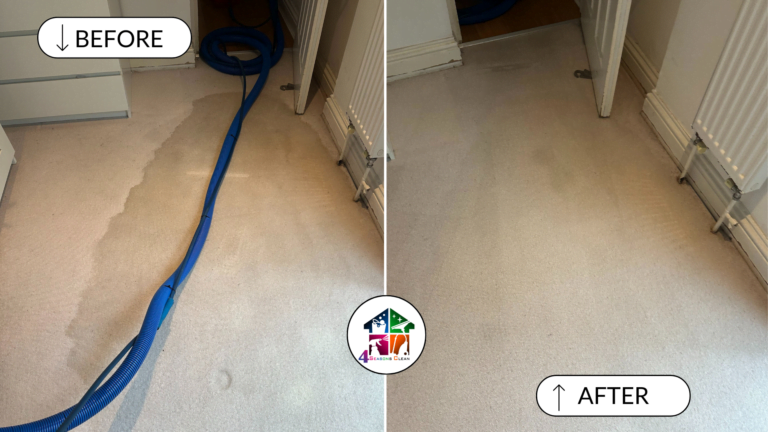
A musty smell after cleaning can indicate carpet or underlay is still damp, but smell alone cannot diagnose mould. Check for leaks, condensation, flooding or a slow drying problem. Do not cover wet carpet with powder or fragrance. If dampness persists, contact the cleaner or investigate the moisture source before arranging another wet treatment.
See our guide to drying carpet after cleaning for ventilation and drying steps. If water came from a flood or leak, use our water-damage checklist and seek appropriate restoration advice.
How to remove smoke or general household smells
Ventilate the room where practical, remove the source of smoke or spill, and vacuum once carpet is dry. Do not spray fragrance over an unexplained or persistent odour. Smoke residue may be embedded in carpet and furnishings; follow material-care guidance and ask a cleaner to assess likely results if household measures do not help.
When should you call a carpet cleaner?
Ask for an assessment when pet odour keeps returning, the affected area is large, carpet remains damp, a stain has changed colour, or DIY treatment has left residue. Share what spilled, when it happened, products already used, carpet fibre if known, and whether smell changes with humidity. A cleaner can explain limits before treatment; no method guarantees removal of every stain or odour.
For a service assessment, see our professional stain-removal service or carpet cleaning in London. If urgent water damage is involved, use emergency carpet-cleaning support.
Frequently asked questions
What is the fastest way to get rid of carpet smell?
First identify the source. Blot fresh spills, keep carpet from becoming saturated, and follow maker instructions. A surface deodoriser cannot fix contamination or moisture beneath the carpet.
Does baking soda permanently remove carpet odours?
No. It may freshen some dry surface odours, but it cannot remove urine or moisture below the pile. Follow carpet-care instructions and avoid powders on damp carpet.
Why does pet urine smell return after cleaning?
Urine may have reached backing, underlay or subfloor, or residue may remain. CRI notes odour can reappear in humid conditions when urine has not been fully removed.
Can I use a steam cleaner on pet urine?
Do not assume it is suitable. CRI warns that steam-cleaner heat can set urine stains and smell. Check exact carpet instructions and product guidance before applying heat.
What should I do if carpet smells musty after cleaning?
Check whether carpet is still damp and ask cleaner about drying progress. Investigate leaks or other moisture sources; do not mask persistent damp smells with fragrance.
Bottom line
Treat the cause, not the smell alone. Gentle vacuuming and airflow may help mild stale odours, while pet urine and dampness need source-specific care. Stop if carpet remains wet, odour returns or material changes, and get an assessment before trying stronger products.