Table of Contents
Short answer: clean carpets after major renovation work only when dusty trades have finished, wet paint and plaster are dry, loose debris has been removed and the room can be ventilated. Vacuuming removes loose dust; professional carpet cleaning tackles soil embedded in the pile and residue that ordinary vacuuming cannot lift.
Renovation dust can settle into carpet, skirting boards and room edges. Paint, plaster, adhesive and tracked-in grit need different responses. Cleaning too early can spread wet materials or trap moisture, so timing matters.
For service options, see our professional carpet-cleaning service in London.
Key Takeaways
- Finish dusty and wet trades before booking the carpet clean.
- Remove dry construction debris carefully before wet cleaning.
- Tell the cleaner about paint, plaster, adhesive, dust and any floor damage.
- Protect new paintwork, skirting boards, thresholds and furniture during access.
- Plan ventilation and drying before the carpet is cleaned.
When Should You Clean Carpet After Renovation?
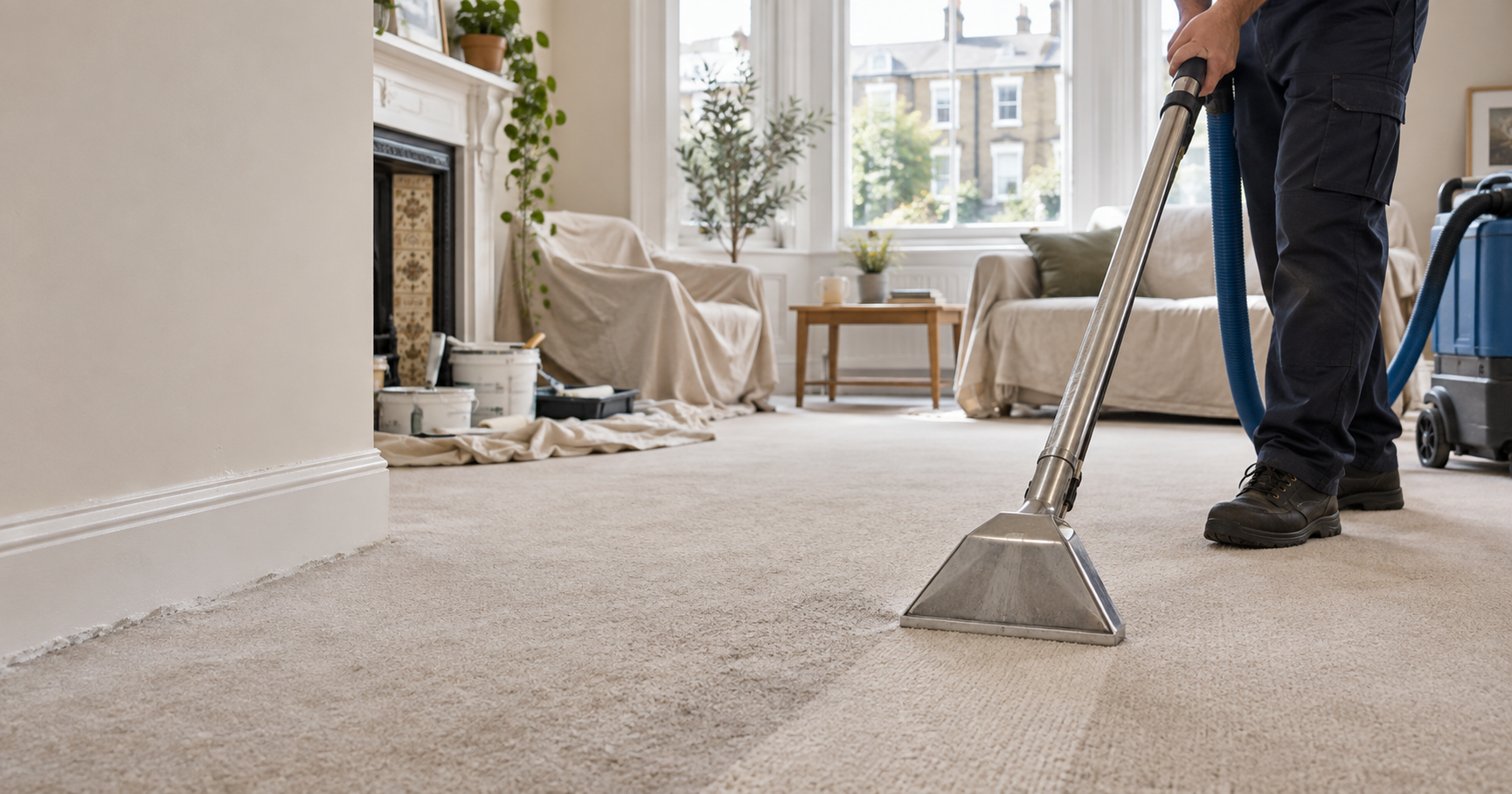
Schedule carpet cleaning after sanding, drilling, plastering, painting and heavy installation work has finished. Allow wet paint, filler and adhesive to cure according to their product instructions. If another trade still needs to cross the room, cleaning first usually wastes the result.
Dry vacuuming and careful debris removal can happen earlier, but avoid dragging sharp rubble across the pile. Tell the cleaner whether the carpet stayed in place throughout the work or was covered and moved several times.
What Renovation Debris Can Professional Carpet Cleaning Remove?
Professional cleaning can remove embedded household soil and some fine dust, tracked-in grit and removable residue. It is not a substitute for removing screws, glass, sharp fragments, wet plaster, cured adhesive or large blobs of paint.
Pick up large debris by hand using suitable precautions, then vacuum slowly with a machine suited to the carpet. Our carpet-cleaning methods comparison explains why fibre and soiling should guide method choice.
How Do You Prepare the Room?
- Remove tools, fixings, offcuts, paint tins and protective coverings.
- Let wet coatings and fillers dry fully.
- Vacuum loose dust without grinding grit into the pile.
- Move small furniture, cables and breakables.
- Protect newly painted skirting and fragile thresholds.
- Record paint, plaster or adhesive marks before cleaning.
- Clear a safe route from entrance to each room.
Do not use carpet powder, strong degreaser or repeated stain products before inspection. The technician needs to know what has already been applied.
How Should You Treat Paint, Plaster and Adhesive Marks?
Different materials need different handling. Lift dry surface flakes gently with a blunt plastic edge. Blot fresh water-based paint without rubbing. Do not scrape aggressively, flood the carpet or use a solvent because it worked on a hard floor.
Tell the cleaner the product name where possible. Acrylic paint, oil-based paint, expanding foam, wallpaper paste and tile adhesive can behave differently. Our common carpet stains guide covers general stain principles, but renovation chemicals may need a specialist assessment.
How Do You Protect Freshly Renovated Surfaces?
Agree an access route that avoids newly painted walls and joinery. Keep hoses and tools away from wet finishes, use suitable protection at thresholds and do not attach tape to fresh paint without checking the finish. Ask the cleaner how furniture and floor edges will be protected.
Take photographs of existing marks before work. This helps separate renovation damage from cleaning-related issues and gives everyone a clear record.
How Can You Plan Drying After the Clean?
Renovated rooms may have limited ventilation because windows are closed, furniture is covered or decorators are still working. Plan safe airflow before the appointment. Keep children and pets away, avoid covering damp carpet and follow the technician’s instructions about furniture and re-entry.
Drying time depends on fibre, backing, method, moisture recovery, temperature, humidity and airflow. Read our carpet-drying guide for aftercare. If the carpet remains unusually wet or develops a persistent odour, contact the cleaner promptly.
When Is Replacement or Specialist Restoration Better?
Cleaning may not be the right answer when carpet has melted fibres, widespread paint, adhesive through the backing, severe water damage, mould or structural damp. A specialist can assess whether cleaning, patching, lifting or replacement is appropriate.
Do not use cleaning to conceal an unresolved leak or damp problem. Fix the cause first, then assess the carpet and underlay.
Frequently Asked Questions
Should I clean carpets before or after painting?
Usually after painting and decorating are complete, once wet products are dry and dusty trades have finished. Cleaning beforehand risks re-soiling.
Will carpet cleaning remove plaster dust?
It can remove fine dust embedded in carpet after loose debris has been removed. Wet plaster and thick deposits need careful manual removal or specialist treatment first.
Can carpet cleaning remove paint after renovation?
Some fresh water-based paint marks may respond to careful treatment. Dried, oil-based or widespread paint may need specialist assessment, and complete removal is not guaranteed.
Can I leave protective plastic on carpet during cleaning?
No. Remove coverings and check the carpet. Plastic can trap moisture and transfer residue. Tell the cleaner what protection was used and for how long.
How long should I wait before replacing furniture?
Follow the technician’s instructions. Surface feel alone does not prove the backing is dry, especially in poorly ventilated rooms.
Post-Renovation Carpet Checklist
- [ ] Dusty and wet trades finished.
- [ ] Paint, filler and adhesive cured.
- [ ] Sharp debris and large deposits removed.
- [ ] Renovation stains photographed and described.
- [ ] Access route and surface protection agreed.
- [ ] Ventilation and drying plan confirmed.
When renovation work is complete, professional cleaning can restore the carpet without undoing new finishes. Book a London carpet-cleaning assessment and include the renovation materials involved.