Table of Contents
Store a Persian rug only when it is clean and completely dry. For a sound, flexible rug, rolling around a wide tube is usually safer than folding. Protect the roll, keep it off the floor and inspect it periodically. Ask a textile specialist before moving a fragile, valuable or damaged rug.
Storage can cause damage that was not visible when a rug went away. Folds may leave creases, while trapped moisture can harm fibres and dyes. This practical guide draws on textile-conservation advice; it cannot determine whether a particular antique rug is safe to handle.
Key takeaways
- Photograph and note existing damage before moving the rug.
- Do not store a damp or dirty rug.
- Roll only when rug condition permits; avoid forcing fragile textiles.
- Use clean protective material and a stable, inspectable storage space.
Inspect and document the rug before moving it
Photograph the front, back, fringe, edges and any stains, worn pile, loose threads or previous repairs. Note pest activity and colour changes. This record helps you compare condition when rug comes out of storage.
Do not lift a heavy rug by its fringe or shake it forcefully. Ask someone to help support its weight. If foundation is brittle, pile sheds, colours transfer, fringe is detached or rug has significant monetary or family value, ask a textile conservator or rug specialist before rolling. Our Persian rug care and restoration guide explains why construction and condition matter.
Clean and dry rug before storage
The Canadian Conservation Institute’s carpet and rug guidance says a rug should be clean and dry before it is rolled for storage. Do not put away a damp rug or seal moisture inside plastic. If it needs cleaning, identify its fibre, dyes and construction first; storage alone is not a reason to use an unfamiliar wash method.
The rug should be clean and dry before being rolled for storage.
Canadian Conservation Institute
Some Persian rugs use fibres, dyes and foundations sensitive to moisture or handling. Our guide to silk and wool rug differences covers why material matters. Storage preparation is different from a Persian rug cleaning schedule.
Roll rather than fold, if rug condition permits
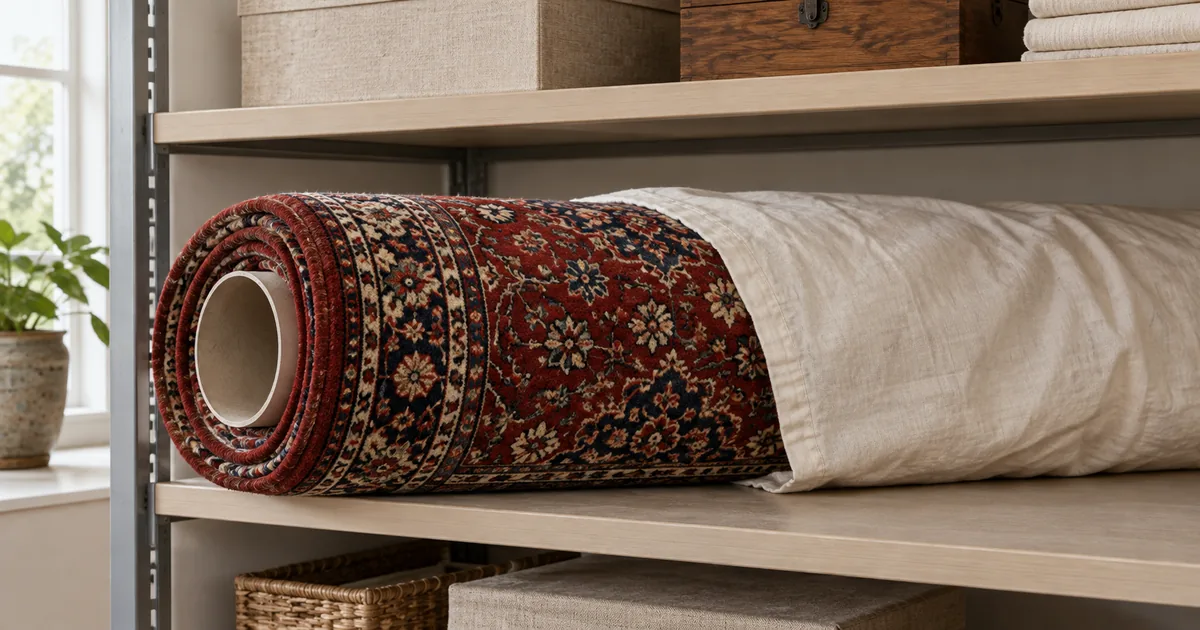
Conservation guidance advises against folding rugs because creases can mark the textile or stress its foundation. For a suitable rug, the Institute describes rolling with the pile facing outward around a wide tube, with a protective layer. Keep the roll even and make sure fringe does not become trapped. Do not force a damaged textile to bend.

Cover roll and choose a stable storage location
Use clean protective fabric such as prewashed cotton muslin, or suitable conservation material, and tie loosely without compressing the pile. A tube should support the rug without sharp edges. Keep the roll raised off the floor and do not stack heavy objects on it.
Choose a clean indoor space with stable conditions that you can inspect. The Institute cautions against attics and basements for collectible textiles because temperature and humidity may fluctuate. Keep rug away from direct sunlight, damp walls, plumbing risks, pests, chemicals and food.
For antique, heavy, fragile or valuable rugs, get specialist handling advice. See our Persian rug cleaning service or carpet moth guidance if you spot pest activity.
Inspect and unpack stored rug
Check the roll periodically for dampness, pest evidence, new odour or changes in condition. If you find a problem, do not brush, wet or treat the rug before identifying its fibres and dyes. Unroll it with help on a clean surface and compare it with your original photographs.
Frequently asked questions
Can I fold a Persian rug for storage?
Avoid folding where possible. Conservation guidance warns that creases can mark a rug or stress its threads. Ask a specialist about a fragile rug.
Which way should the pile face when rolling?
For a suitable rug, conservation guidance describes rolling with pile facing outward around a wide tube. Do not force damaged material to roll.
Can I wrap a rug in plastic?
Do not seal a damp rug in impermeable plastic. Use clean, suitable protective material and make sure rug is fully dry first.
Can I store a rug in an attic or basement?
These spaces can have fluctuating temperature and humidity. Choose a cleaner, more stable indoor location you can inspect.
Should a Persian rug be cleaned before storage?
It should be clean and completely dry. Cleaning method depends on fibre, dyes and condition; ask a specialist if uncertain.
If rug is valuable or delicate, get handling advice before storage. Contact our team with photos and details about its condition.