Table of Contents
If DIY sofa cleaning leaves a musty smell, stop adding water, cleaner or fragrance. Record the treatment and check accessible upholstery without opening the filling. Smell alone cannot identify the cause. Persistent damp, visible or suspected mould, flooding or sewage exposure needs a restoration specialist’s assessment rather than another routine sofa clean.
A cleaner-looking seat does not settle the moisture question. The useful next step is to establish what happened, whether the sofa or room remains damp and which professional scope fits the problem. This guide is for London households deciding what to do next, not a recipe for treating mould inside furniture.
Key takeaways
- Stop further wet cleaning and scent masking while you assess the situation.
- A dry surface does not establish that the cushion filling is dry.
- Do not fan, vacuum or brush visible or suspected mould.
- Record treatment details and inspect only safely accessible areas.
- Routine upholstery cleaning does not resolve hidden moisture or replace restoration assessment.
Jump to: first actions, accessible checks, decision table, airflow limits, room checks or FAQs.
Stop cleaning and record what happened
Put the cleaning equipment aside and keep product packaging. Do not rinse again because the smell seems stronger, or add a deodoriser to judge whether the issue has gone. Changing products mid-investigation makes it harder to separate the original problem from the effects of another treatment.
- Write down when cleaning started and finished, and when you first noticed the smell.
- Record the machine or method, products, dilution and approximate amount applied; say when an amount is unknown.
- Note which cushions or panels were treated, repeated passes and any earlier spills.
- Photograph the current condition and retain the care label or maker’s instructions.
- Record room conditions, including closed windows, damp surroundings and any known water incident.
Be specific when describing the odour: where you notice it, whether it existed before cleaning and whether it returns after the room has aired. Do not press your face into seams to investigate. An assessor needs a treatment history and observations, not a confident label such as mould, bacteria or detergent residue.
Check accessible areas without opening the sofa
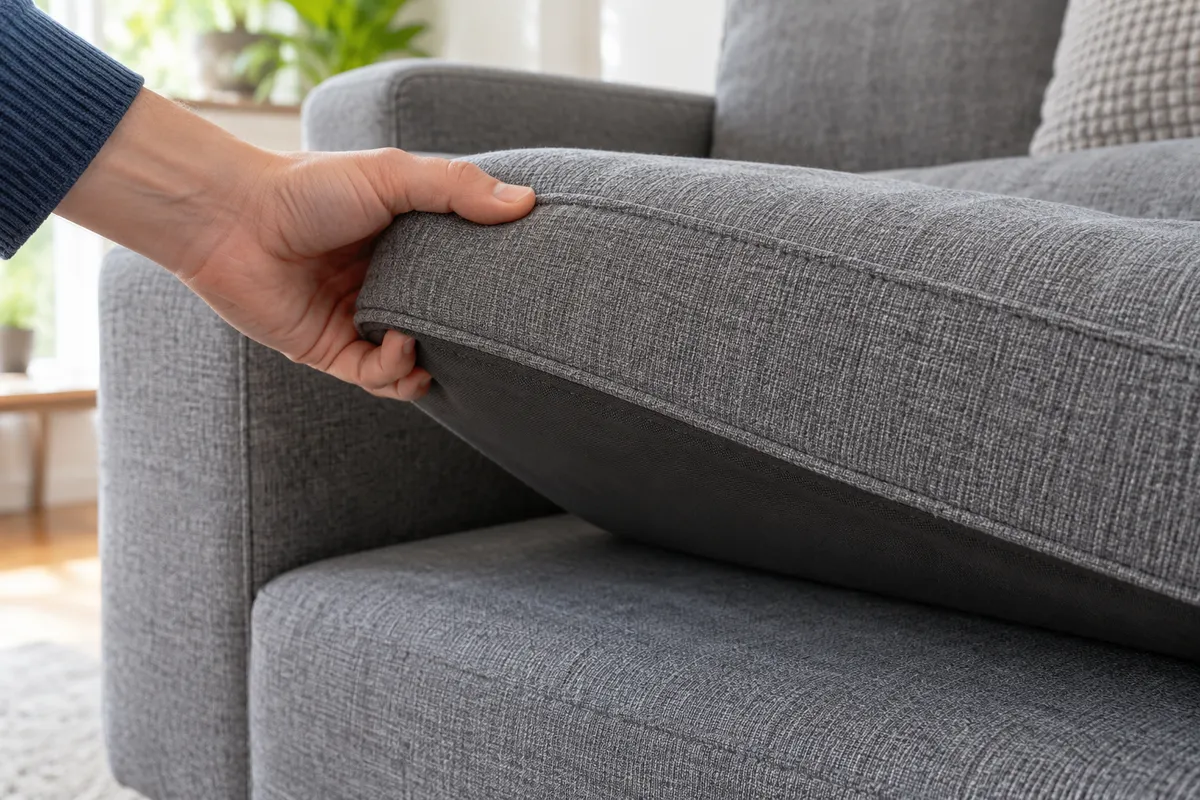
Look at the seat, cushion edges and accessible seams in good light. If there is no visible or suspected growth or contaminated-water exposure, lift only cushions designed to be lifted. Check their accessible undersides and seating recess without squeezing them to force moisture out. Leave fixed upholstery, stapled dust covers and mechanisms alone.
A cover can feel dry while deeper material remains damp. Do not unzip a cushion to inspect foam, cut into filling or remove lining to prove dryness. If you cannot establish the condition without dismantling furniture, that is a reason to request assessment. Photograph any new discolouration, distortion or damp contact area without declaring what caused it.
If you see growth or have reason to suspect it, stop handling the area. Do not vacuum, brush or direct a fan at it. Keep people and pets away from the affected sofa while arranging advice, and avoid moving it through other rooms just to investigate.
Choose the next step from the condition
Choose help according to the moisture history and current condition. A routine cleaning enquiry is appropriate only when the situation has been assessed as suitable for ordinary upholstery care. If the water source or depth of dampness is uncertain, describe that uncertainty before accepting a cleaning appointment.
| What you observe | Next step |
|---|---|
| Odour; moisture status unclear | Request assessment before re-cleaning |
| Recent clean-water wetting; no suspected growth | Seek furniture-specific drying advice |
| Persistent damp or suspected growth | Contact a restoration specialist |
| Flooding, sewage or uncertain water source | Arrange water-damage assessment |
| Issue resolved; routine care suitable | Confirm upholstery-cleaning scope |
Tell the professional if the sofa was already damaged, if the frame or floor beneath it became wet, or if it has significant monetary or sentimental value. Ask what they will inspect and what they cannot determine from photographs. An assessment may identify a drying, repair or replacement decision; do not assume cleaning is necessarily the answer.
Use airflow only in an appropriate situation

The EPA’s Table 1, printed page 11 addresses clean-water damage. Upholstery may be difficult to dry completely; valuable furniture may need restoration advice. Use fans only with known clean water and no suspected growth.
For an appropriate ordinary drying situation, follow the sofa maker’s instructions and professional advice. Space removable cushions only where permitted, keeping them supported and clear of damp contact surfaces. Open a window when conditions and security allow. Do not treat an open window or moving air as confirmation that the filling has dried.
Keep electrical equipment away from wet surfaces and follow its instructions. Do not press a heater against upholstery, trap damp cushions under throws or wrap the sofa for storage. If safe access or suitable drying arrangements are unavailable, explain that when requesting help instead of improvising a high-heat treatment.
Understand the EPA prevention window
The EPA’s home moisture guide advises prompt drying of water-damaged materials within 24-48 hours to help prevent mould. This is prevention guidance, not a sofa drying estimate, permission to wait, or a mould test. Do not use elapsed time to declare the sofa safe or contaminated.
When contacting an assessor, give the actual elapsed time alongside the amount applied, treatment method and present condition. Do not delay a call to reach a particular hour count. Equally, a smell noticed soon after cleaning does not establish a specific diagnosis. The record helps someone decide what to investigate, rather than replacing that investigation.
Check whether the room is part of the problem
Observe the room as well as the furniture. Note window condensation, visible leaks, wet flooring or water marks nearby without dismantling fittings or shifting heavy furniture. Record whether the smell is confined to one cushion or noticeable throughout the room; this helps describe the problem but does not locate its cause conclusively.
Government guidance for housing providers in England emphasises addressing underlying water damage, ventilation problems and condensation, rather than only surface mould. In a rented home, report concerns to the landlord or agent promptly, with dates and photographs. If you are concerned about symptoms, consult a doctor.
Keep the sofa treatment record separate from building observations, so the landlord and furniture assessor can see both. For example, record that a window was wet and that a cushion was treated, without claiming the first caused the second. Ask who will investigate the room and who will assess the furniture.
Separate restoration from routine sofa cleaning
Flooding, sewage exposure, persistent damp and visible or suspected growth require a restoration or water-damage specialist. Ask whether they assess upholstered furniture and contaminated-water incidents. Ordinary upholstery cleaning is not hidden-moisture remediation, and a deodorising treatment cannot establish that a sofa is dry or suitable to use.
Once the issue has been addressed and routine care is appropriate, discuss fabric suitability and treatment history with the London sofa-cleaning service. The cleaning price guide concerns routine services, not a mould-remediation quote. Ask what is included before booking, including any limits on odour treatment.
Frequently asked questions
Does a musty smell mean my sofa has mould?
No smell-based diagnosis is reliable here. Describe the odour and treatment history, and seek assessment if dampness persists or growth is suspected. Do not open the sofa or disturb suspect material to check.
Should I wait 48 hours before calling someone?
No. The EPA prevention window is not a waiting instruction or a guarantee of dryness. Contact an appropriate assessor promptly when the condition or water history causes concern.
Can I put a fan next to the sofa?
Only for known clean-water wetting without suspected growth, with suitable furniture-specific advice. Keep it away from wet electrical hazards. Do not use airflow to investigate or treat suspected mould.
Can bicarbonate or fragrance remove the problem?
Do not add powders, fragrance or another DIY mixture while the cause is unresolved. A change in smell would not confirm dry filling or address a building problem. Avoid bleach, vinegar and further steam treatment too.
When can I return to ordinary sofa maintenance?
After the moisture or suspected-growth issue has been addressed and the sofa is suitable for routine care. Follow its maker’s instructions; the general sofa-care tips are further reading for that stage, not remediation instructions.
Explain the problem before booking
You can contact 4 Seasons Carpet Clean to clarify routine upholstery scope or ask about referral options. Send photographs, label details and your treatment record. Do not assume a routine booking covers mould or water damage; those concerns belong with an appropriately experienced restoration specialist.