Table of Contents
A sofa can look patchy after spot cleaning because the area is still damp, treatment residue remains, an outline has developed, the fabric catches light differently or its colour has changed. Appearance alone cannot identify the cause. Stop adding water or products, follow the permitted drying instructions and compare the fully dry area before considering further treatment.
The useful question is what changed during treatment, not which stronger cleaner to try. A darker patch, pale centre and yellow edge may need different assessments. Our sofa cleaning service provides general service information; ask about inspection and fabric suitability before assuming another clean will correct the appearance.
Key takeaways
- A visible patch is a clue, not a diagnosis of dirt or damage.
- Judge the result after drying, in comparable light and from more than one angle.
- Do not enlarge a wet patch or add household remedies to chase an edge.
- Record the spill, products, dilution, rubbing and drying history.
- Persistent rings, colour changes or altered texture need fabric-specific assessment.
Jump to: first steps, decision table, rings, assessment record or FAQs.
Pause treatment and check the drying stage
Put the cleaner aside before trying to make the patch match. Check the sofa’s care instructions and the directions for anything already applied. If the treatment was not approved, avoid repeating it on a hidden patch now: document what happened and contact the supplier or an upholstery specialist.
If the area is still damp, follow the permitted drying method. Keep it uncovered, allow room airflow and keep people off the treated cushion. Avoid hairdryers, radiator contact or a clothes steamer. Do not remove fitted covers to speed drying unless their instructions allow removal and explain refitting.
Check accessible seams and cushion undersides without opening sealed upholstery. A dry-feeling surface does not establish that moisture beneath it has gone. There is no universal waiting time for every cushion and treatment. Persistent dampness calls for advice; this appearance check is not a guide to treating odours.
Once dry, compare with an untreated area in ordinary daylight. Keep the cushion in its normal position. Check from the front and side, noting whether the shape, shade or edge changes with your viewing position. Take photographs before any additional action so you retain a record of the original result.
Compare the patch without diagnosing it
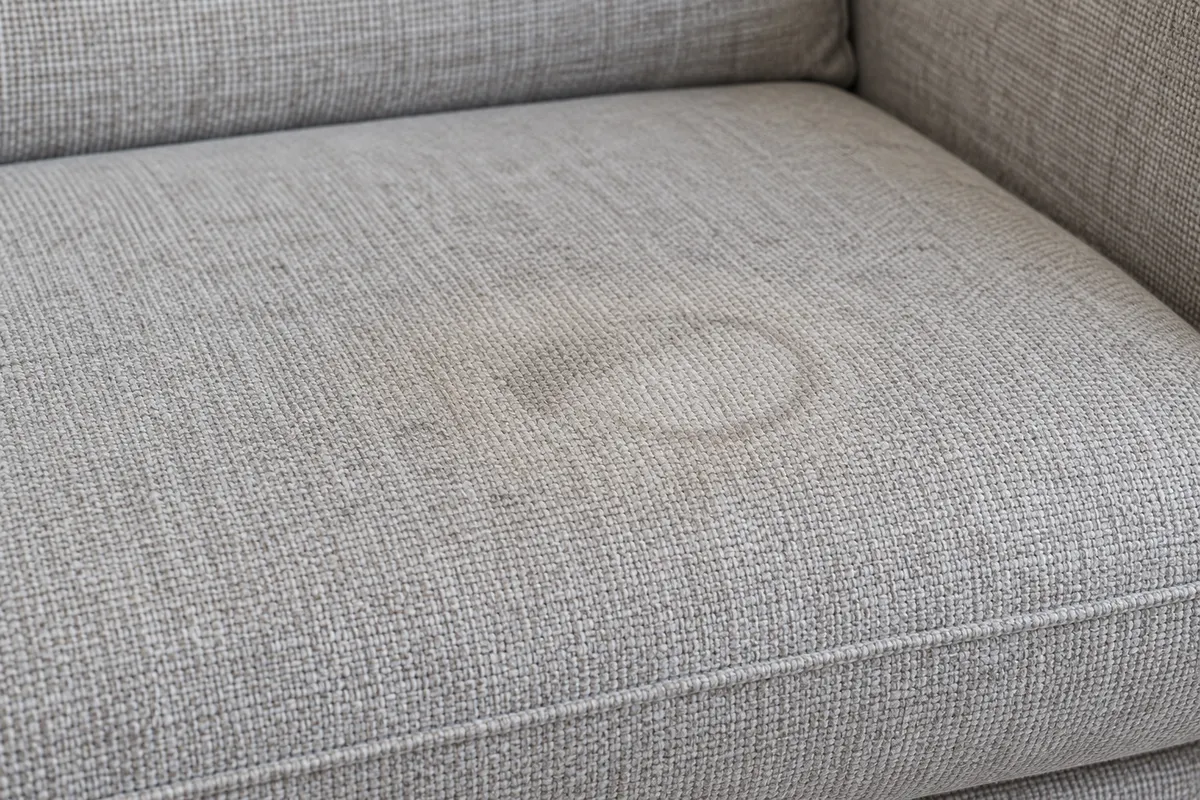
Separate what you can observe from what might explain it. A fixed outline differs from shading that changes as you walk around the sofa, but neither proves a single cause. Several factors can overlap, including an original stain that remains beneath the effects of treatment.
| What you observe | Possible explanation, not a diagnosis | Next step |
|---|---|---|
| The treated area remains damp or feels cool | Drying may be incomplete | Follow permitted drying instructions; reassess when dry |
| The dry patch feels stiff, tacky or crusty | Product residue or altered texture may be involved | Record the product; do not improvise a rinse |
| A fixed outline surrounds the treated area | A ring or treatment-related change needs assessment | Photograph the edge and stop enlarging the wet area |
| The patch changes shade from another angle | Light reflection or surface direction may contribute | Compare viewpoints without rubbing or wetting it |
| A pale or differently coloured area stays visible | Colour change or remaining staining is possible | Seek specialist advice before further treatment |
Use the table to prepare a description, not to select a chemical. For example, a stiff dry patch after detergent use makes the product history relevant, but it does not prove that residue is the only problem. Do not scrape the surface or deliberately re-wet it as a diagnostic test.
Understand why a ring needs caution
The IICRC consumer upholstery tip sheet explains that wet, slowly drying plant fibres such as cotton and linen can develop yellow-brown cellulosic browning. It identifies water rings as possible browning after spills or spot cleaning and advises specialist help, not home correction. It also flags colour bleeding, texture change and shrinkage risks in natural-fibre upholstery. These possibilities cannot be confirmed from a photograph alone.
Do not assume that a circular edge needs more water across the whole cushion. Increasing the treated area changes the task and may expose previously untouched upholstery to the same unsuitable method. Panel-wide treatment is a fabric-specific decision, not a dependable way to erase every ring.
For a persistent outline or new colour difference, request a professional stain assessment. Explain that the mark appeared or changed after spot treatment. Ask the assessor to distinguish cleaning options from damage or other changes that cleaning may not correct; a larger treatment cannot guarantee an even result.
Consider light and texture without brushing harder
A patch that changes with the viewing angle may involve surface shading. DFS’s chenille guide describes pile fabrics catching light differently across furniture. That supports considering light reflection; it does not establish that your patch is harmless or provide a treatment for every sofa fabric.
Keep the inspection gentle. Do not repeatedly rub or brush a patch to see whether it becomes lighter. This troubleshooting step is about comparing appearances, rather than grooming chenille or restoring pile. A smooth, rough or unusually flat area that persists after drying deserves attention even if its shade also varies with light.
For routine maintenance after the issue is resolved, our general sofa care tips provide background reading. Apply only advice compatible with your own care instructions. A broad care article cannot approve further treatment of an unexplained patch.
Record the treatment history for assessment
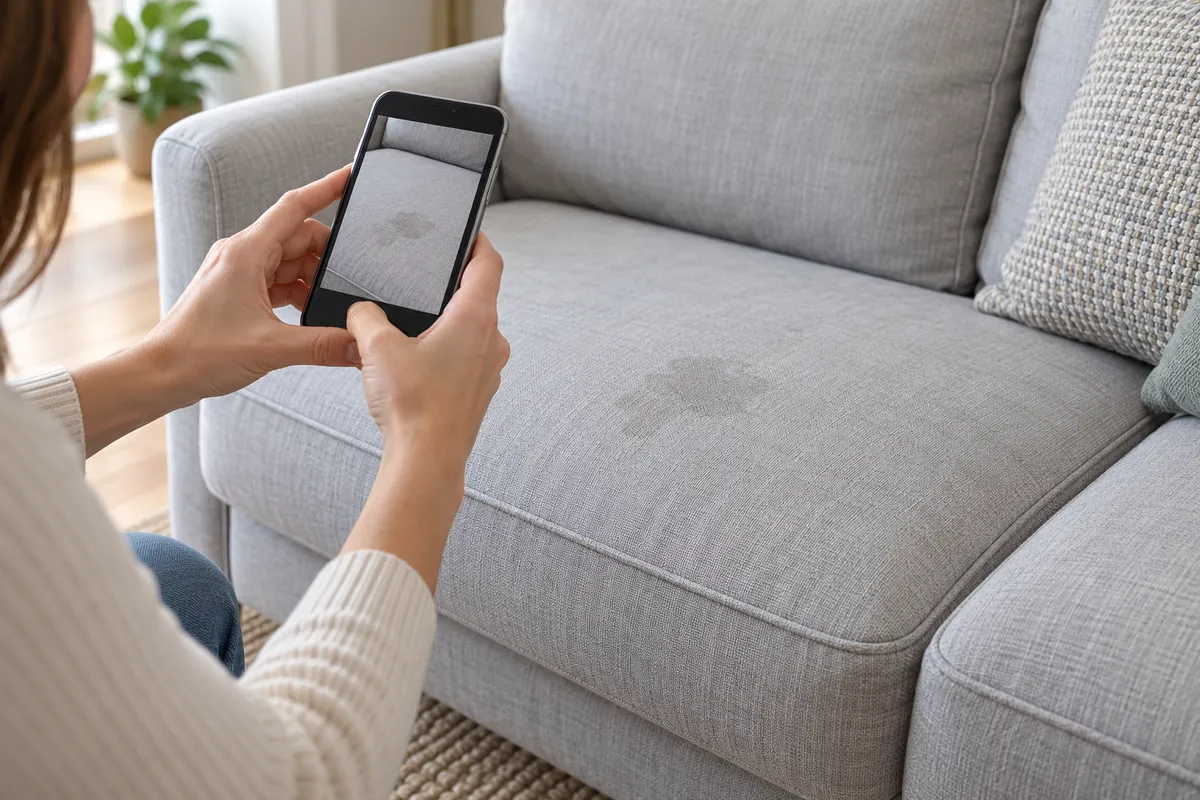
Give the assessor a clear account before discussing products or a quote. Photograph the whole sofa, the cushion and the patch in the same light, then include a close view of its edge. Keep originals without filters or colour adjustments. A phone photograph records appearance; it cannot identify fibre content or prove what caused the change.
- The model, fabric name, label and manufacturer care instructions.
- The original spill or mark, when it happened and whether it was already dry.
- Every product used, its concentration and any products mixed or applied afterwards.
- Whether you sprayed, blotted, scrubbed, rinsed or used a machine or heat.
- When the patch appeared, how it dried and whether its texture or outline changed.
Keep the product packaging or photograph its label. If you cannot remember the dilution or amount, say so rather than estimating confidently. Mention earlier treatments too, even if they seemed successful. Accurate history helps an assessor decide what to inspect and whether another cleaning attempt is appropriate.
Frequently asked questions
Does a ring mean my sofa is permanently damaged?
Not necessarily, but appearance cannot establish reversibility. Have the dry area assessed with its fabric and treatment history. Avoid promises that one more clean will remove it, and do not attempt a home correction for suspected browning.
Should I rinse out suspected detergent residue?
Do not improvise a rinse based on stiffness alone. Check the original treatment instructions and describe the change to the supplier or specialist. Adding water may enlarge the problem, and a stiff patch can have more than one explanation.
Will vinegar, bicarbonate of soda or steam fix the patch?
None is a universal remedy for unexplained patchiness. Do not apply an acid, powder or steam treatment to guess at the cause. The right next step is identifying the fabric and reviewing what was already used, not layering another method onto it.
Can I brush the patch until its colour matches?
No. A lighter appearance after rubbing would not establish that the cause was removed. Repeated friction can further disturb the surface. Compare the dry patch from different angles and leave any grooming to the routine expressly specified for that upholstery.
What will professional assessment or cleaning cost?
Ask what inspection includes and whether treatment is recommended before requesting a cleaning price. Our London cleaning price guide offers general context, not a guaranteed correction price. Confirm limitations and whether assessment and treatment are quoted separately.
Get advice before treating the patch again
If patchiness remains after drying, contact 4 Seasons Carpet Clean with photographs, the care label and your treatment record. Ask whether fabric-specific assessment is available and what outcomes are realistic. Preserving the evidence is more useful than another unplanned cleaning pass.