Table of Contents
The fastest practical way to dry carpet after cleaning is to recover as much moisture as the cleaning method allows, move air across the surface and control humidity. Follow the technician’s aftercare instructions, keep the carpet uncovered and use ventilation or a dehumidifier according to room conditions.
There is no reliable one-hour or six-hour promise for every home. Carpet construction, the amount of moisture left behind and the room environment all matter. This guide covers routine aftercare for carpet that has just been cleaned. Floodwater, a leak or contaminated water needs a different assessment.
Your carpet-drying checklist
- Ask the cleaner for an expected drying range and any fibre-specific instructions.
- Keep people, pets and movable objects off the damp area as far as practical.
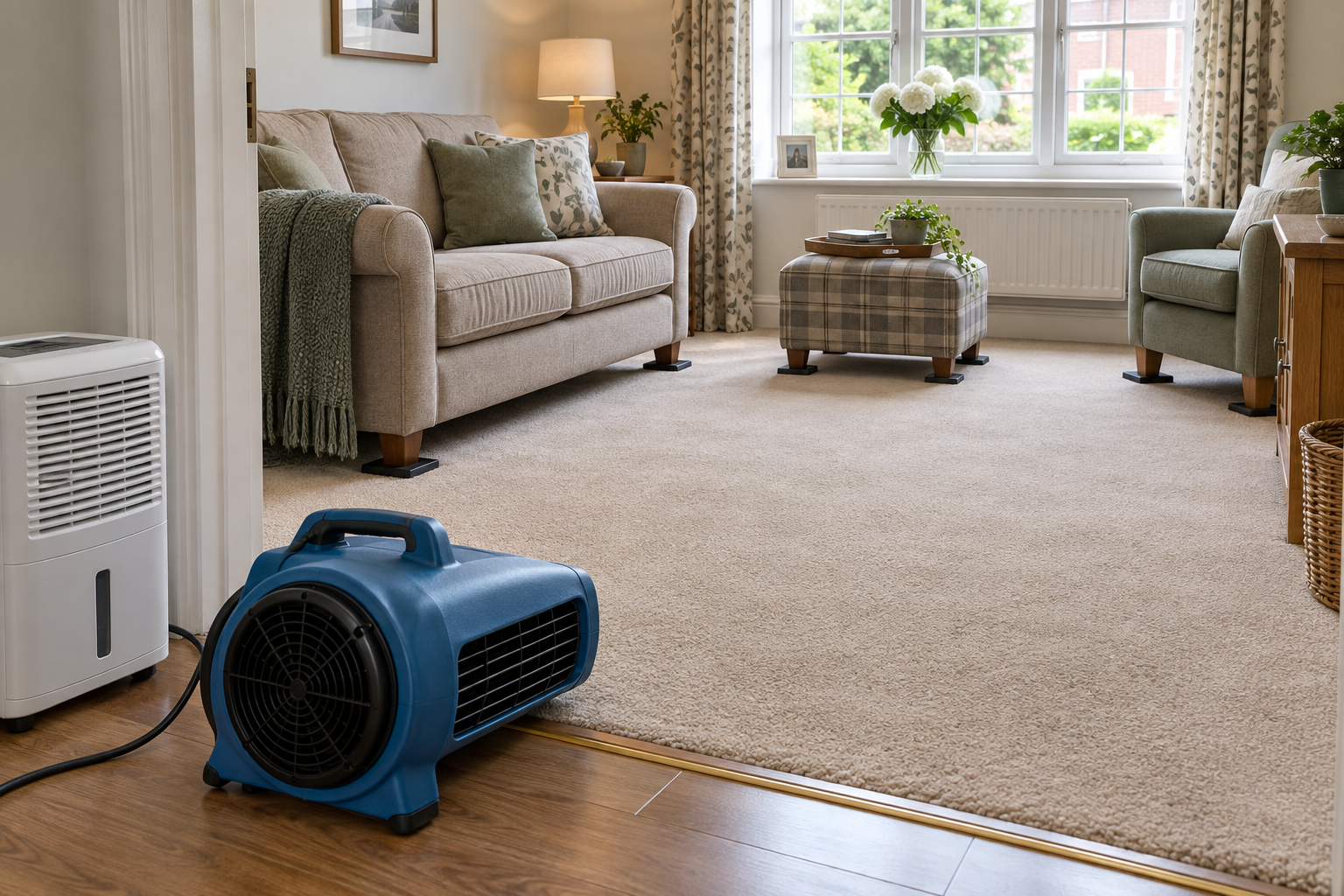
- Create gentle airflow across the carpet with safely positioned equipment.
- Use ventilation when outside conditions help, or control indoor humidity with a suitable dehumidifier.
- Leave protective furniture tabs or blocks in place for the period the cleaner recommends.
- Contact the cleaner promptly if drying is slower than expected or the carpet feels unusually wet.
Start with moisture removal, not extra heat
Good moisture recovery during professional carpet cleaning helps the later drying stage. If you are using a rental machine, follow its instructions for extraction-only passes and the carpet manufacturer’s care guidance. Do not repeatedly spray a clean area because you expect heat to dry it later.
A domestic dry vacuum is not a water extractor. Never use one to pick up water. If the carpet is squelching, water is pooling or a large area is soaked, stop treating it as ordinary aftercare and arrange an assessment. A drier surface does not establish that the backing, underlay or floor beneath is dry.
Use airflow across the carpet
Moving air helps carry moisture away from the carpet surface. Position a suitable fan or air mover so air travels across the damp area, following the equipment instructions. Keep the inlet and outlet clear. Several obstructed fans are less useful than a safely placed unit with a clear path for air.
Keep electrical equipment and plugs away from wet areas. Use a stable, dry position and route cables so they cannot be tripped over. Do not run equipment unattended unless its manufacturer permits that use. Check the setup before leaving the room, especially if children or pets are present.
Should windows be open or closed?
Open windows can help when outdoor air supports drying and it is safe to ventilate. Humid or rainy conditions can make that less effective. A blanket instruction to open every window ignores the weather and how the room is being dried.
When using a dehumidifier, follow its instructions for room enclosure. Many work best with external windows and doors closed so they are drying the room rather than incoming outside air. Maintain any ventilation needed for occupants and combustion appliances; do not obstruct permanent vents. If the correct setup is unclear, ask the cleaner.
What does a dehumidifier do?
A dehumidifier removes moisture from room air. It supports evaporation from the carpet but does not extract liquid trapped in underlay. Use a model suitable for the room and temperature, empty its tank when needed and follow its clearance and operating instructions.
A humidity reading can help you understand room conditions, but it cannot prove that carpet layers are dry. If the room feels less humid while the carpet remains wet, further inspection may be needed. Keep a note of when cleaning finished and whether different parts of the room are drying evenly.
How long should carpet take to dry?
Use the estimate provided for your particular clean. A thin carpet in a well-ventilated room may behave differently from dense carpet over absorbent underlay. Method, fibre, moisture recovery, temperature and relative humidity all affect the result. Avoid booking the room back into use against a generic online deadline.
- Carpet and underlay: thickness and construction affect where moisture remains.
- Cleaning method: different processes leave different amounts of moisture.
- Airflow: closed rooms and covered areas can dry unevenly.
- Humidity: damp air reduces the room’s ability to take up more moisture.
- Furniture and access: blocked airflow makes some patches harder to dry.
Ask for a realistic range before the appointment and a contact point if the carpet is still unusually damp afterwards. If no range was given, call the provider rather than adding more products or guessing which machine setting to use.
Protect furniture and avoid covering the carpet
Keep loose rugs, storage boxes and plastic sheets off damp carpet. Covering it can restrict evaporation and hide areas that need attention. Follow the cleaner’s instructions for furniture blocks or protective tabs; avoid moving heavy pieces yourself simply to speed up drying.
Minimise foot traffic until the carpet is ready for use. A damp carpet meeting a smooth floor can create a slip risk. Keep children and pets away from equipment and treated areas for the period specified by the cleaner and product instructions.
What if the carpet still feels wet the next day?
Contact the cleaner promptly if the carpet remains unusually wet, drying has stalled or a musty smell develops. Explain when it was cleaned, which rooms are affected, how the room has been ventilated and whether there was a leak. Do not wait for visible mould before asking for help.
The US EPA advises drying wet materials within 24–48 hours to help prevent mould growth. That is a moisture-control guideline, not a promise that every carpet is safe until the end of that period. Unusual wetness deserves early attention.
If water has come from a leak or flooding, use our emergency carpet-cleaning contact page to describe the situation and confirm what help is available. Routine cleaning and specialist water-damage restoration are different services. Do not assume either is suitable before the water source and affected materials are assessed.
Which shortcuts should you avoid?
- Do not use an iron, hairdryer or concentrated heater on carpet.
- Do not sprinkle baking soda or carpet powder onto damp pile as a substitute for moisture removal.
- Do not cover damp carpet with a rug or plastic sheet.
- Do not add fragrance to mask an unexplained smell.
- Do not assume the underlay is dry because the top feels dry.
- Do not direct fans at suspected mould or contaminated floodwater; seek specialist advice.
If a spill still needs treatment before drying, use our carpet stain-removal guide. Avoid starting another wet treatment while trying to diagnose slow drying. Record which areas were treated so the cleaner can assess the full picture.
Planning a clean in a London flat
Limited window openings, restricted access and rooms that must stay in use make planning worthwhile. Before booking, explain whether the carpet is in a basement, whether windows open safely and where equipment could be placed. Ask the cleaner what aftercare fits the space rather than assuming a particular machine will be available.
You can request a cleaning appointment with these details. Keep the discussion practical: when the room needs to be usable, what ventilation is available and who to contact if the carpet is not drying as expected.
Frequently asked questions
Does a fan or dehumidifier dry carpet faster?
They do different jobs. A fan moves air across the surface; a dehumidifier removes moisture from room air. The useful combination depends on room conditions and the cleaning method.
Should I turn the heating up?
Maintain suitable room conditions following the cleaner’s advice. Do not use concentrated heat or place a heater close to carpet. Extra heat without moisture control is not a complete drying plan.
Can I walk on carpet while it dries?
Minimise traffic and follow the cleaner’s instructions. Keep vulnerable users and pets away from the damp area and watch for slippery transitions onto hard flooring.
Can baking soda dry a wet carpet?
It is not a substitute for extraction, airflow and humidity control. Avoid adding powder to damp carpet; it introduces another material that may need removing.
When can I put furniture back?
Follow the technician’s guidance. Keep protective blocks or tabs in place as advised, and do not rely only on how the surface feels.
What if the carpet smells musty after cleaning?
Contact the cleaner promptly. A smell alone does not identify the cause, but persistent dampness or an unusual odour needs assessment rather than fragrance or repeated wet cleaning.
The aim is steady drying through the carpet, not simply a warm room. Arrange moisture recovery, safe airflow and suitable humidity control, then ask for help early if progress does not match the cleaner’s expectations.