Table of Contents
Fresh nail polish comes out of carpet with careful blotting and a small amount of acetone-free remover or surgical spirit, applied to a cloth rather than poured on. Never let polish dry if you can help it, and never soak the carpet in acetone — it dissolves synthetic fibres and carpet backing along with the polish.
Key Takeaways
- Blot wet polish immediately; dried polish is far harder to remove.
- Apply remover to a cloth, never directly to the carpet — acetone can dissolve synthetic pile.
- Always patch-test: acetone strips carpet dye as readily as it strips polish.
- Wool and delicate rugs should go straight to professional treatment.
Why Is Nail Polish So Damaging to Carpet?
Nail polish is a lacquer that hardens as it dries, gripping carpet fibres and setting into a solid film. Worse, the standard solution — acetone — is a strong solvent that attacks the same synthetic polymers many carpets are made from. You’re balancing two risks: the polish and the cure.
That’s why the safest approach uses the mildest solvent that works, applied sparingly and tested first.
What we see on the job: The permanent damage we see is almost never from the polish. It’s from someone pouring acetone straight onto a synthetic carpet, which melts the pile and leaves a hard, discoloured patch no cleaning can reverse.
What Do I Do the Moment Polish Spills?
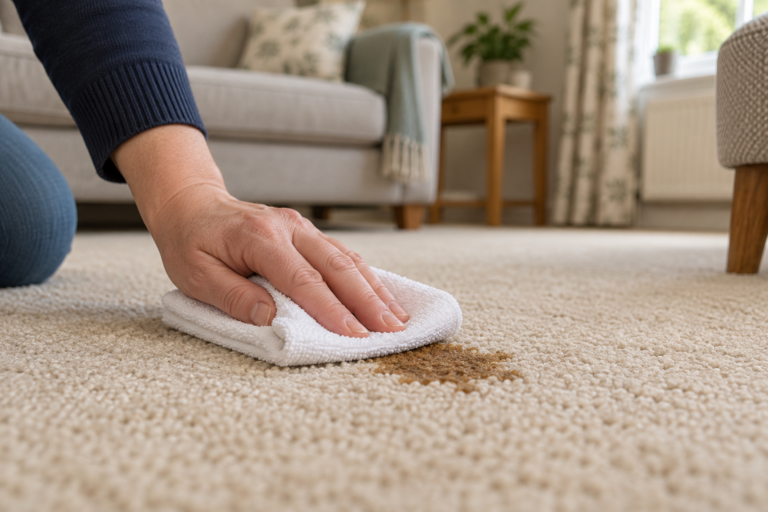
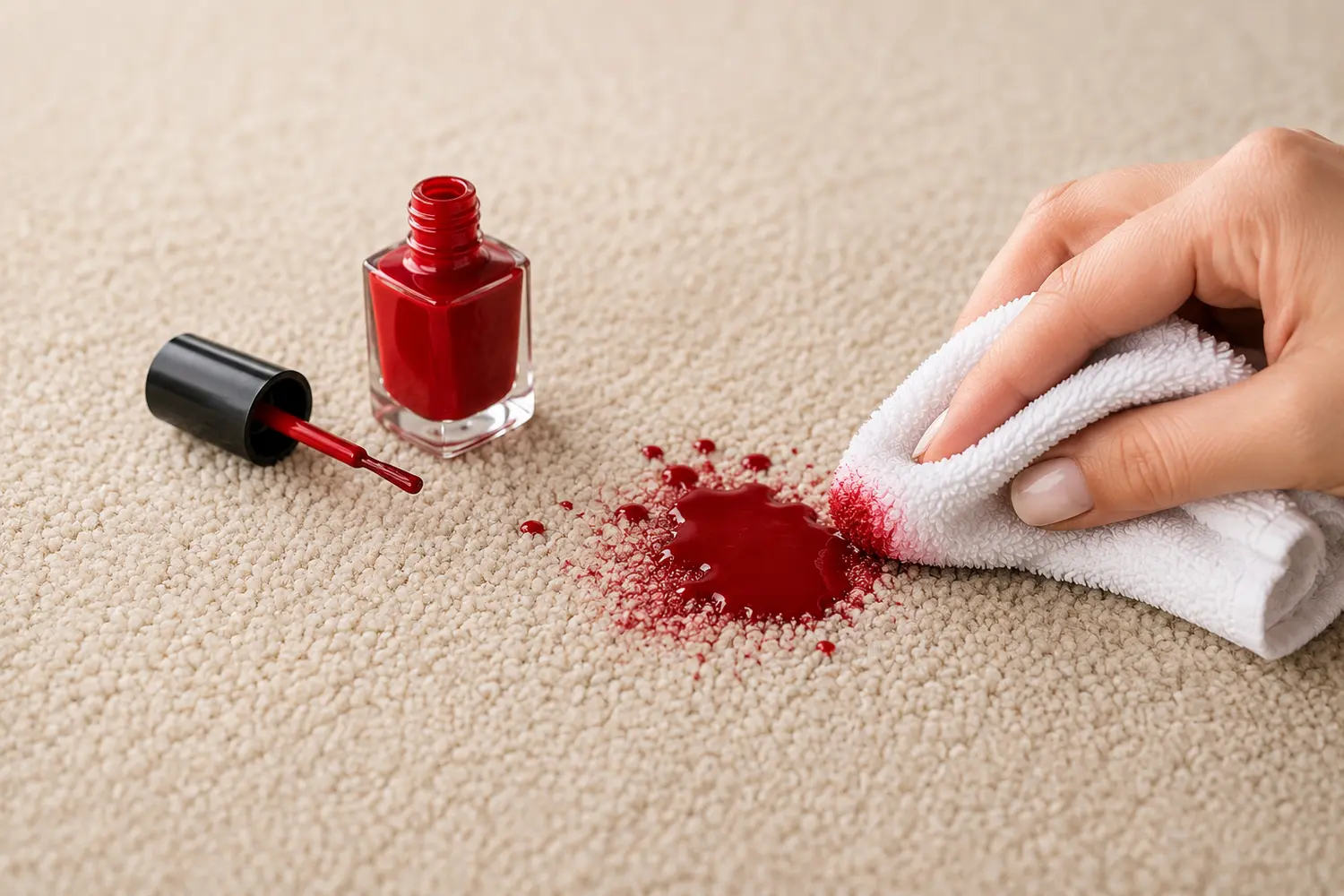
Blot immediately and resist the urge to wipe. Wiping spreads liquid lacquer across a wide area, and once it dries you have a much bigger problem than the original drop.
Act in this order:
- Blot gently with a white cloth or paper towel, pressing straight down.
- Work from the outside in so the polish doesn’t spread.
- Change to a clean cloth section constantly.
- Don’t add water — it won’t dissolve lacquer and makes the area harder to treat.
- Move to solvent treatment while the polish is still wet.
Speed matters more here than with almost any other spill. Wet polish is a stain; dry polish is a solid.
What Actually Removes Nail Polish From Carpet?
Use the gentlest effective solvent and always apply it to a cloth. Start mild, escalate only if needed, and patch-test every product on a hidden area first.
In order of safety:
- Non-acetone nail polish remover — safest starting point on most carpets
- Surgical spirit or rubbing alcohol — effective and gentler on fibres than acetone
- Washing-up liquid solution — for lifting residue after the bulk is gone
- Acetone remover — last resort, tiny amounts, never on synthetic carpet without testing
- Hairspray — an old tip that rarely works and leaves sticky residue
Dab, don’t scrub. Between applications, blot with a dry cloth so the dissolved polish leaves the carpet instead of sinking deeper. For related solvent-based stains, see our guide to removing ink and biro from carpet.
How Do I Remove Dried Nail Polish?
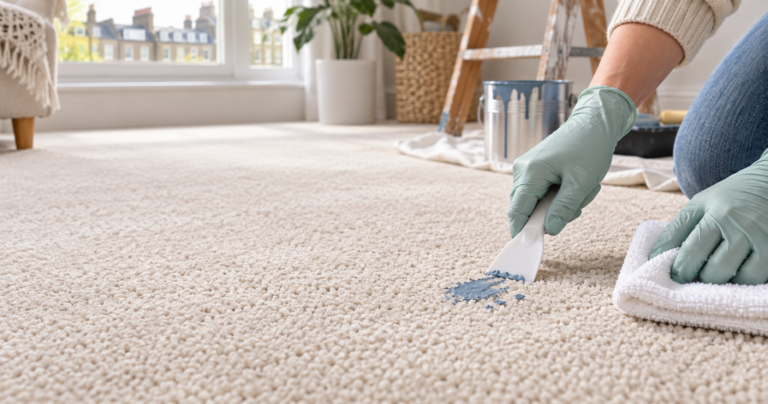
Dried polish needs to be softened and broken up before any solvent will work. Scraping alone tears fibres; solvent alone can’t penetrate a hardened film.
Try this approach:
- Chip gently at the hardened edges with a blunt knife or the edge of a spoon.
- Vacuum the loose flakes before they work back into the pile.
- Soften the remainder with a cloth dampened in non-acetone remover, held against it briefly.
- Dab and lift as the film softens, repeating in short cycles.
- Stop if carpet colour transfers to your cloth — that’s dye loss, and it’s permanent.
Several short attempts beat one long soak every time.
When Should I Call a Professional?
Call a professional for dried polish, large spills, wool or silk carpets, and any valuable rug. The solvents that remove polish are exactly the ones that damage delicate fibres, and the margin for error is small.
Professional treatment uses controlled solvent application with immediate extraction, so the dissolved lacquer is pulled out rather than driven into the backing. For wool and hand-knotted rugs, this is the only safe route — see our Persian and Oriental rug cleaning or book a carpet visit online.
Frequently Asked Questions
Can I use acetone on carpet?
Only with extreme caution, and never on synthetic carpet without patch-testing. Acetone dissolves many synthetic fibres and carpet backings, causing melting and permanent discolouration. Non-acetone remover or surgical spirit is safer and usually effective. If acetone seems like the only option, professional treatment is the better choice.
Does nail polish come out of carpet once it’s dried?
Often, yes, though it takes more work. Chip away the hardened edges, vacuum the flakes, then soften what remains with repeated short applications of non-acetone remover. Dried polish on wool or valuable rugs should go straight to a professional, since aggressive DIY attempts risk permanent fibre and colour damage.
Will nail polish remover bleach my carpet?
It can. Both acetone and non-acetone removers may strip carpet dye along with the polish, leaving a pale patch. Always patch-test on a hidden area first and check your cloth for colour transfer as you work. If carpet dye appears on the cloth, stop immediately and call a professional.
What’s the safest thing to try first on a polish spill?
Blot the wet polish with a dry white cloth, then dab with a cloth lightly dampened in non-acetone remover or surgical spirit. This combination removes most fresh spills with the least risk to fibres and colour. Escalate to stronger solvents only after patch-testing, and stop at the first sign of dye transfer.
The Bottom Line
Nail polish on carpet is a race against drying time and a test of restraint. Blot immediately, apply the mildest solvent to a cloth rather than the carpet, patch-test everything, and stop the moment carpet dye starts lifting. Acetone poured straight on is what causes the damage people can’t undo.
Dried polish, a large spill, or a wool rug? Book professional stain removal in London rather than risking the pile.