Table of Contents
To remove carpet stains without damaging fibres, lift loose material, blot liquid with a clean white cloth and check the carpet manufacturer’s care instructions before adding a product. Test any approved solution in a hidden area, use minimal moisture and stop if the carpet changes colour or texture.
A stain can be frustrating, especially on pale carpet, but working harder is not always the answer. Scrubbing, soaking and repeated product changes can leave a mark that is harder to correct than the original spill. The useful first decision is whether you are dealing with removable material, a change in the carpet dye, or physical damage to the pile.
What should you do immediately after a spill?
- Keep people and pets away so the spill is not carried into another room.
- Lift solid or thick material with a spoon or blunt edge. Do not grind it into the pile.
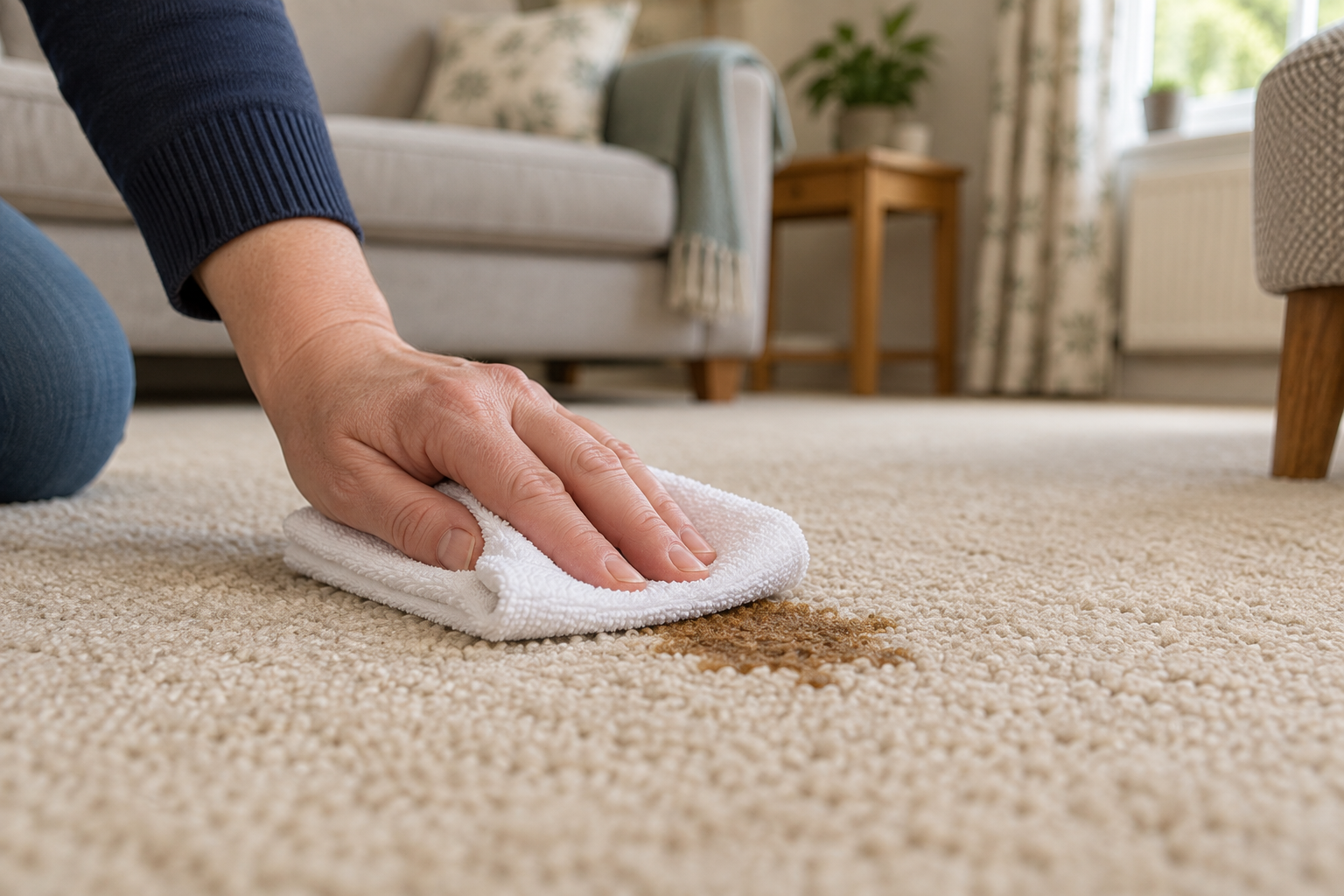
- Blot liquid with plain white kitchen roll or a clean absorbent cloth. Work from the outside towards the centre.
- Turn to a clean part of the cloth as material transfers. Continue gently while blotting is still helping.
- Check the care label, product label and stain type before deciding on the next step.
This first response does not require a cupboard full of cleaning products. Keep the spill local, remove what you can without force and avoid making the area wetter. WoolSafe’s fine-fibre care guidance recommends prompt action and absorbent white material for spills. A white cloth also helps you see what is transferring during treatment.
Check the fibre before choosing a stain remover
The carpet’s colour and softness do not reliably identify its material. Look for an invoice, sample label or manufacturer’s instructions. If you cannot identify it, treat that uncertainty as a reason to avoid aggressive home remedies. A product described as a general cleaner is not automatically suitable for every carpet.
- Wool: use products specifically suitable for wool and follow the carpet maker’s instructions. Avoid bleach and unapproved household mixtures.
- Synthetic carpet: check the particular fibre and construction. A claim about polypropylene does not establish safety for nylon, polyester, backing or adhesive.
- Viscose, sisal, silk and other delicate materials: seek specialist advice before wet treatment. Rubbing and moisture can create lasting changes.
- Unknown fibre or valuable rug: limit first aid to careful lifting and blotting, then request an assessment.
For an individual spill, the WoolSafe Stain Wizard can help identify an appropriate starting point. Follow the instructions for the material and stain rather than combining several unrelated recipes.
How to test a carpet-cleaning product
A hidden-area test reduces risk; it does not guarantee that every visible part will respond identically. Sun exposure, wear and previous treatment may change how a stained patch behaves. Do not skip the test because a product worked on a different carpet.
- Read both labels and check that the product is intended for your carpet. Use the specified dilution.
- Choose an inconspicuous area and apply a small amount in the way the label directs.
- Blot gently with a white cloth and look for carpet-colour transfer.
- Let the test patch dry, then check colour, texture and any ring before treating the visible stain.
- Stop if the test changes the carpet or the instructions are unclear.
A controlled method for a small, fresh stain
Once the product and fibre checks are complete, use short, controlled passes. Follow the product’s stated contact time and application method. Do not pour extra solution onto the spot in an attempt to speed up removal. More liquid can carry dissolved material deeper into the carpet.
Blot rather than scrub, changing the cloth surface frequently. If the label requires residue removal, use only the recommended method and amount of water. Finish with a dry absorbent cloth. If the mark is no longer transferring, pause and assess the result instead of repeating the same treatment indefinitely.
Let the treated patch dry before judging its final appearance. Damp pile can look darker than the surrounding carpet. For aftercare, follow our guide to drying carpet after cleaning. Keep the area clear while it dries and avoid placing a rug over it to hide the mark.
Choose advice for the actual stain
A coffee spill, candle wax and dried paint require different decisions. The general method above is first aid, not a complete treatment for every substance. Use the relevant guide below and check its fibre limitations before proceeding.
- Coffee stain removal: identify what was spilled and avoid repeated soaking.
- Red wine stain guidance: use the carpet-specific advice, not instructions intended for washable clothing.
- Removing tea stains from carpet: follow the dedicated treatment guidance for tea marks.
- Professional stain removal in London: request assessment when the stain or fibre needs specialist treatment.
What should you avoid?
- Hard brushing: can distort the pile and leave a visible texture change after the stain has faded.
- Flooding the patch: can move contamination into backing and underlay.
- Heat from an iron or hairdryer: can damage fibres; do not improvise a heat treatment.
- Mixing cleaners: produces unpredictable results and may be hazardous.
- Bleach or strong solvents: can remove colour or affect carpet components. Use only a manufacturer-approved method.
- Repeated product switching: adds residue and makes later diagnosis harder.
Why does a stain come back after drying?
A mark that returns may involve material below the surface moving upwards as moisture evaporates, or residue that attracts new dirt. That is different from a stain that never lifted in the first place. Photograph the wet and dry result, record what you applied and give those details to the cleaner.
Do not assume that a pale patch needs another stain remover. Bleaching, dye loss and abrasion can resemble staining but need a different assessment. Cleaning cannot replace missing dye or repair worn fibres. A realistic inspection may recommend treatment, repair or acceptance of a permanent mark.
When should you stop and call a professional?
Stop if colour transfers from the carpet, the texture changes, a ring spreads or the backing becomes wet. Seek advice early for old unknown stains, valuable rugs, large spills and anything involving an unlabelled chemical. Tell the technician the approximate age of the mark and every product already used.
For a London property, request a carpet-cleaning assessment with photographs and fibre details where available. Ask what result is realistic before work begins. Complete removal should not be assumed before the carpet has been assessed.
Frequently asked questions
Can every carpet stain be removed?
No. Results depend on the substance, fibre, dye stability, stain age and earlier treatment. Some marks are permanent colour changes or physical damage.
Should I scrub a carpet stain?
Avoid forceful scrubbing. Lift excess material and blot, following the carpet and product instructions. Aggressive movement can spread the spill and change the pile.
Is vinegar safe on all carpets?
No universal household recipe is safe for every carpet. Check the manufacturer’s care guidance and use a suitable labelled product rather than assuming vinegar is appropriate.
Can I use washing-up liquid?
Only if the carpet manufacturer’s guidance allows it and provides a method. Household detergent can leave residue, so an approved carpet product is usually easier to use according to clear instructions.
What if carpet colour appears on the cloth?
Stop treatment and seek advice. Distinguish the spill colour from the carpet dye where possible, but do not keep applying product if you are unsure.
Should I clean an old stain repeatedly?
No. If controlled treatment stops improving it, let the area dry and seek assessment. Repeated soaking can create additional problems.
Use the gentlest suitable first response, keep a record of treatments and judge the carpet when dry. Protecting the fibre matters as much as removing the visible mark.