Table of Contents
Viscose rugs are the most damage-prone floor covering in most homes, because the fibre loses strength when wet and marks permanently from water alone. Clean them dry wherever possible: vacuum gently, blot spills immediately with almost no moisture, and never shampoo, steam or soak them. Wet cleaning a viscose rug at home usually causes irreversible damage.
Key Takeaways
- Viscose loses up to much of its strength when wet, so soaking causes fibre collapse and permanent marks.
- Plain water alone leaves yellow or brown watermarks on viscose — this is normal, not a cleaning failure.
- Blot spills immediately with a barely damp cloth; never rub, which causes irreversible pile distortion.
- Viscose is often sold as “art silk”, “bamboo silk”, “banana silk” or “rayon” — same fibre, same fragility.
What Is Viscose and Why Is It So Fragile?
Viscose is a semi-synthetic fibre made from processed wood pulp, designed to imitate the sheen of silk at a fraction of the cost. It looks beautiful and feels soft, but the manufacturing process leaves a fibre that weakens dramatically when it absorbs water — unlike wool, which is naturally resilient.
That single property drives every rule below. A wool rug tolerates a wet clean; a viscose rug can be permanently marked by a spilled glass of water.
You may not even know you own one. Check the label for these names:
- Viscose or rayon
- Art silk or artificial silk
- Bamboo silk, banana silk, or modal
- Tencel or lyocell (related, slightly more stable)
What we see on the job: More ruined rugs come to us as viscose than every other fibre combined — usually after someone treated a small spill with water and a cloth, and the watermark spread wider than the original stain.
For how other rug fibres compare, see our guide to silk versus wool rug cleaning.
How Should I Clean a Viscose Rug at Home?
Keep it dry. Regular gentle maintenance prevents almost every problem that wet cleaning creates, and dry soil removal is genuinely effective on viscose.
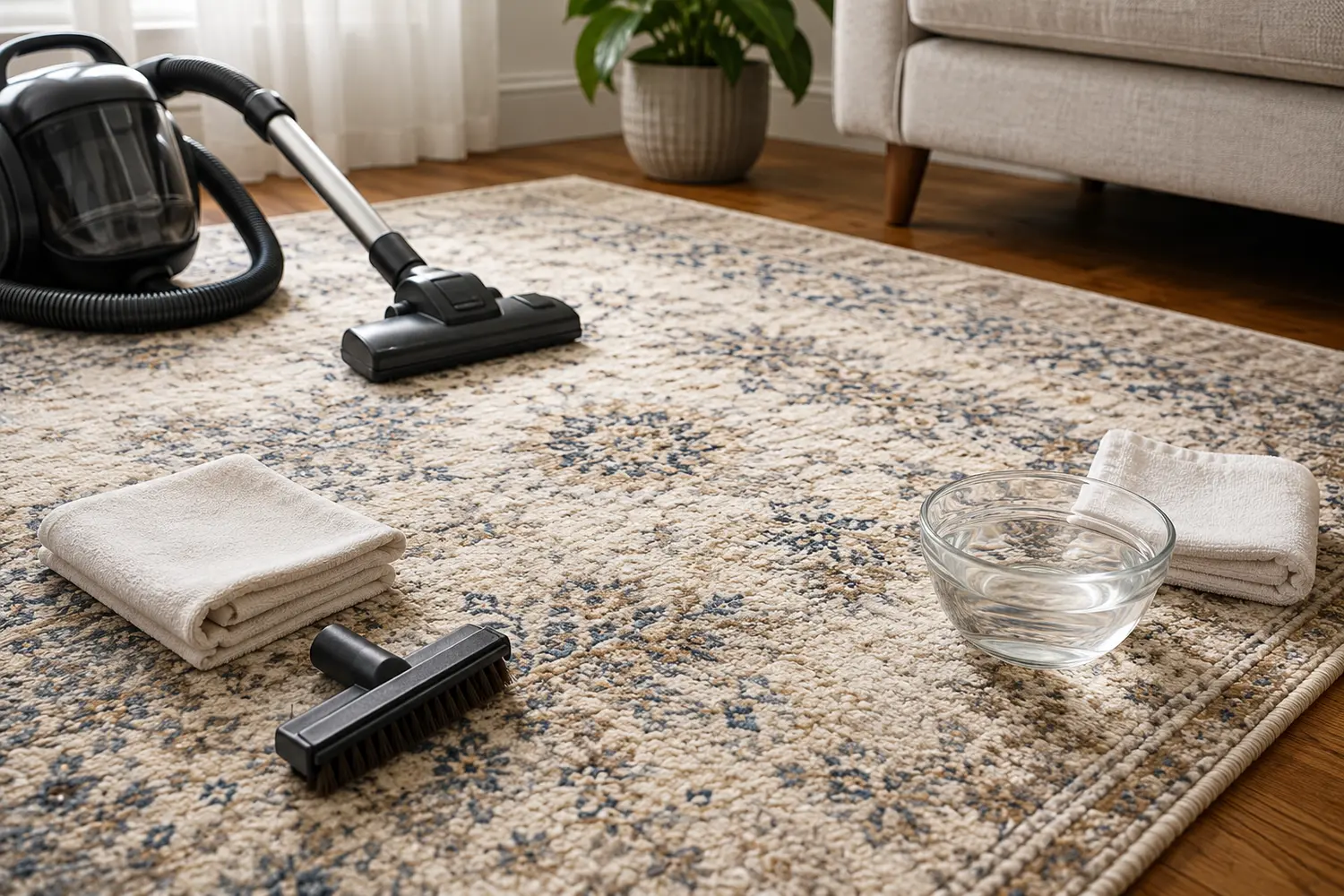
Your safe routine:
- Vacuum with suction only — turn the beater bar off, or use an upholstery attachment.
- Vacuum in the pile direction to avoid distorting the fibres.
- Shake or gently beat small rugs outdoors to release trapped grit.
- Rotate the rug every few months so wear and light exposure stay even.
- Use a rug pad underneath to reduce friction damage from below.
Never use a rotating brush head. Viscose fibres shred under mechanical agitation, leaving a fuzzy, matted patch that can’t be restored.
What Do I Do About a Spill on a Viscose Rug?
Blot immediately with a dry cloth and use as little liquid as possible — ideally none. The instinct to reach for water is exactly what causes permanent damage on this fibre.
Handle spills like this:
- Blot straight down with a dry white cloth, absorbing as much as you can
- Never rub — friction on damp viscose permanently distorts the pile
- Avoid water unless absolutely necessary, and then only a barely damp cloth
- Dry immediately with a fan or hairdryer on cool, blotting as it dries
- Accept some marking — even correct treatment can leave a faint ring on viscose
For anything larger than a small spot, stop and call a professional rather than escalating. The damage from a well-meant DIY attempt usually exceeds the damage from the spill.
Why Does Water Leave a Brown Mark on Viscose?
Water causes browning on viscose because it draws lignin and residual processing chemicals from the wood pulp up to the surface, where they oxidise into yellow-brown stains. It’s a property of the fibre, not a sign you used the wrong product.
This is why “just dab it with water” is such bad advice for viscose rugs. Professional cleaners use low-moisture methods and specialist drying precisely to avoid triggering this reaction, and they can often reverse existing browning with treatments that aren’t available domestically.
Can a Viscose Rug Be Professionally Cleaned?
Yes — but only with low-moisture methods by someone who has identified the fibre correctly. Standard carpet cleaning techniques that work well on wool and synthetics will damage viscose, so fibre identification comes before any treatment.
A professional will test the fibre, use controlled low-moisture cleaning, and dry the rug rapidly under tension to prevent browning and pile collapse. That combination isn’t reproducible at home with a hired machine.
If you’re unsure what your rug is made of, ask before booking. We clean viscose, wool, silk and hand-knotted rugs across London — see our rug cleaning service or book a collection.
Frequently Asked Questions
Can I steam clean a viscose rug?
No. Steam cleaning combines heat and moisture, the two things viscose tolerates worst, and it commonly causes fibre collapse, browning and permanent texture loss. Viscose needs low-moisture professional methods with rapid controlled drying. If a cleaner offers to steam clean your viscose rug, find a different cleaner.
Why does my viscose rug look matted and dull in patches?
Viscose fibres flatten and shred under friction, especially in high-traffic areas or where a vacuum beater bar has passed over them. Once the fibre surface is damaged, it scatters light differently and looks dull. Professional grooming can improve appearance, but severely shredded areas can’t be fully restored.
Is viscose the same as bamboo silk?
Yes, in practice. Bamboo silk, banana silk, art silk and artificial silk are marketing names for viscose or closely related regenerated fibres. They share the same weakness to moisture and friction, so treat them all with identical care regardless of the name on the label or the shop’s description.
Should I put a viscose rug in a high-traffic room?
Ideally not. Viscose suits low-traffic rooms, bedrooms and areas away from doors, food and pets, because it wears quickly and marks easily. In hallways, dining rooms or family spaces, wool or a quality synthetic will look better for far longer and tolerate the cleaning that heavy use requires.
The Bottom Line
Viscose is beautiful and unusually fragile. Keep it dry, vacuum without a beater bar, blot spills with almost no moisture, and accept that water alone can mark it. Steam, shampoo and soaking are what turn a small problem into a ruined rug.
Not sure what your rug is made of, or already dealing with a watermark? Book a professional rug assessment in London before trying anything else.