Table of Contents
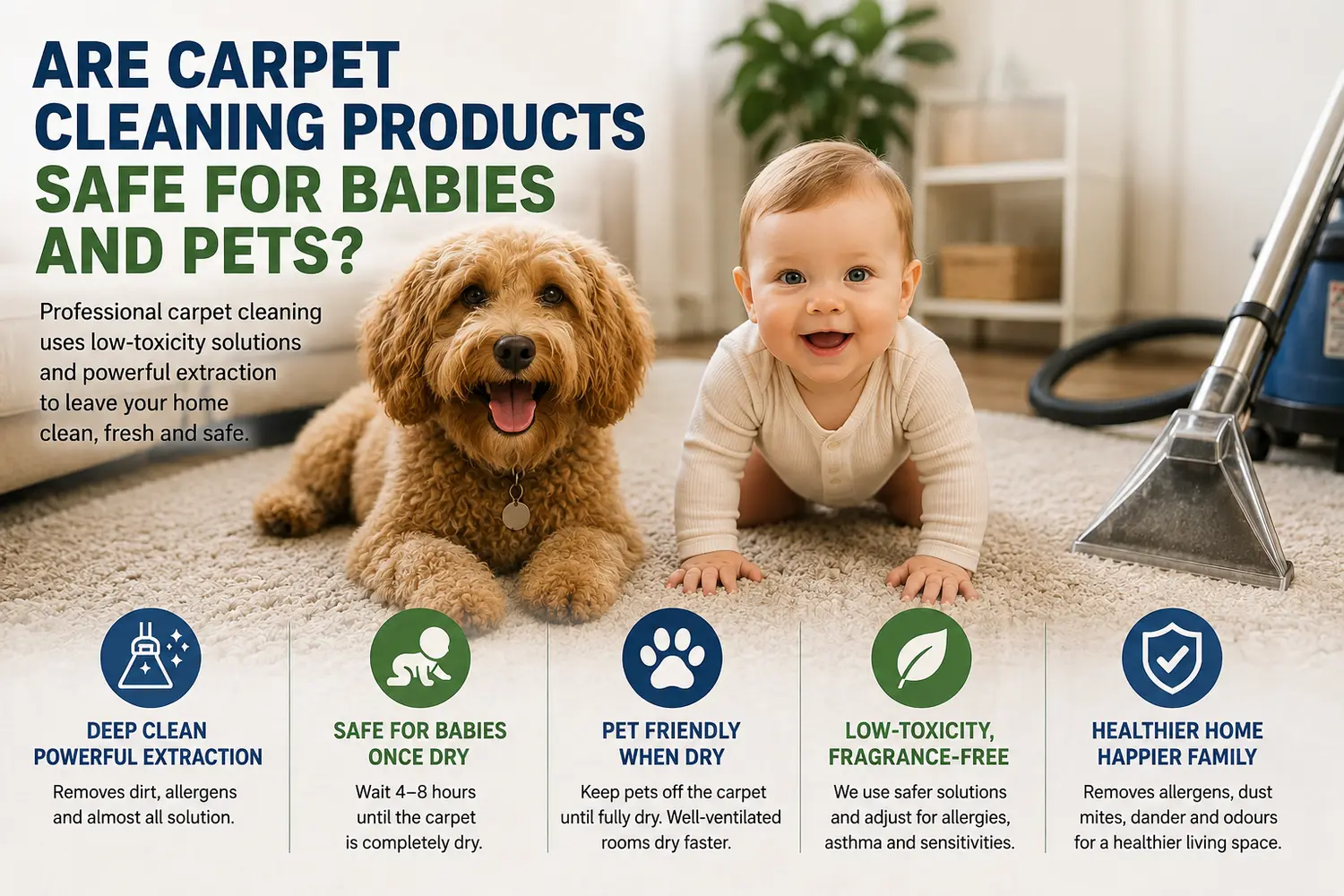
Professional carpet cleaning is safe for babies and pets once the carpet is dry, because reputable cleaners use low-toxicity solutions and extract almost all of it back out. The risk isn’t the cleaning itself — it’s supermarket products left sitting in the pile, and letting children or animals back onto a carpet that’s still damp.
Key Takeaways
- Professional hot water extraction removes both the dirt and the cleaning solution, leaving minimal residue.
- Wait until the carpet is fully dry before letting babies or pets back on it — usually 4 to 8 hours.
- DIY supermarket products often leave more residue than professional cleaning, because there’s no extraction step.
- Always tell your cleaner about pets, babies, asthma or allergies so the treatment can be adjusted.
Is Professional Carpet Cleaning Safe Around Children?
Professional cleaning is safe for children once the carpet has dried, because the extraction stage removes the solution along with the dirt. That’s the key difference from DIY: a professional machine sprays and immediately vacuums back out, so very little is left behind in the fibres.
Babies are the most exposed group in any home — they crawl, they put hands in mouths, they spend hours at floor level. Which is exactly why the residue question matters more than the chemical name on the bottle.
What we see on the job: Parents worry about what we spray on. In practice, the bigger residue problem is the supermarket foam someone used six months ago, which has no extraction step and stays in the pile attracting dirt.
For households managing allergies specifically, see our guide to carpet cleaning for homes with allergies.
How Long Should I Keep Pets and Babies Off the Carpet?
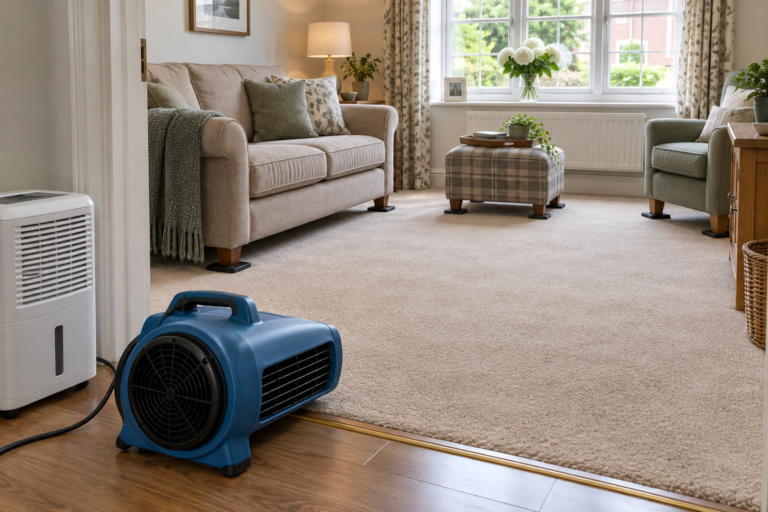
Wait until the carpet is fully dry, typically 4 to 8 hours after professional cleaning. Touch-dry usually comes at 2 to 4 hours, but “touch-dry” isn’t the same as ready for a crawling baby or a dog that licks its paws.
To speed it up and stay safe:
- Keep windows open and air moving through the room
- Run the heating gently alongside ventilation
- Close the door to keep pets and toddlers out until it’s done
- Check the pile at the base, not just the surface, before letting anyone back on
- Ask your technician for the expected drying time for your carpet type
Thick wool and heavy pile take longer than low-pile synthetic. Our guide on drying carpets fast after cleaning covers the full method.
Are DIY Carpet Cleaning Products Riskier Than Professional Ones?
Supermarket products often leave more residue than professional cleaning, because home methods rarely extract what they apply. Powders, foams and spray-on shampoos are designed to be vacuumed off, and a domestic vacuum can’t retrieve what’s soaked into the backing.
That leftover residue does two things: it stays where children and pets contact it, and it makes the carpet re-soil faster because sticky residue grabs dirt. Hired machines help, but they extract far less water and solution than truck-mounted professional equipment.
If you clean between professional visits, use less product than the label suggests, rinse with plain water, and extract as much moisture as you can. Read more in our comparison of DIY versus professional carpet cleaning.
What Should I Tell My Carpet Cleaner Beforehand?
Tell your cleaner about every sensitive occupant before the visit, so solutions and drying plans can be adjusted. It costs nothing to ask and it’s the single best thing you can do for safety.
Mention:
- Babies, toddlers or anyone crawling on the floor
- Pets, including which rooms they use and whether any are birds or small caged animals
- Asthma, eczema or chemical sensitivities in the household
- Fragrance sensitivity — many treatments can be done unscented
- Any previous reactions to cleaning products
Birds are worth flagging specifically: their respiratory systems are unusually sensitive, so most cleaners will recommend moving cages to another room during and after the visit.
Does Carpet Cleaning Help Allergies and Pet Odours?
Professional cleaning removes dust mites, pet dander, hair and allergens that vacuuming leaves behind, which usually improves indoor air quality for sensitive households. It also removes the organic residue behind pet odours rather than masking it.
That’s a genuine health argument for cleaning rather than against it. For homes with pets, regular professional cleaning tends to reduce the allergen load more than any product you apply between visits. See our guides on removing pet hair from carpet and getting rid of carpet smell.
Frequently Asked Questions
Do I need to leave the house during carpet cleaning?
Most households don’t need to leave, though it’s easier to work in an empty room and ventilation helps drying. People with asthma or chemical sensitivities often prefer to be out during the visit and return once the carpet is dry. Ask your cleaner what they recommend for your specific situation.
Are eco or non-toxic carpet cleaning options available?
Yes. Most professional cleaners offer low-toxicity, fragrance-free or eco-certified solutions on request, and hot water extraction relies heavily on heat and water pressure rather than chemical strength. Ask when booking so the technician brings the right products, rather than assuming standard solutions will be used.
Is it safe for my dog to walk on a cleaned carpet?
Wait until the carpet is completely dry, usually 4 to 8 hours. Dogs lick their paws, so damp carpet carrying residual solution is the main risk. Once dry, professionally cleaned carpet is safe. Keep pets in another room during cleaning and drying, and ventilate the space well.
Can carpet cleaning trigger asthma?
Cleaning usually improves asthma symptoms by removing dust mites and allergens, but strong fragrances can irritate sensitive airways. Request unscented solutions, ventilate the room during and after the visit, and stay out until the carpet dries. Tell your cleaner about asthma when booking so the treatment is adjusted appropriately.
The Bottom Line
Professional carpet cleaning is safe around babies and pets, provided you wait for the carpet to dry fully and tell your cleaner who lives in the house. The bigger residue risk usually comes from DIY products that get applied but never properly extracted.
Want a clean that’s planned around a baby, a pet or an allergy? Book a visit and tell us when you call — we’ll adjust the treatment and the timing.